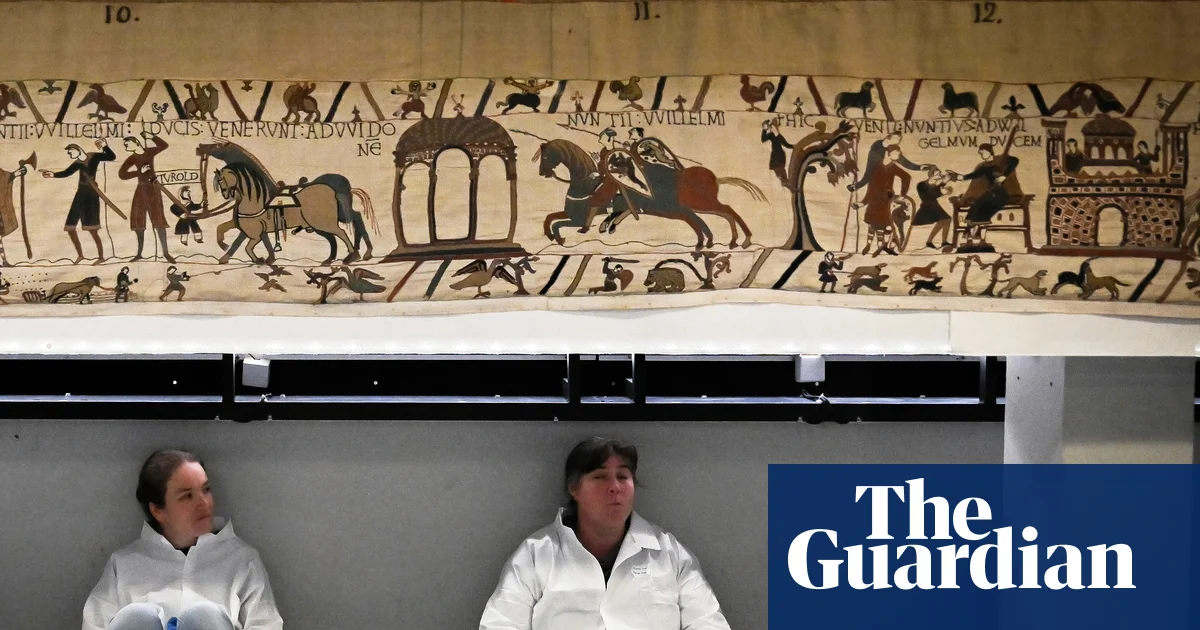
The Bayeux tapestry will be insured for an estimated £800m when it returns to the UK in 2026 for the first time in more than 900 years.
The Treasury will insure the 70-metre embroidered cloth, which depicts the 1066 Norman invasion and Battle of Hastings, for damage or loss during its transfer from France and while it is on display at the British Museum from September.
It will back the cover under the Government Indemnity Scheme, an alternative to commercial insurance that allows art and cultural objects to be shown in the UK.
The Financial Times reported the Treasury had provisionally approved an estimated valuation for the tapestry with the final valuation expected to be about £800m.
An HM Treasury spokesperson said: “The Government Indemnity Scheme is a longstanding scheme that allows museums and galleries to borrow high value works for major exhibitions, increasing visitor numbers and providing public benefits.
“Without this cover, public museums and galleries would face a substantial commercial insurance premium, which would be significantly less cost effective.”
The scheme is estimated to have saved UK museums and galleries £81m compared with commercial insurance.
The Bayeux tapestry depicts the Battle of Hastings and events leading up to it. At the battle William the Conqueror defeated Harold Godwinson and became the first Norman king of England.
The cloth consists of 58 scenes and is widely accepted to have been made in England during the 11th century and was probably commissioned by Bishop Odo of Bayeux.
It will be on loan while the Bayeux Tapestry Museum in Normandy closes for renovation until its scheduled reopening in October 2027.
Visitors will have the chance to view it in the Sainsbury Exhibitions Gallery of the British Museum in London between autumn next year and July 2027.
It is part of a major loan agreement between the UK prime minister, Keir Starmer, and the French president, Emmanuel Macron, announced in July. The British Museum will loan the Sutton Hoo collection, the Lewis Chessmen and other items to France in return for the tapestry.
In France, voices from the art and conservation fields have called on President Macron to abandon the project because of concerns transportation would cause irreparable damage to the tapestry.