- The shift to a green economy has deepened global dependence on rare earth elements, prompting countries to pursue collaboration while simultaneously racing to secure local resources.
- In India, rare earth reserves lie in ecologically fragile coastal and riverine ecosystems, where mining poses serious risks to biodiversity, groundwater, erosion, and long-term environmental stability.
- Companies and research institutions are also turning to the recycling and recovery of rare earth elements.
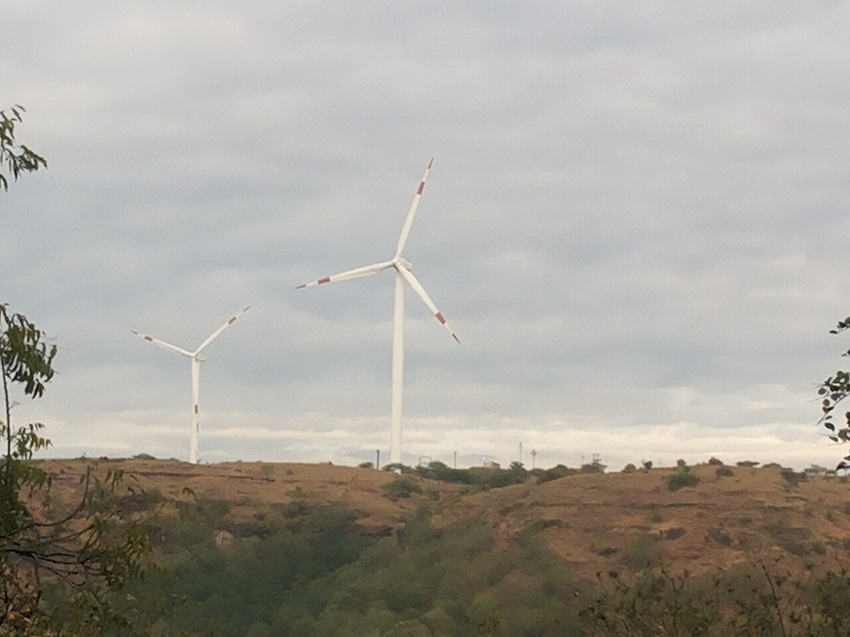
The global shift to a green economy may mark an improvement over oil- and gas-driven exploration, but it is not free of ecological caveats by any means. Everything from wind turbines to electric vehicle manufacturing requires elements such as neodymium, dysprosium, and others, collectively known as rare earth elements (REEs). Their use in defence equipment further underscores their importance.
The urgent need for REEs was evident when, on January 12, the U.S. organised a ministerial-level meeting of the G7 countries and their allies in Washington to discuss the rare earth supply chains. The meeting focused on reducing reliance on China for rare earth minerals. The Union Minister for Electronics and Information Technology, Ashwini Vaishnaw, represented India in the meeting.
In a post on X (formerly Twitter) after the event, Vaishnaw wrote, “Strengthening critical mineral supply chains is vital to enhancing the resilience of India’s manufacturing capabilities and its rapidly growing electronics sector.”
The U.S. has launched an initiative, Pax Silica, with several partner countries to build a resilient, diversified supply chain from critical minerals and energy inputs to advanced manufacturing, semiconductors, AI infrastructure, and logistics. This move is part of broader efforts to reduce dependence on China for critical minerals, including rare earths. US Ambassador to India Sergei Gor later wrote on X that India would be invited to join the initiative.
Other developments also highlight the emerging geopolitical effort to control the rare earth supply chain. In September 2025, Shenghe Resources, partly owned by the Chinese state, acquired the Australian mining company Peak Rare Earths, which operated in Tanzania. With such an acquisition along with major control on the processing of critical minerals, China continues to lead the global supply chain of REE, which gives it an edge in geopolitics.
In December 2025, the Indian government announced a seven-year plan to initiate a manufacturing scheme for rare-earth permanent magnets with an investment outlay of ₹72.8 billion. According to Vaishnaw, this would increase the country’s self-reliance and strategic autonomy by expanding indigenous sources of supply for these critical minerals.
However, the bulk of these critical elements is found along India’s coastlines and in alluvial sand ecosystems, amounting to around 7.23 million tonnes.
Strategic minerals, sensitive landscapes
According to the 2019 revised Coastal Regulation Zone policy, mining of atomic minerals falls under the regulated category. Through the public sector company, Indian Rare Earths Limited (IREL), the department currently has mines in Odisha, Tamil Nadu and Kerala. Monazite — a major source of rare earth elements in India — occurs in coastal and riverine sands in Andhra Pradesh, Odisha, Tamil Nadu, Kerala, West Bengal, Jharkhand, Gujarat and Maharashtra, and additional rare earth reserves are also found in hard rock deposits in Gujarat and Rajasthan.
According to 2022 study, mining beaches and alluvial sands for heavy minerals such as monazite usually involves strip mining, in which the topsoil is removed to a depth of about 30 metres. The area is filled with the waste, or tailings, generated after mining.
With demand for REEs alone already poised to outstrip supply, these mining activities, which also already outstrip the natural regeneration rate of beach sand, endanger critical coastal and riverine ecologies. Experts say that there is an urgent need to marry the goal of strategic autonomy with long-term sustainable development. Many researchers have already explored and are working on alternatives to rare-earth extraction based on the principles of ‘reduce and recycle’.
The co-founder of the Council for Critical Mineral Development in the Global South, a collaborative platform, Sandeep Pai, echoes this principle and believes that while the overall share of rare earth mining in the larger mining ecosystem is minimal, we should look at alternatives such as the recovery of these elements from various mine tailings, or waste, acid mine drainage and coal waste like fly ash.” While countries continue to look to new mining exploration to boost supply, there are some critical case studies of recovery and demand reduction worth noting for India.
The circular path to critical minerals
Back in 2010, the Japanese coastguard detained a Chinese fishing boat after it collided with Japanese vessels in the disputed Senkaku Islands. As a retaliatory measure, China halted exports of REEs to Japan. This set in motion a long-term strategic plan in the small island country to not only reduce its dependence on China for REEs, but to reduce its dependence on REEs wholly. While Chinese imports still account for about 60% of Japan’s REE use, there are critical environmental lessons to be drawn from the approaches taken by countries like Japan and even the U.S. regarding REE demand and supply.
The first prong deals with identifying alternatives to REEs and developing rare earth-free magnets. Honda and Daido Steel announced back in 2016 that they had modified the production of neodymium magnets to eliminate the addition of a heavy REE such as dysprosium. Daikin also announced the launch of air conditioners with 95% less REEs than traditional models, eliminating heavy rare earths like dysprosium. However, this is only free of heavy rare earths, and not the medium and light categories of REEs. Another study published in American Chemical Society -Sustainable Chemistry and Engineering in 2023 has demonstrated that magnets completely free of rare earth elements are not only possible but also achieve a 95% reduction in carbon footprint, according to its life-cycle assessment.
The second prong focuses on recycling existing electronics to recover their rare earth elements. Apart from the methods Pai mentions, researchers at Kyoto University have developed innovations such as separating and recycling REEs from magnets used in consumer and industrial products. Known as the selective extraction–evaporation–electrolysis (SEEE) process, it demonstrated recovery rates of about 96% for neodymium (Nd) and 91% for dysprosium (Dy) in laboratory tests. These rare earths are key components in high-performance magnets, used in technologies such as electric vehicles and wind turbines.
Their industry counterparts in the U.S. have recovered REEs, as well as high-quality gold, copper, and steel, from decommissioned hard drives and server hardware. They are funnelling them back into electric vehicles, electronics and wind energy production. More iterations are required to scale these innovations for industry use, but they represent safer, cleaner alternatives.
Vaishnaw also underlined the importance of recycling as “a good way of harnessing the minerals out of the waste products,” after the inter-ministerial meeting in Washington.
Read more: India steps up plans to explore critical minerals crucial to its clean energy transition
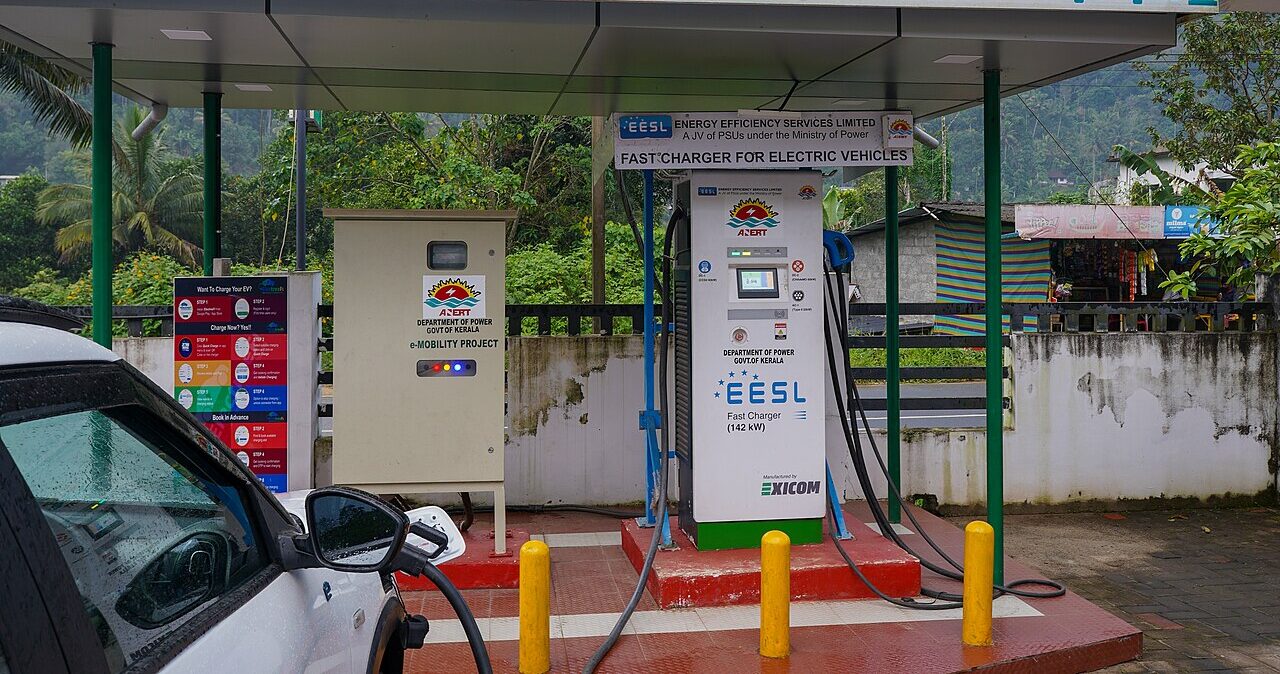
Banner image: An EV charging station in Kerala. Image by Timothy A. Gonsalves via Wikimedia Commons (CC BY-SA 4.0).