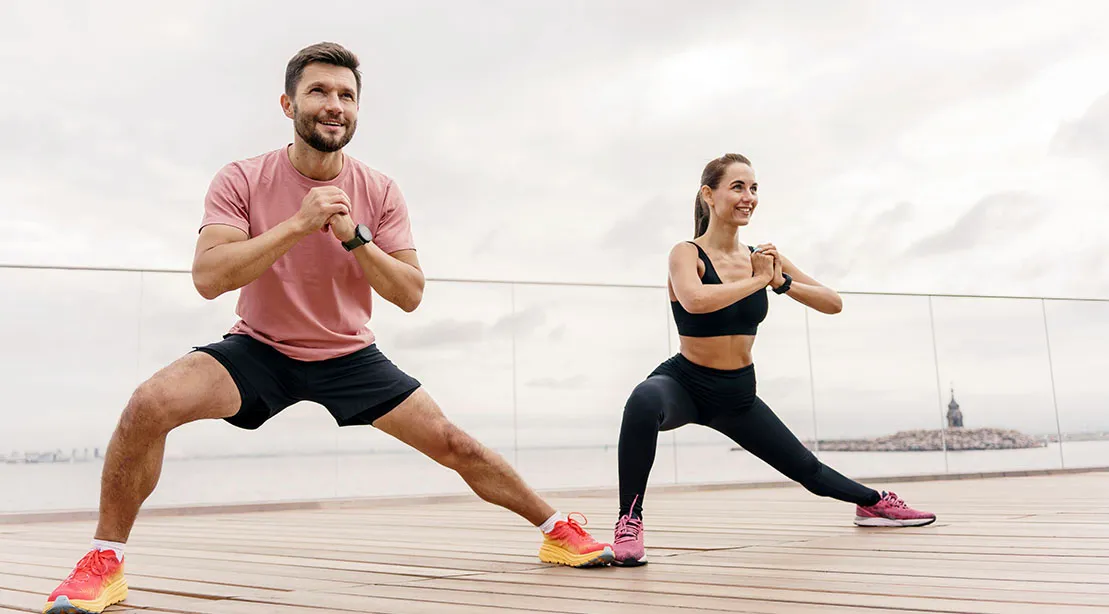
While the humble warmup if often the most neglected portion of any workout, many of us take more care as colder temperatures take hold. Still, when it comes to preparing our body for the best possible exercise session, which type of warmup works best? Science has the answer.
Lots of people glide straight past the warmup phase of working out, while others limber up with a little stretching, but elite athletes are often taken through lighter, warmup sets before hitting the same task at full intensity, but which method works best? A new systematic review from Edith Cowan University (ECU) has determined that getting the body ready for gains is more complex than simply raising muscle temperature, but it is an important start. “The research found that for every 1°C increase in muscle temperature, performance improved by about 3.5%,” explains the study’s lead researcher, Dr. Cody Wilson. “With the greatest benefits seen in rate-dependent muscle properties like speed and power, but not in maximum strength.”
Getting warm by any method may be a great start, but there’s more to it than that. Apparently, the type of warmup style used to increase the heat is of paramount importance to your PRs too. In order to figure out which warmup works best, scientists crunched the data on passive warmups, where the body is heated from external sources such as a shower or heat pads to add warmth without movement. They also looked at active warmups, requiring gentle activity like ten minutes on an exercise bike, or completing a less strenuous version of the main workout session.
Which is the Best Way to Warmup Before Exercise?
Many previous studies have taken a catch-all approach to recording the results of active warmup methods, often lumping in general cardio with exercise specific starts, but the experts who worked on this the new study feel that choosing a warmup that matches the actual exercise is likely better than ten minutes on a bike, because you might end up warming-up different muscle groups. According to the science, it’s all about making the most of ‘post-activation potentiation.’
“While both active and passive warmups result in better speed and power, a lot of research shows that the warmup exercises should be similar to the exercise you will be doing,” says fellow study author, JP Nunes. The reason for this method working best appears to be that it primes the body and mind perfectly for the task ahead. “If you are lifting weights, starting out by doing the exercise with lighter weights, because the practice actually helps us to activate our muscles more and to use more efficient movement patterns — the nervous system can learn on-the-spot,” explains Nunes.
So, there you have it: sticking to the same exercises through your warmups and working sets is the best advice, according to the latest findings. “Any warmup is important, whether that’s just walking to the gym or doing a ten-minute cycle before your work-out. But there is some indication that warmups not related to the exercise being performed do not have as great an effect on performance as just ‘practicing’ the performance,” concludes Dr Wilson.