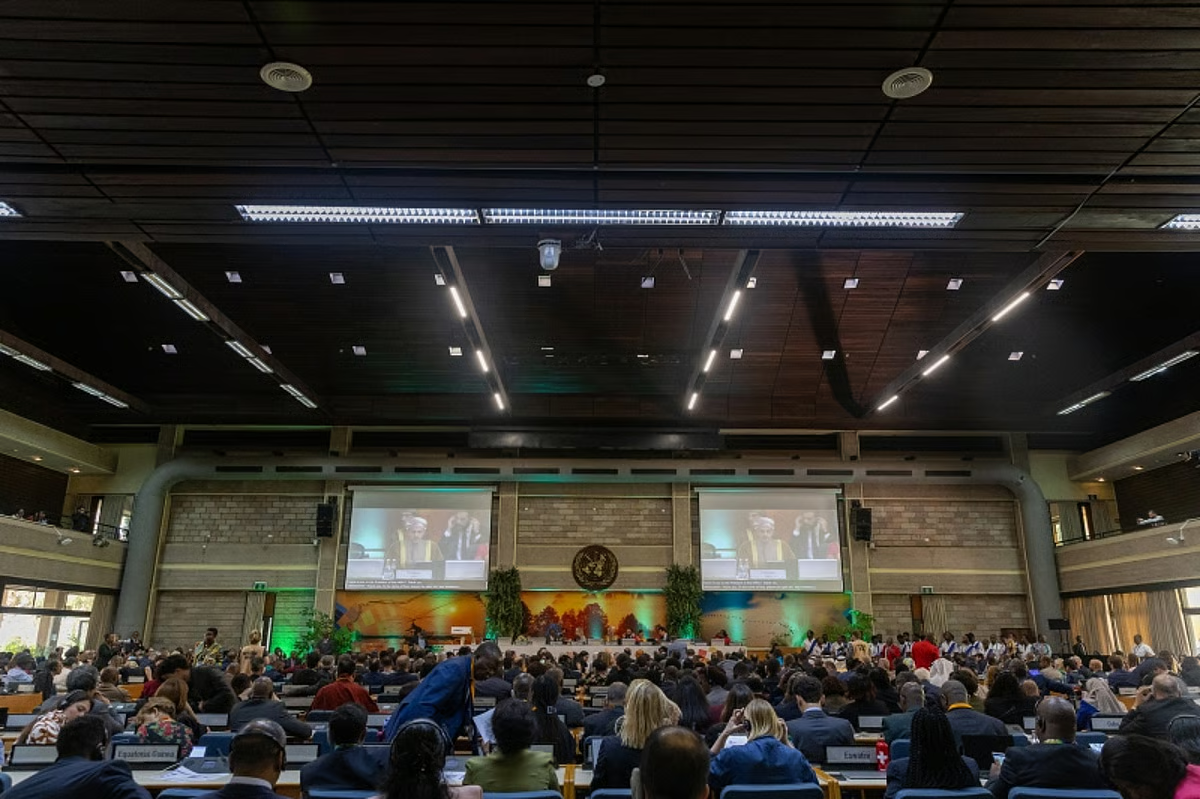
Japan is preparing to convene informal meetings aimed at breaking the deadlock in global negotiations on a legally binding treaty to address plastic pollution, as governments gather in Nairobi, Kenya for the seventh session of the United Nations Environment Assembly (UNEA-7), which took place December 8 to December 12, 2025.
The country said the sessions would seek to bridge differences between negotiating parties and build consensus on issues that have stalled progress towards an agreement intended to govern the production, use and disposal of plastics worldwide.
Bridging divides in stalled talks
Japan has been engaging in dialogue with both supporters and critics of the proposed treaty to help resolve outstanding disagreements, according to Ryo Nakamura, assistant minister and director general for global issues at Japan’s Ministry of Foreign Affairs.
“We must deepen and build dialogue. Japan is considering hosting informal meetings to help resolve fundamental differences before full formal negotiations happen,” he said at an official side event titled Bridging Divides, Building Consensus: Towards an Ambitious Global Plastics Treaty during the seventh session of the United Nations Environment Assembly (UNEA-7) on December 11, 2025.
“To accelerate the pace of negotiations, Japan is encouraging small informal group meetings to support efforts to bridge existing gaps and help find common ground,” he added.
Nakamura cautioned that divisions persist between countries that approach plastics primarily as an environmental issue and those that view them largely from an industrial perspective.
Kenya’s Environment Minister, Debora Barasa, warned that the treaty must go beyond waste management and address the entire plastics value chain, including production, use and circularity.
She said that while the six negotiation sessions held so far had delivered some progress despite differences, strong political will was needed to reach an agreement that was acceptable to all parties and responsive to the scale of the plastics challenge.
“The negotiations must explore common ground and help bridge current differences, and multilateralism can help deliver a treaty that is acceptable,” she said.
Developing countries demand ambition
The next phase of talks, also known as Third Part of the Fifth Session of the (INC-5.3) for developing a global, legally binding treaty on plastic pollution is scheduled for February 7, 2026 at the Geneva International Conference Centre.
Bernadette Arakwiye, Rwanda’s Minister for Environment, said that INC-5.3 would focus on electing officials to the (NIC) and all available resources should be mobilised to narrow differences.
She said negotiators must ensure the treaty “leaves no one behind”, advances planetary wellbeing and promotes equity.
The Gambia’s Minister for the Environment, Climate Change and Natural Resources, Rohey John Manjang, said her country, with a population of 2.7 million, generates around 20,000 tonnes of plastic waste annually despite not producing plastics and having enforced a plastic ban since 2015.
For that reason, she said, political will and global solidarity were essential, with plastic producers taking greater responsibility. “It is sad that producers are busy making money, but what is money without our health?” she said.
Plastics pollution has moved beyond being solely an environmental issue and is now a major human health concern, said Nagnouma Kone, Kenya’s representative at the . She warned that plastics contain a cocktail of around 3,000 chemicals, many of which are hazardous to microorganisms, wildlife and humans.
The root of the issue
Addressing plastic pollution through recycling and circular economy approaches could create up to 700,000 green jobs globally, she added. “Our negotiations must focus on upstream issues, not just downstream waste, but also on how plastics are developed and produced,” she said.
Jyoti Mathur-Filipp, executive secretary of the INC and head of its secretariat, said countries and negotiators had learned important lessons during the process so far. “We only need to make a little more progress,” she said, adding that Japan’s proposed informal consultations could help unlock the current impasse.
Negotiations for a legally binding global plastics treaty were launched under UNEA Resolution 5/14 in 2022. While progress has been made, the INC remains divided over several critical issues.
These include the scope and strength of binding measures, such as whether to cap or reduce virgin plastic production, how to manage hazardous chemical additives, and how the treaty should be financed and implemented, particularly to support developing countries during a just transition. Standards for redesign, reuse and recycling also remain unresolved.
The UNEA-7 side event returned to Nairobi, where the treaty mandate was first agreed in March 2022, with the aim of rebuilding political momentum.
Future discussions will focus on bridging divides, fostering consensus, and advancing an ambitious treaty that transforms the plastics economy through innovation, reduction, and equity