- Buckwheat, a high altitude plant that adapts well to poor soil conditions and short growing seasons, is regaining attention for its health benefits and overall resilience in a changing climate.
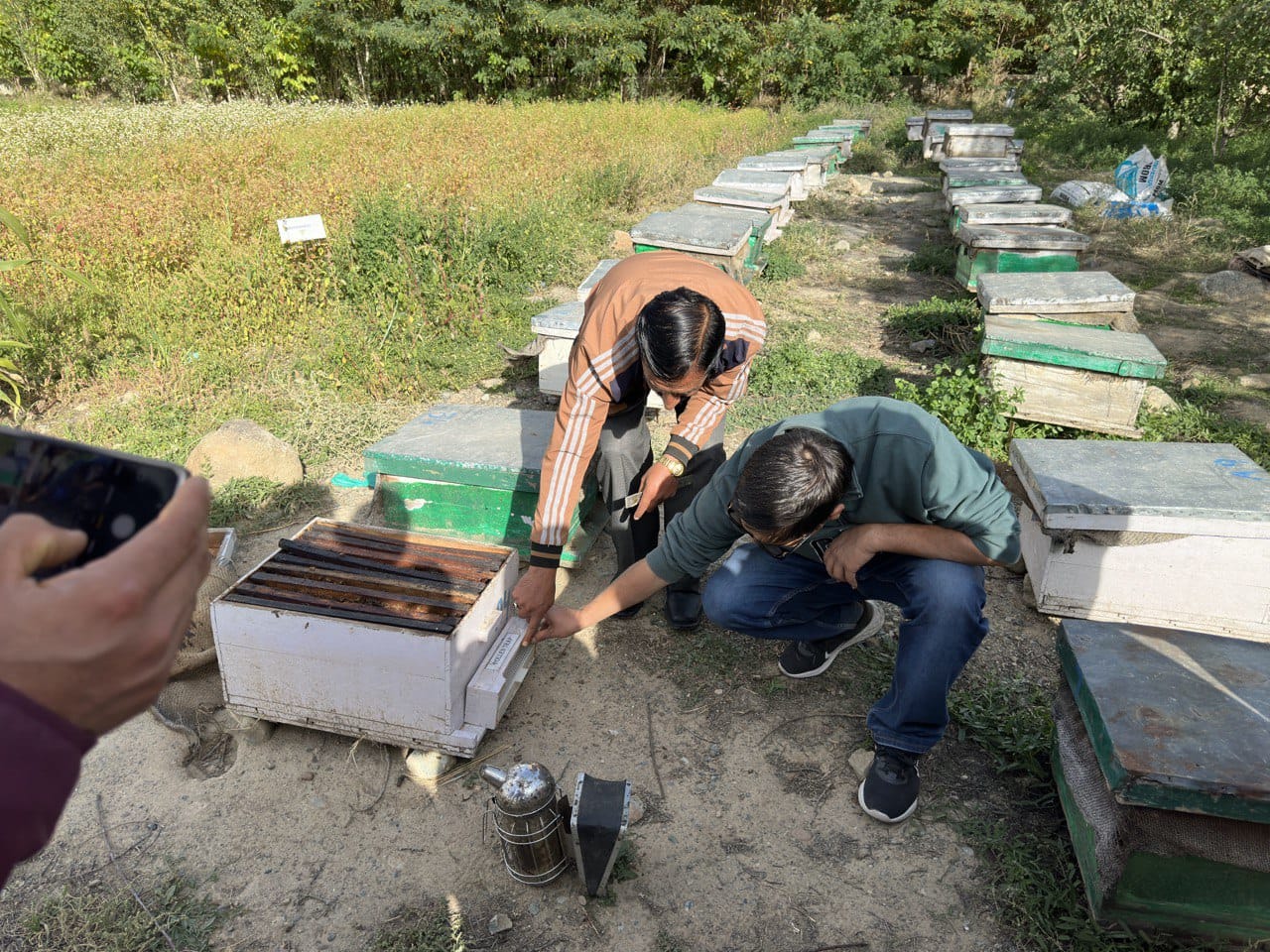
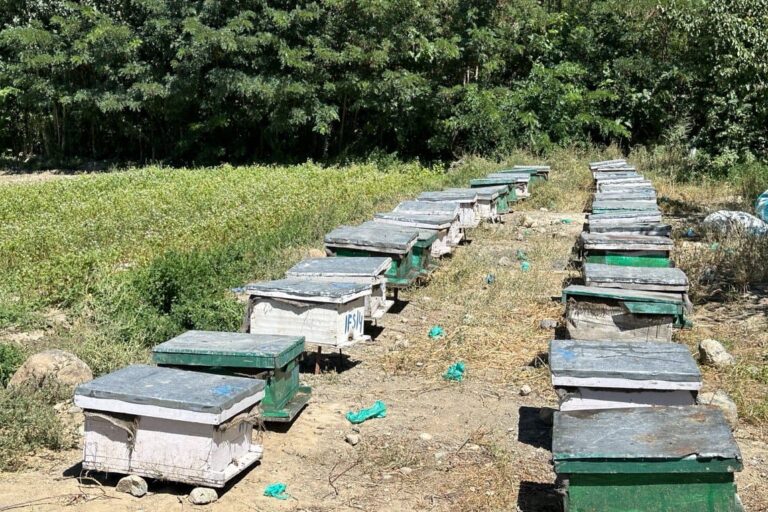
- To make the crop more attractive to farmers in Ladakh, researchers have also started integrating buckwheat with other livelihood activities such as beekeeping.
- While farmers view beekeeping as a natural extension of their work for an additional source of income, they cite initial investment challenges.
- Agriculture researchers also call for market support and local processing facilities for the farmers to enter the health-food markets.
Buckwheat, once grown mostly in marginal soil in the Indian Himalayas, is now regaining attention for its nutritional properties and its ability to grow in harsh mountain conditions where other crops fail. Apart from being a dependable food source, the crop’s abundant flowers support beekeeping, leading to the production of high-value buckwheat honey. Scientists at Sher-e-Kashmir University of Agricultural Sciences and Technology (SKUAST-Kashmir) are now encouraging farmers to combine buckwheat cultivation with apiculture as a way to improve incomes and strengthen mountain agriculture.
Buckwheat’s resilient properties
Buckwheat is one of the pseudo-cereals (not belonging to the true grass family) that contains protein of high nutritional value, dietary fibre, resistant starch, vitamins and minerals.
Buckwheat – both the common buckwheat (Fagopyrum esculentum) and tartary buckwheat (Fagopyrum tartaricum) – is a high-altitude, cool-climate annual plant. It is native to Central Asia, cultivated in China and other Eastern countries as a bread-corn. In India, the crop is widely grown in the high mountains of Jammu and Kashmir, Himachal Pradesh, Uttarakhand, Sikkim and Arunachal Pradesh. In South India, it is sporadically grown in the Nilgiris and Palani hills.
What makes buckwheat particularly suited to these regions is its ability to thrive where other crops struggle. “Buckwheat adapts well to poor soils, high altitudes, and short growing seasons,” says Sajad Zargar, an associate professor in the Division of Plant Biotechnology at SKUAST-Kashmir. Zargar’s research focuses on conserving and improving diverse plant material to develop climate-resilient, nutritionally rich buckwheat varieties suited to sustainable agriculture in temperate and high-altitude regions. He adds, “It (buckwheat) can grow from about 1,000 metres to over 4,000 metres above sea level and performs its best in cool conditions, typical of the Himalayan region.”
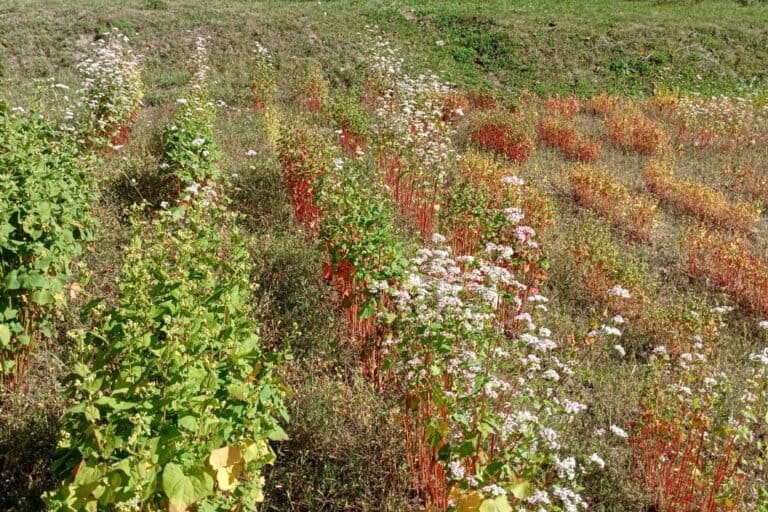
Unlike wheat or rice, buckwheat does not demand fertile soil or heavy fertiliser inputs. It grows well in light, well-drained soils and completes its life cycle within 70-90 days. “This short growing window allows the crop to escape early frosts and late-season climate stress, which is an important advantage in places such as Gurez, Kargil and Leh, where low temperatures, limited rainfall and delicate soils define agriculture,” Zargar explained.
Saika Bashir, a researcher on Zargar’s team, notes that while prolonged heat especially during flowering can affect yields, buckwheat’s overall resilience makes it a promising option in a changing climate. “It requires less water and fewer nutrients than crops like rice and wheat and can tolerate poor soils. Though it is not immune to heat stress, its flexible sowing window and low input needs give farmers more room to adapt,” she says.
As climate change begins to disrupt traditional cropping calendars across the Himalayas, buckwheat is increasingly being viewed as a resilient alternative.
Decline, renewed interest and a slow revival
Despite its high agricultural and nutritional significance, buckwheat cultivation has decreased over the years in the Western Himalayas of India. The easy availability of wheat and rice in the government stores, unavailability of market, and the tastes for cereals have played a major role in the decline in cultivation of buckwheat, according to Bashir.
However, while buckwheat remains underutilised at the national level, the interest in the crop is slowly returning. Growing awareness of its health benefits, particularly its gluten-free and diabetic-friendly properties, has created new demand in urban markets. “We are seeing a revival, especially in niche and organic farming systems,” Zargar says. “In some Himalayan areas, farmers are beginning to see buckwheat as a potential income crop, rather than just a fallback option.”
He continued, “This shift is reflected in the emergence of value-added products such as buckwheat flour, noodles and traditional specialty foods. However, the transition is uneven. Limited access to quality seed, unavailability of standard cultivation practices, lack of processing facilities, and weak market linkages continue to constrain expansion.” Targeted support, both institutional and policy-driven, is essential if buckwheat is to reclaim its place in alpine agriculture, Zargar added.
To make the crop more attractive to farmers, researchers have also begun exploring ways to integrate buckwheat with other livelihood activities. One such approach combines buckwheat cultivation with beekeeping and it has shown promising results in Ladakh.
Buckwheat honey in Ladakh
In Ladakh’s farming system, buckwheat occupies a unique niche. Kargil district spans nearly 14,000 sq km and includes some of the coldest inhabited regions in the country. In high-altitude areas such as Drass, Zanskar and Panikhar located at about 3,200 metres above sea level, the growing season lasts barely four months. Farmers here grow only one crop, barley, their staple food, leaving no room for diversification. But in relatively warmer pockets near Kargil town and the Aryan Valley located about 65 kms away, at around 2,400 metres, the growing season extends from March to mid-October.
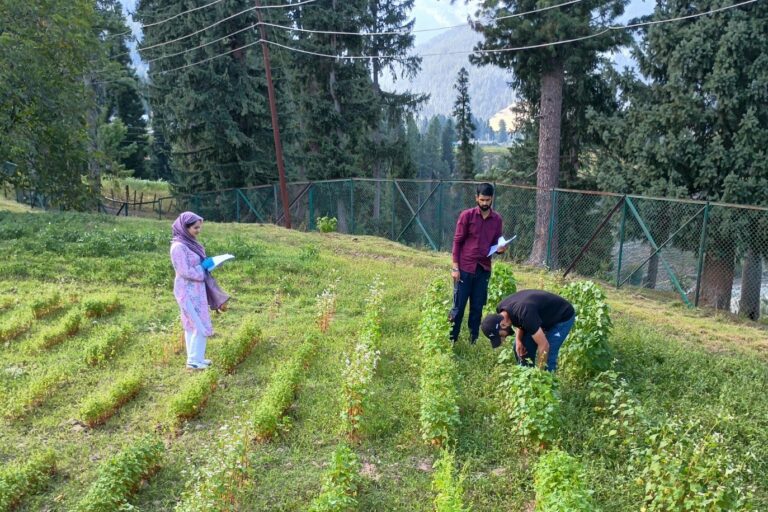
“After harvesting barley, farmers in these areas have a narrow window to grow a second crop and buckwheat fits neatly into that slot,” says Faizan Ahmed, Chief Scientist and Dean, School of Agriculture Science and Technology, Kargil, University of Ladakh. In 2025, for the first time, buckwheat honey was successfully extracted in Kargil. The initiative was led by the School of Agriculture Science and Technology (SAST), Kargil, in collaboration with SKUAST-Kashmir. Following a carefully planned floral calendar, buckwheat was sown on July 22, and bee colonies were introduced in August, and the honey was harvested in October.
Beekeeping in the Himalayas, however, is not without challenges. Harsh winters make it impossible to maintain bee-colonies year-round. “Below four degrees Celsius, bee activity drops sharply, and prolonged cold can wipe out colonies,” Ahmed points out. “As a result, beekeeping in the region is migratory”.
During winter, colonies are moved to warmer areas such as Jammu or Rajasthan, where mustard crops provide nectar as they are in flowering at that time. During spring, they return to Kashmir to coincide with the flowering of apple and apricot orchards. By early summer, Kashmir faces a floral gap that is an absence of flowering plants. It was this gap that sparked the idea of buckwheat honey.
The experiment was built on earlier success with alfalfa, a perennial fodder crop widely grown in Ladakh. Beginning in 2019, School of Agriculture Science and Technology, Kargil and SKUAST-Kashmir extracted honey from alfalfa. “But alfalfa flowering ends by mid-July. By synchronising buckwheat sowing so that its flowering followed alfalfa, researchers were able to retain bee colonies in Kargil longer and harvest honey again. Also, we trained around 150 farmers during the alfalfa project,” he says.
Buckwheat honey is light and translucent. “While the quality analysis is still underway, the honey is expected to be of high quality, as buckwheat cultivation in the region is entirely organic,” he says.
Financial barriers and the road ahead
Buckwheat honey production still remains at an early stage. Farmers are interested, but only a few can afford the initial investment required for migratory beekeeping.
Ghulam Mohammad Akhoon, a farmer from the outskirts of Kargil town, was among those trained during the alfalfa honey programme. “Earlier, I thought beekeeping was only for people in Kashmir or Jammu,” he says. “Seeing honey extracted here (in Kargil) changed our thinking.”
Akhoon already grows buckwheat and views beekeeping as a natural extension. “The crop is already there. Bees will improve pollination, seed quality, and give us honey as extra income,” he says. But starting the venture is expensive. A single bee colony costs ₹18,000–20,000, and at least 30 to 40 colonies are needed to make the operation viable. Including safety gear, transport and training, the investment can reach ₹700,000-800,000.
Similar concerns are echoed in Aryan Valley, where another local farmer Tsering Gangzom says that beekeeping is a way to make farming viable for the next generation. “We saw with our own eyes that honey can be produced here,” he says. “But the risk is high. If colonies die or transport fails, the loss is too big for small farmers.”
Both the farmers also note that government support is essential. “The assistance during the initial cycle including colonies, transport subsidies, and structured schemes is what we need. Once that support comes, many farmers will join,” he says.
Ahmed too argues that economically, the model has potential. “From 30 colonies, about 1.5 quintals of honey at a price of ₹1,500 per kilogram can be harvested per crop. With multiple harvests across Jammu, Kashmir and Kargil, the annual production can reach eight quintals. At current prices, the returns are substantial. But without institutional backing, the risks remain high.”
The scientists at SKUAST- Kashmir stressed that for buckwheat farming to continue, farmers need basic support like good-quality seeds, practical guidance, and reliable markets. “Without assured buyers and fair prices, many shift to other crops. Local processing facilities can reduce losses and improve returns, while training in value addition and certification can help farmers access health-food markets. Most importantly, they need government support through schemes, cooperatives and nutrition programmes that would further strengthen confidence,” Zargar says.
He notes, reviving buckwheat in Himalayan agriculture will depend on combining science, markets and tradition. “Promoting it as a healthy, heritage crop, encouraging value-added products like flour and buckwheat honey, and supporting small local enterprises can help turn buckwheat into a viable and sustainable livelihood option.”
Read more: Centring women in climate-resilient farming
Banner image: Bee colonies are being installed alongside buckwheat fields in Ladakh, where scientists are testing how the crop can support beekeeping and provide farmers with an additional income. Image by Faizan Ahmed.