
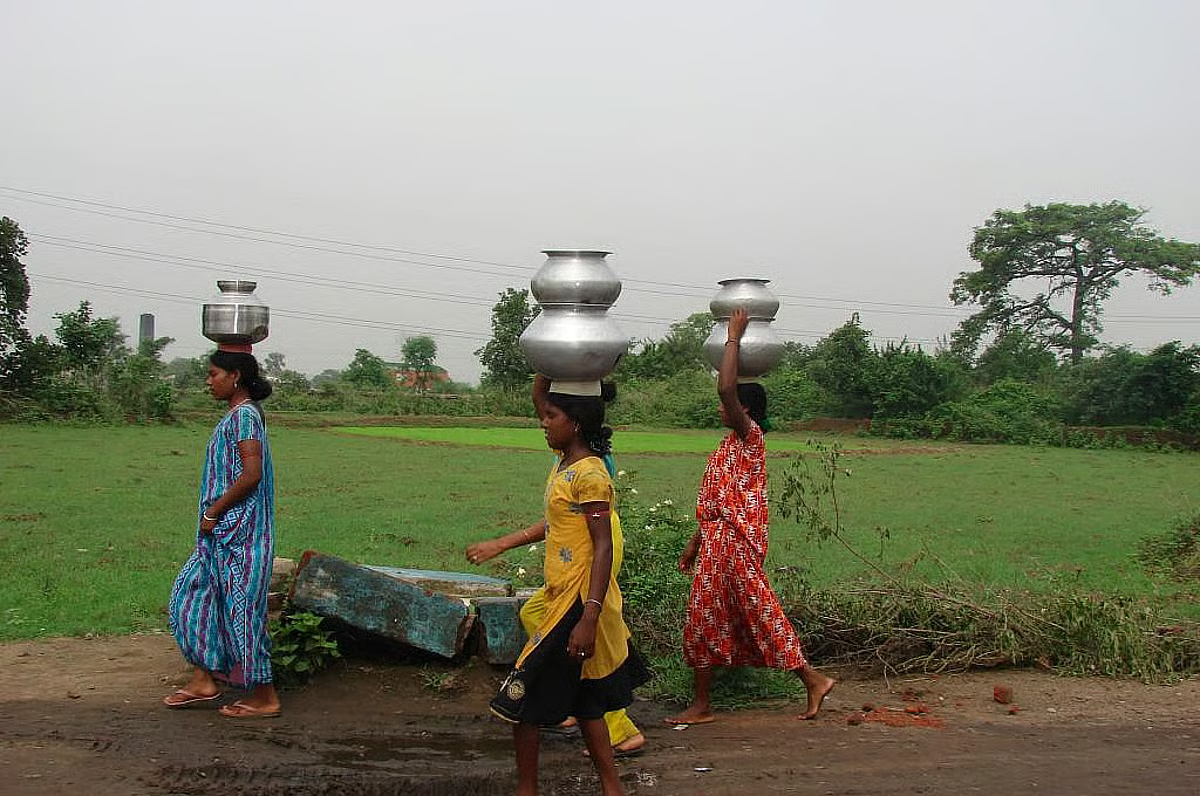
The most prominent feature of Budget 2026-27, presented in Parliament on February 1, 2026, is the Jal Jeevan Mission, which aims to provide tap water to every rural household.
The programme component — which accounts for the largest share of the mission — covers actual field work such as laying pipelines, developing water sources and providing household tap connections. It is here that the discrepancy in spending is most visible.
For 2025-26, the budget estimate for this component stood at Rs 66,770.47 crore, but the revised estimate reduced it to just Rs 16,944.44 crore. This indicates that nearly Rs 49,826 crore of planned expenditure remained unrealised during the year.
In the budget estimates for 2026-27, the same component has been increased again to Rs 67,363.50 crore. The fluctuation suggests that projects did not progress at the planned pace, and that unfinished physical work and financial liabilities from the previous year have been carried forward. Had implementation stayed on track, such a large cut in the revised estimate would not have been required.
Such underspending typically occurs when proposals from states are delayed, tendering processes stall, or ground-level work progresses more slowly than anticipated.
The budget estimates for 2026-27 therefore imply the need for a major push to revive momentum under the Jal Jeevan Mission. Even within the mission’s overall allocation, the largest shares continue to be earmarked for programme components linked to physical execution, including pipeline laying, source development and household connections.