The annual budget speech for 2026-2027 delivered by Union Finance Minister, Nirmala Sitharaman, on February 1, 2026, did not have a single direct mention of climate change, its mitigation or adaptation. Even then, many initiatives, allocations and tax relaxations were announced for renewable energy, critical minerals and other allied sectors which can be tagged as measures towards mitigation or the reduction of greenhouse gas emissions.
“With this budget, India has decisively shifted focus to the ‘nuts and bolts’ of the energy transition—securing battery ecosystems and critical minerals to boost green manufacturing. But while we are building a strong green industry, we are leaving the human strategy fragile,” said Harjeet Singh, climate activist and founding director of Satat Sampada Climate Foundation.
There were many ‘general development’ measures that have been announced in the budget speech but no specific measures to reduce the risks from the impacts of global warming and consequent climate change. For instance, specific measures to protect communities’ lives and livelihoods and infrastructure from extreme weather events such as heat waves, long-term drought, wildfires, riverine floods, flash floods, landslides or Glacial Lake Outburst Floods (GLOFs) in the Himalayan regions.
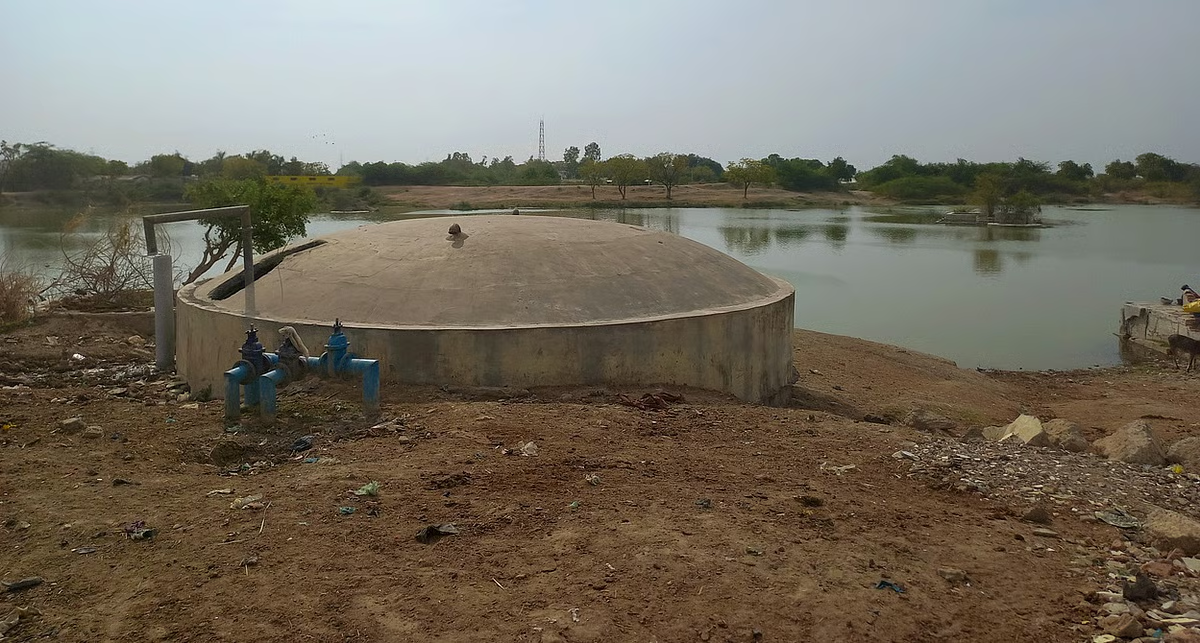
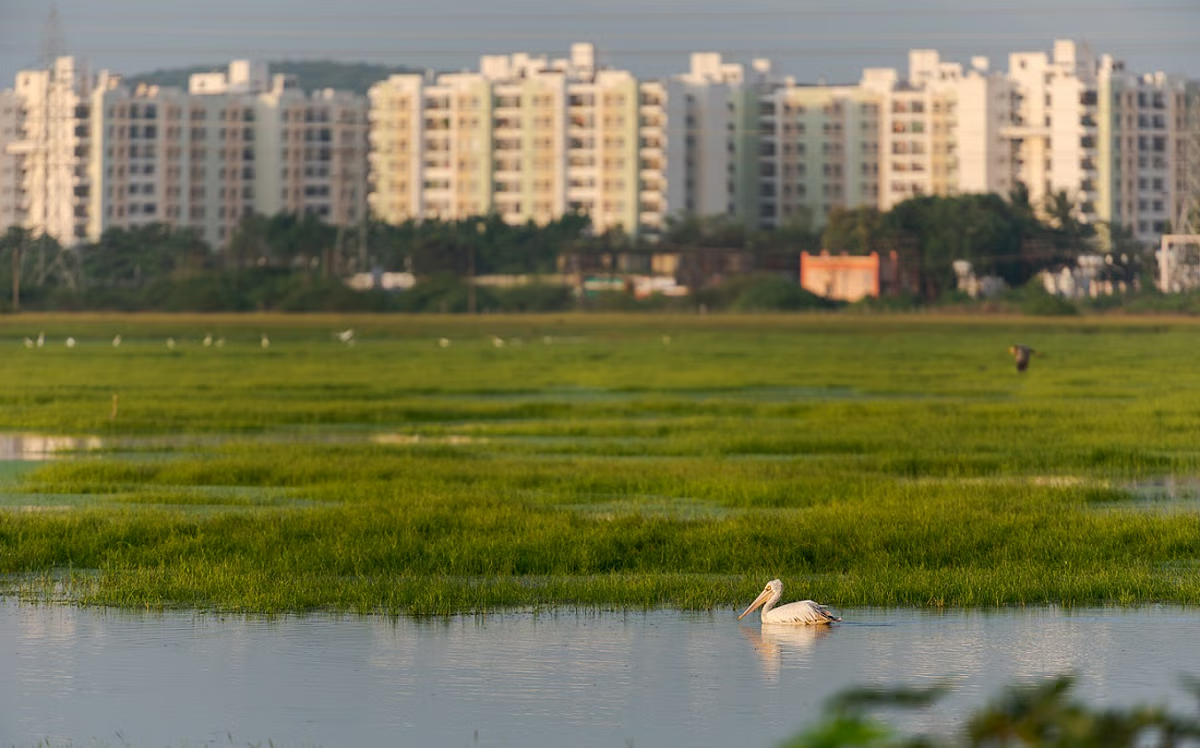
One announcement made by Sitharaman that can be considered as an adaptation measure is the announcement about integrated development of 500 water reservoirs and Amrit Sarovars. This would be done for fisheries. The Amrit Sarovar project was started back in April 2022 to develop and rejuvenate 75 water bodies in each of the districts of the country.
The total number to be rejuvenated was 50,000 and the target achieved in the first phase that ended in August 2023 was 68,827. Further, the government wants to “strengthen the fisheries value chain in coastal areas and enable market linkages involving start-ups and women-led groups together with Fish Farmers Producer Organisations.”
There is a recent initiative taken for the integrated management of reservoirs mainly for flood control taken by the Government of Tamil Nadu. The Integrated Reservoir Management Centre (IRMC) for Chennai was inaugurated on January 6, 2026, as reported by Business Standard. The IRMC will use data driven technological tools to manage the water in the interlinked reservoirs of Poondi, Chembarabakkam and Red Hills.
This is a major change from the usual manual management of reservoirs which is an impediment in flood control in cities like Chennai. “The focus on integrated reservoirs is a welcome step for adaptation; however, we urgently need a comprehensive safety net to build true resilience against rising climatic disasters,” said Singh.
“‘General development’ cannot substitute for specific protection against climate shocks. Artificial intelligence can help identify risks, but our farmers and coastal communities need a financial shield against the disasters erasing their livelihoods,” he added.