
- A new study shows that human disturbance and water stress reduce evergreen tree richness but favour deciduous species, in low-elevation northern Western Ghats forests.
- Restoration efforts guided by the study focus on reintroducing slow-regenerating evergreen species rich in Western Ghats endemics.
- Experts caution that dry-season length, slope, and infrastructure pressures limit broader generalisation of the findings.
It is a well-documented fact that climate change, combined with multiple anthropogenic pressures, is drastically altering forest landscapes. A new study from the northern Western Ghats highlights how climatic factors such as water stress, along with chronic anthropogenic disturbances like biomass extraction, influence tropical forest community structure, richness, and composition. The study finds that overall tree richness — and evergreen tree richness in particular — is lower in disturbed areas, while deciduous richness rises sharply under conditions of high disturbance and water stress.
As a part of an on-ground restoration programme in Maharashtra, the researchers conducted baseline surveys of birds, amphibians, and reptiles in the northern Western Ghats to understand where the restoration should take place: “We wanted sites that were highly threatened, poorly protected, yet still retained significant biodiversity,” explains Rohit Naniwadekar, one of the authors of the study.
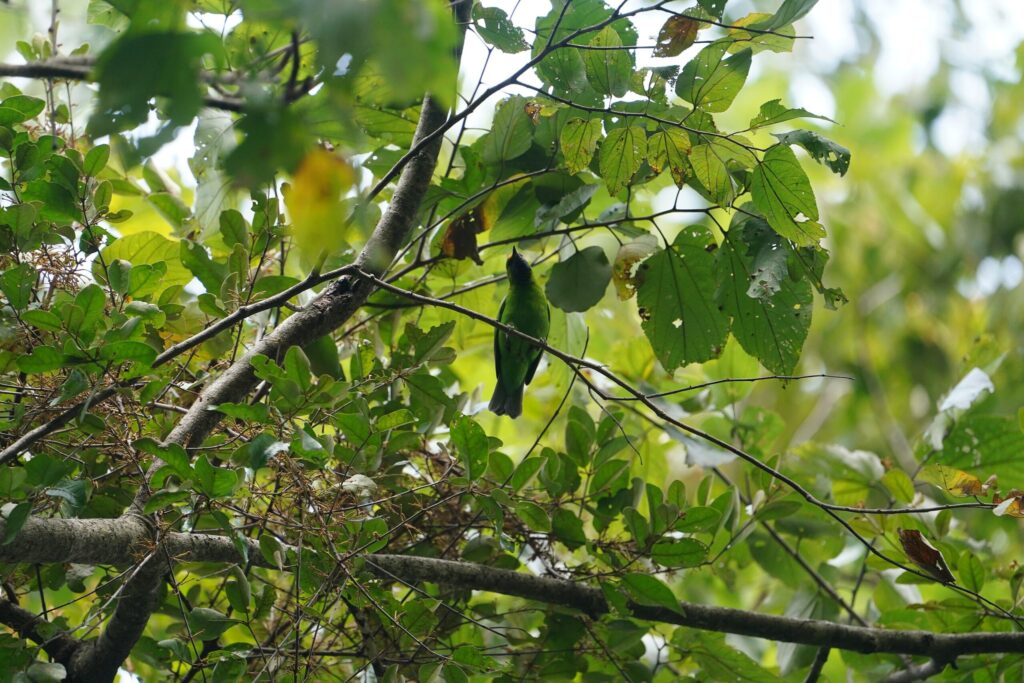
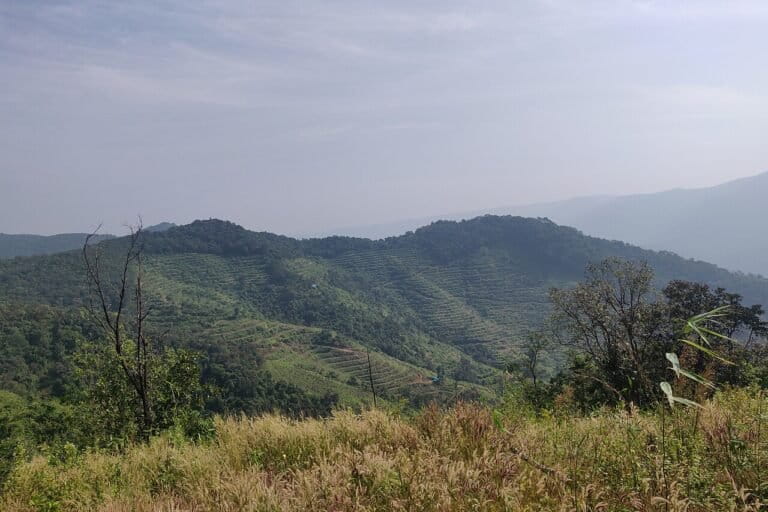
The surveys revealed that low-elevation forests in the northern Western Ghats harbour unique biodiversity, with higher diversity of birds and reptiles than higher elevations. At the same time, only a fraction of these forests fall within the protected area network. “Low-elevation forests are largely not government-owned. Much of the land is privately or community owned and is rapidly being converted to cashew, rubber, and mango plantations,” Naniwadekar says.
Whatever forest remains is often harvested periodically for fuelwood. Forests are cut, allowed to regenerate for about a decade, and then harvested again. “This cycle allowed us to identify low-elevation forests as both highly biodiverse and highly threatened — making them priority sites for restoration,” he adds.
The restoration dilemma
This recognition, however, revealed another challenge: the researchers were uncertain about what kind of forest should be restored. With no undisturbed benchmark forests remaining in the region, they decided to undertake a detailed ecological study. The team sampled 120 tree plots across a 15,000 km² landscape in Maharashtra’s northern Western Ghats, covering a range of elevations and disturbance histories — historically disturbed sites, chronically disturbed sites, and relatively undisturbed areas such as sacred groves.
“This approach led to two key findings,” says Naniwadekar. “First, disturbance is driving a shift from evergreen to deciduous forests. Repeated cutting filters out evergreen species, leaving mostly deciduous trees behind. Second, even in the driest parts of the landscape, evergreen species persist — often making up nearly 50% of the tree community.”
An examination of climate water deficit — the balance between rainfall and water loss through transpiration — added further insight. Wetter sites were found to be almost entirely evergreen, while even the driest sites retained a substantial evergreen component. Together, these patterns showed that both climate and disturbance play a critical role in shaping forest composition.
These findings guided the researchers to frame their restoration strategy around bringing back evergreen species that have been selectively lost due to repeated disturbance. “Deciduous species tend to regenerate on their own once disturbance reduces, but evergreen species do not. Given that the Western Ghats have around 650 evergreen tree species — about 65% of which are endemic — focusing restoration on evergreen species also contributes directly to plant conservation,” Naniwadekar points out.
The study also underscores how chronic anthropogenic disturbances, such as biomass extraction by local communities, can rapidly alter forest composition, shifting systems from evergreen- to deciduous-dominated states.
Palynologist and palaeoecologist Anupama Krishnamurthy of the French Institute of Pondicherry, however, raises concerns about how “anthropogenic pressure” is framed in the study. She notes that the paper largely refers to biomass extraction through fuelwood collection and tree felling as the primary human impacts. By using broad terms such as “Anthropocene” and “anthropogenic disturbance” without explicitly discussing other drivers, she argues, the study overlooks contemporary realities.
Auroville-based ecologist Nina Sengupta who has experience in restoration concurs, “Today, some of the most significant pressures on Western Ghats forests come from tourism infrastructure, resorts, roads, real estate development, and plantation expansion.” “Forests in India have almost always had people in them. What has changed is the nature and intensity of the impact. Focusing only on extraction risks missing this distinction.”
There are multiple challenges and pressures, agrees Naniwadekar. “This paper particularly looks at repeated disturbances in the area we studied, which turned out to be largely land conversion into cashew plantations,” he says. Another study by the team has looked at various drivers including infrastructure expansion and developmental activities.

What deciduousness signals
While Krishnamurthy and Sengupta find the paper methodologically sound, with robust sampling and current statistical approaches, Krishnamurthy feels it simplifies what drives deciduousness in the Western Ghats. In particular, she points to two ecological factors that receive insufficient attention: the length of the dry season and the role of slope and aspect in shaping species composition.
“In the far south, the dry season can be less than two months, whereas in the northern Western Ghats it can extend to four to five months or more. This alone naturally favours a higher proportion of deciduous species in the north,” she explains. “When we compare forests across regions, we must account for this climatic baseline. Increased deciduousness is not always a signal of degradation; in some contexts, it is a natural outcome of longer dry periods.” According to her, while the findings make sense within the study landscape — where dry-season length is broadly comparable across sites — they cannot be generalised across the entire Western Ghats.
She also emphasises that slope and aspect play a major role in determining species composition. Two sites at the same elevation and receiving similar rainfall can support very different plant communities depending on slope orientation, wind exposure, soil depth, and drainage. “From the paper, it is not very clear how slope and topographic variation were incorporated. They focus on low-elevation forests, but within that category, the heterogeneity is large. This makes it difficult to fully interpret changes in species composition,” she says.
Naniwadekar says that every study site has a different story to tell in terms of deciduousness. Despite the forest landscape in Maharashtra being largely more deciduous than the southern parts of Western Ghats, “90% trees were found to be evergreen which was surprising,” according to him. Seasonality doesn’t vary drastically in the 15,000 km² landscape they studied. “We are in the process of collecting data, with this study focusing only on the plots we looked at,” he shares.
The study raises another important question: can climate change itself convert evergreen forests into deciduous ones? “Climate change is complex,” Naniwadekar says. “Some models suggest rainfall may decrease in the central Western Ghats but increase in the north, though rainfall is also expected to become more erratic. If rainfall were to drop significantly, evergreen forests could transition towards deciduous systems.”
He cautions, however, that model uncertainty remains high, making it premature to draw firm conclusions about future forest trajectories.
Banner image: The surveys revealed that low-elevation forests in the northern Western Ghats harbour unique biodiversity, with higher diversity of birds and reptiles than higher elevations. Image by Irvin Calicut via Wikimedia Commons (CC BY-SA 4.0).

