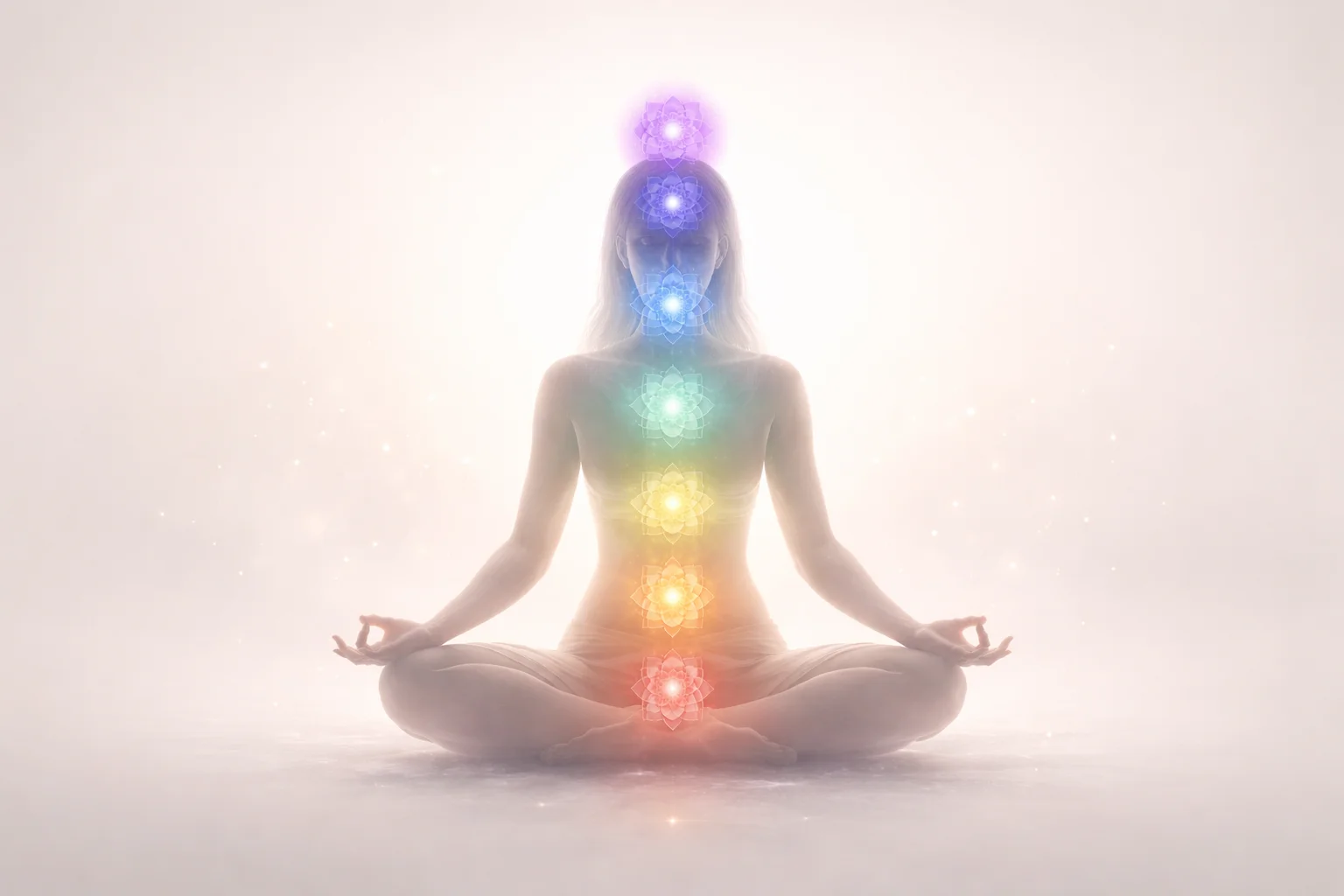
In traditional yogic science, the human being is not only physical but also vibrational. Thoughts, emotions, breath, and awareness all move through subtle pathways known as nadis, and where these pathways intersect, energy concentrates into spinning fields called chakras.
The word “chakra” (Sanskrit: चक्र) means wheel. These wheels of consciousness regulate physical health, mental patterns, and spiritual perception. In Nada Yoga, the yoga of sound, chakras respond directly to vibration, especially mantra and resonance.
Understanding the chakras is essential for:
- Meditation practitioners
- Yoga teachers & TTC students
- Sound healers & therapists
- Anyone seeking emotional balance & self-awareness
This guide explores each chakra in depth: location, element, color, bija mantra, deity, psychology, imbalance patterns, and practices.
What Are Chakras in Yogic Science?
Chakras are psycho-energetic centers located along the Sushumna Nadi (central channel) running through the spine. They bridge:
Body ↔ Mind ↔ Emotion ↔ Consciousness
Chakras are not physical organs but centers of awareness. They affect how we experience life, from basic instincts and emotions to intuition and higher understanding, influencing both mind and body. They do not work separately but as one connected system of consciousness, which is why understanding the chakra system and energy body in yoga gives a clearer foundation before exploring each center individually.
Each chakra represents a stage of human evolution, from survival to transcendence.
| Chakra | Theme | Evolution Level |
|---|---|---|
| Root | Survival | Physical existence |
| Sacral | Emotion | Relationship & pleasure |
| Solar Plexus | Power | Identity & will |
| Heart | Love | Compassion & connection |
| Throat | Expression | Truth & communication |
| Third Eye | Perception | Awareness & intuition |
| Crown | Unity | Pure consciousness |
In Nada Yoga, every chakra has a specific vibration (bija mantra) that harmonizes it.
1. Muladhara Chakra (Root Chakra)
Location
Base of spine/perineum
Element
Earth (Prithvi)
Color
Deep Red
Bija Mantra
LAM
Presiding Deity
Lord Ganesha / Brahma
Psychological Themes
- Safety
- Stability
- Belonging
- Basic trust
- Survival instincts
This chakra governs the nervous system’s sense of grounding. When balanced, a person feels stable and present. When disturbed, fear dominates perception.
Signs of Imbalance
Deficient
- Anxiety
- Disconnection from the body
- Lack of direction
- Chronic worry
Excessive
- Rigidity
- Over-attachment to money/security
- Resistance to change
Nada Yoga Practice
Chant LAM slowly in a deep tone.
Let the vibration resonate in the pelvic floor.
Helpful Practices
- Walking barefoot on earth
- Slow breathing
- Long humming sounds
- Deep grounding meditation
2. Svadhisthana Chakra (Sacral Chakra)
Location
Below the navel/lower abdomen
Element
Water (Apas)
Color
Orange
Bija Mantra
VAM
Presiding Deity
Vishnu / Rakini Shakti
Psychological Themes
- Emotion
- Creativity
- Pleasure
- Relationships
- Sensuality
This chakra governs emotional flow. It determines whether we experience life as rigid control or fluid expression.
Signs of Imbalance
Deficient
- Emotional numbness
- Creative block
- Fear of intimacy
Excessive
- Emotional dependency
- Addictive tendencies
- Mood instability
Nada Yoga Practice
Chant VAM with a fluid, wave-like tone.
Feel vibration moving in the lower belly.
Helpful Practices
- Hip-opening asanas
- Gentle swaying meditation
- Listening to flowing rhythmic sounds
3. Manipura Chakra (Solar Plexus Chakra)
Location
Navel / upper abdomen
Element
Fire (Agni)
Color
Yellow
Bija Mantra
RAM
Presiding Deity
Rudra / Lakini Shakti
Psychological Themes
- Confidence
- Personal power
- Decision-making
- Discipline
- Self-worth
This chakra converts experience into identity. It forms the sense of “I.”
Signs of Imbalance
Deficient
- Low self-esteem
- Procrastination
- Lack of willpower
Excessive
- Anger
- Control issues
- Dominance
Nada Yoga Practice
Chant RAM sharply and clearly.
Feel warmth spreading from the navel center.
Helpful Practices
- Kapalbhati breathing
- Sun exposure
- Rhythmic chanting
4. Anahata Chakra (Heart Chakra)
Location
Center of chest
Element
Air (Vayu)
Color
Green
Bija Mantra
YAM
Presiding Deity
Ishvara / Kakini Shakti
Psychological Themes
- Love
- Compassion
- Forgiveness
- Emotional balance
Anahata means unstruck sound, the inner sound heard in deep meditation.
This chakra is the bridge between physical and spiritual consciousness.
Signs of Imbalance
Deficient
- Isolation
- Difficulty trusting
- Emotional withdrawal
Excessive
- Over-giving
- Lack of boundaries
- Emotional dependence
Nada Yoga Practice
Chant YAM softly with openness in chest resonance.
Helpful Practices
- Loving-kindness meditation
- Gentle humming
- Gratitude contemplation
5. Vishuddha Chakra (Throat Chakra)
Location
Throat
Element
Ether/Space (Akasha)
Color
Blue
Bija Mantra
HAM
Presiding Deity
Sadashiva/Shakini Shakti
Psychological Themes
- Truth
- Communication
- Authentic expression
- Listening
This chakra purifies experience into expression.
In Nada Yoga, it is the gateway where sound becomes consciousness.
Signs of Imbalance
Deficient
- Fear of speaking
- Suppressed feelings
- Weak voice
Excessive
- Talking excessively
- Dishonesty
- Verbal aggression
Nada Yoga Practice
Chant HAM with open throat resonance and long exhalation.
Helpful Practices
- Mantra chanting
- Singing
- Silent listening meditation
6. Ajna Chakra (Third Eye Chakra)
Location
Between eyebrows
Element
Mind / Light
Color
Indigo
Bija Mantra
OM
Presiding Deity
Ardhanarishvara / Hakini Shakti
Psychological Themes
- Intuition
- Insight
- Awareness
- Perception
This chakra governs inner seeing, the ability to observe without distortion.
Signs of Imbalance
Deficient
- Confusion
- Poor judgment
- Over-reliance on logic
Excessive
- Over-analysis
- Hallucination
- Disconnection from reality
Nada Yoga Practice
Chant OM, focusing vibration in the skull.
Helpful Practices
- Trataka (candle gazing)
- Silent meditation
- Internal sound listening
7. Sahasrara Chakra (Crown Chakra)
Location
Top of head
Element
Pure consciousness
Color
Violet/White
Mantra
Silence (or subtle OM)
Presiding Deity
Shiva / Pure Awareness
Psychological Themes
- Unity
- Transcendence
- Spiritual realization
- Liberation
This is not a psychological center but a state of consciousness beyond individuality.
Signs of Imbalance
Deficient
- Meaninglessness
- Existential anxiety
Excessive
- Spiritual escapism
- Dissociation from reality
Nada Yoga Practice
Listen to the inner sound (Nada) rather than producing sound.
Helpful Practices
- Deep meditation
- Awareness of awareness
- Witness consciousness
How Sound Balances the Chakras
In Nada Yoga, chakras are not “opened”; they are tuned.
Each bija mantra produces a frequency pattern that harmonizes the nervous system:
| Chakra | Mantra | Effect |
|---|---|---|
| Root | LAM | Grounding |
| Sacral | VAM | Emotional flow |
| Solar | RAM | Activation |
| Heart | YAM | Expansion |
| Throat | HAM | Expression |
| Third Eye | OM | Awareness |
| Crown | Silence | Unity |
Sound works because the body itself is vibration.
You are not adding energy; you are removing distortion.
Integrating Chakra Work into Daily Practice
A simple daily sequence:
- Sit comfortably
- Breathe slowly
- Chant each mantra 7 times
- Observe sensations
- End in silence
Total time: 10 minutes
Consistency matters more than intensity.
Final Thoughts
Chakras are not mystical objects; they are maps of consciousness.
Working with them is not about achieving something new but about restoring natural alignment between body, mind, and awareness. Through sound, breath, and attention, perception gradually becomes clear.
In Nada Yoga, healing happens not by forcing change, but by listening deeply enough that imbalance dissolves on its own.
Explore More
If you want to experience chakra work through authentic mantra and sound meditation, explore guided practices and teacher training programs at Nada Yoga School.