
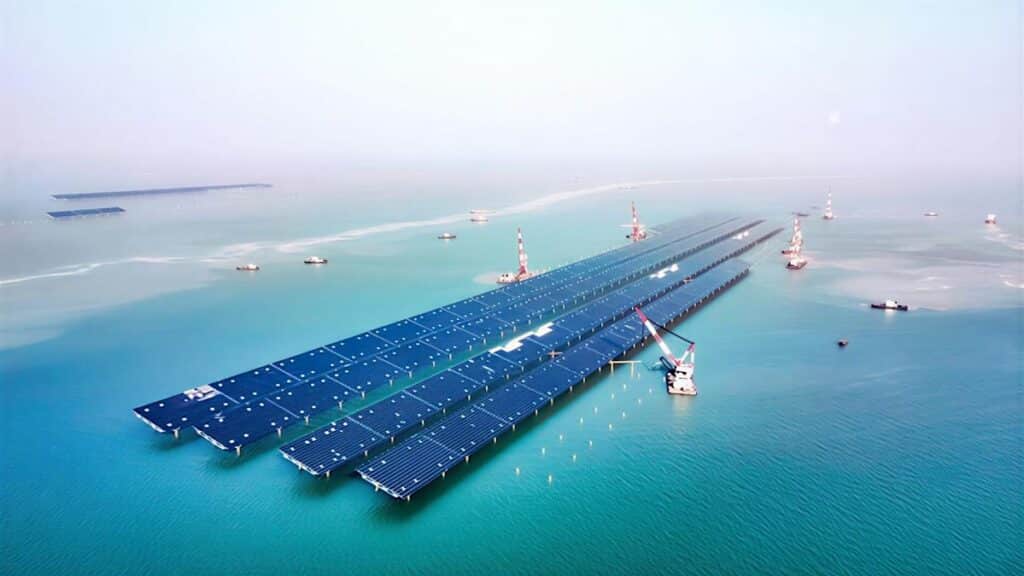
Water scarcity threatens billions globally, yet China’s floating solar installations tackle two crises at once. These massive photovoltaic arrays generate clean energy while shading reservoirs to prevent evaporation—like getting a Tesla that also waters your garden.
Massive Installations Prove the Concept Works
China operates the world’s two largest floating solar projects, demonstrating commercial viability at unprecedented scale.
The 320-megawatt Dezhou Dingzhuang facility and 150-megawatt Three Gorges project in Huainan represent floatovoltaics hitting the mainstream. These aren’t experimental pilot programs—they’re industrial-scale power plants floating on reservoirs.
The technology, mounting solar panels on buoyant platforms, transforms underutilized water surfaces into energy generators without consuming valuable farmland. You’re looking at infrastructure that solves land scarcity while generating clean power.
Water Conservation Delivers Unexpected Efficiency Gains
Cooler panels produce more electricity while reducing agricultural water stress.
“Floating solar panels provide shade, reducing evaporation from water bodies. This is particularly beneficial in drought-prone areas,” according to industry analysis. The setup delivers a double win: water stays in reservoirs for farming and drinking, while the cooling effect boosts panel efficiency by up to 10%.
Your rooftop solar bakes in summer heat, but these panels stay cooler thanks to water’s natural temperature regulation. The result is more electricity from the same amount of sunlight.
Global Potential Reaches Staggering Numbers
Covering just 1% of artificial water bodies could power 400 million homes worldwide.
Floating solar capacity already exceeds 3 gigawatts globally, yet that barely scratches the surface. The math gets wild quickly—utilizing even a fraction of existing reservoirs, lakes, and artificial water bodies could generate 400 gigawatts of clean power.
However, ecological concerns remain legitimate. Altered water temperatures and habitat disruption worry environmental scientists, while material degradation could release pollutants into water supplies. Balancing innovation with environmental protection requires careful site selection and monitoring.
Multi-Purpose Infrastructure Points to Future Solutions
The technology signals a shift toward solving multiple environmental challenges simultaneously.
Smart resource management means making every square meter work harder. These floating arrays also reduce algal blooms by limiting sunlight penetration, creating cleaner water while generating electricity.
You’re witnessing infrastructure evolution—single-purpose facilities giving way to integrated systems that address energy, water, and land use constraints together. China’s leadership in floatovoltaics demonstrates how renewable energy can solve problems beyond just carbon emissions.
From the coolest cars to the must-have gadgets, GadgetReview’s daily newsletter keeps you in the know. Subscribe – it’s fun, fast, and free.