
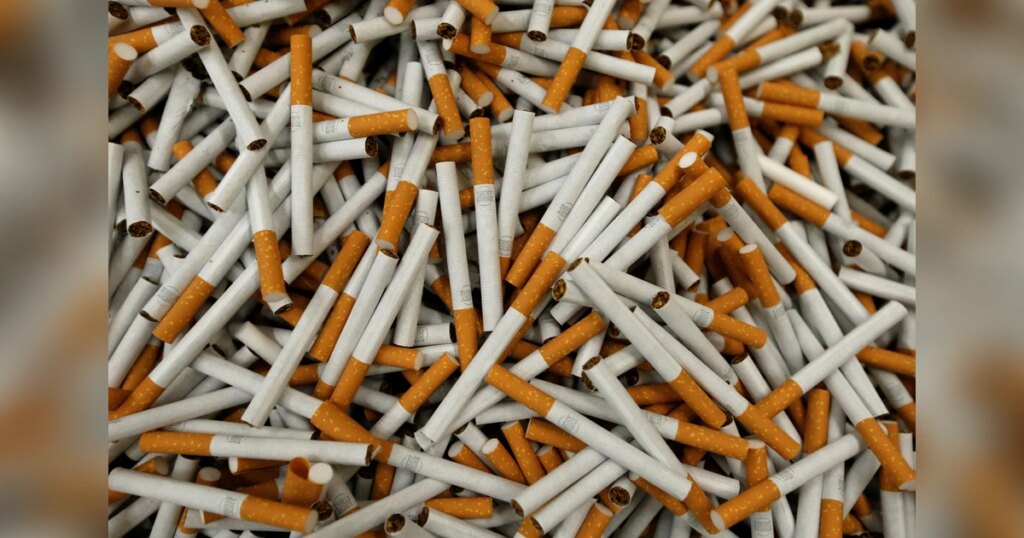
Cigarette tax: From February 1, 2026, cigarette prices will see a significant increase following the government’s reintroduction of a specific central excise duty on cigarettes, over and above the goods and services tax (GST). This marks a major shift in the taxation of tobacco products, linking excise directly to the length and type of cigarette.
Excise duty by length and type
Under the new system, excise duty will be levied per 1,000 sticks, with rates varying by whether a cigarette is filtered or unfiltered and by its size:
-
Unfiltered cigarettes below 65 mm: Rs 2,050 per 1,000 sticks (Rs 2.05 per stick) -
Filtered cigarettes below 65 mm: Rs 2,100 per 1,000 sticks (Rs 2.10 per stick) -
Filtered cigarettes 65-70 mm: Rs 3,600–4,000 per 1,000 sticks (Rs 3.60–4 per stick) -
Filtered cigarettes 70–75 mm: Rs 5,400 per 1,000 sticks (Rs 5.40 per stick) -
Premium or longer cigarettes above 75 mm: Up to Rs 8,500 per 1,000 sticks (Rs 8.50+ per stick)
Cigarette tax: impact on smokers and prices
The excise increase means that the length of a cigarette will now be a key factor in price hikes. Short, mass-market products will face smaller increases, while long and premium variants are likely to bear the full brunt of the tax rise. Retail prices will now depend not only on brand but also on the size of the stick.
Tax burden and public health
The new excise will be in addition to GST, which ranges between 18 per cent and 40 per cent depending on the product.
Although the government has withdrawn the GST compensation cess on tobacco, the combined tax burden still works out to around 53 per cent of retail prices. This remains below the World Health Organization’s recommended benchmark of 75 per cent for effective tobacco control.
The Finance Ministry has stated that the revised tax structure aims to curb evasion, boost revenue, and align India’s tobacco taxation with global public-health norms.