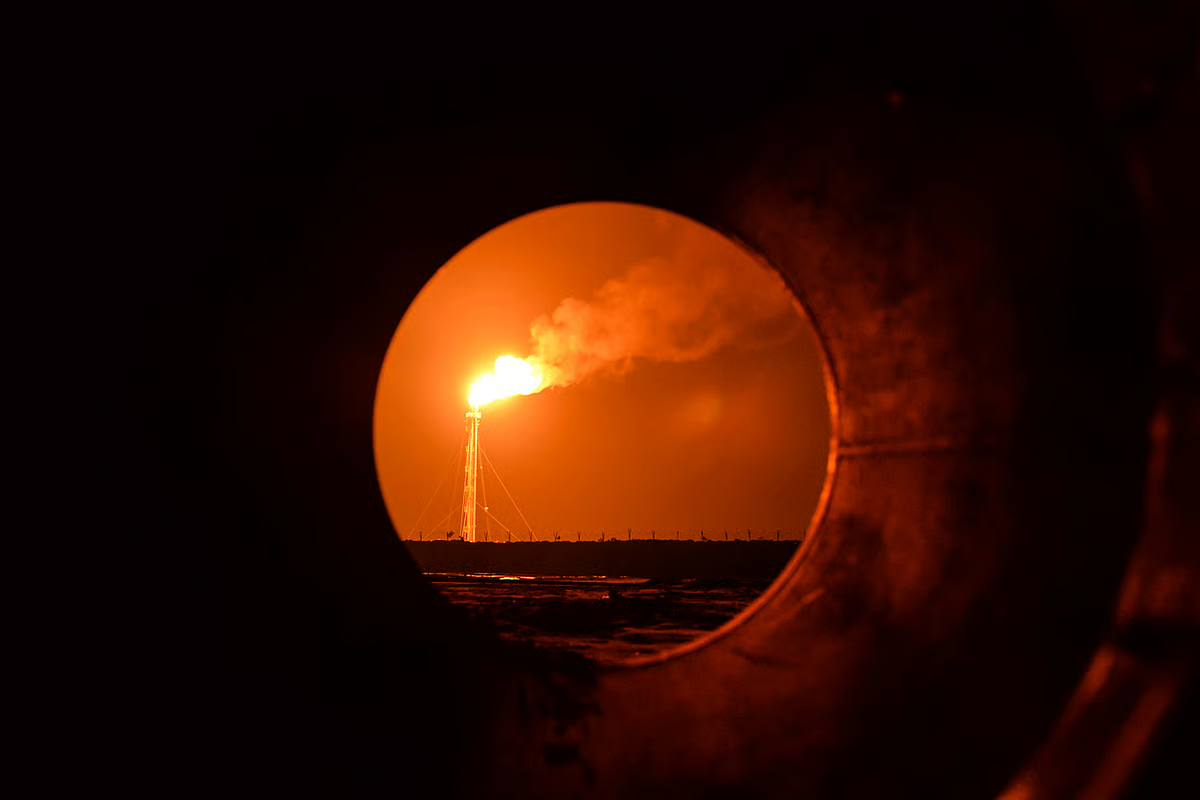
The authors warned that these figures capture only the earliest phase of the conflict. Emissions are expected to rise sharply as military operations continue, driven particularly by uncontrolled fires at oil infrastructure, the replenishment of weapons stocks and the deployment of additional naval forces. The closure of the Strait of Hormuz and damage to refineries and tankers could further intensify both the economic and environmental toll.
“Every refinery fire and tanker strike is a reminder that fossil‑fuelled geopolitics is incompatible with a livable planet,” said Patrick Bigger, study co-author and CCI research director told The Guardian. “This war shows, yet again, that the fastest way to supercharge the climate crisis is to let fossil fuel interests dictate foreign policy.”
Long-term emissions may far exceed those generated during active fighting. Reconstruction of damaged homes, roads, energy systems and public infrastructure typically produces significantly higher carbon output than combat itself. Previous conflicts, including those in Gaza and Ukraine, have shown that rebuilding phases can generate emissions comparable to, or far greater than, wartime activity.
Climate cost of modern warfare
The climate cost of armed conflict has been documented in earlier wars as well. In 2025, the researchers analysed the Gaza conflict and found that in 15 months, emissions from direct military activities alone exceeded the annual greenhouse gas output of 36 countries and territories. Researchers estimated around 1.9 million tonnes of CO2e from active combat, encompassing aerial bombardment, artillery use, vehicle movement and military logistics.
When emissions from pre-war fortifications and anticipated reconstruction were included, the total footprint rose to over 32.2 million tonnes of CO₂e and surpassed the yearly emissions of more than 100 countries.
Researchers divided the carbon footprint into three phases: pre-conflict construction, active warfare and post-war rebuilding. Pre-war infrastructure such as tunnel networks and security barriers alone generated more than 557,000 tonnes of CO2e, largely owing to the heavy use of steel and concrete.