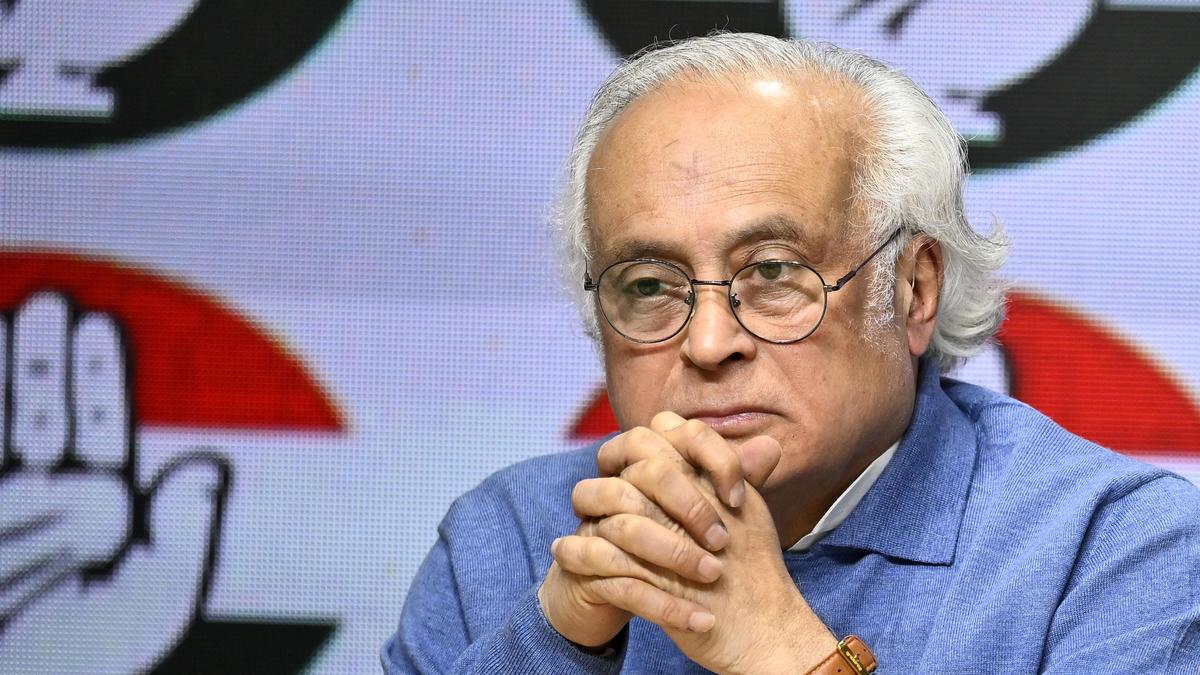
Congress leader Jairam Ramesh says States would be watching the Budget closely for signals on how the Centre intends to address issues like the approach to fiscal devolution. File
| Photo Credit: The Hindu
Ahead of the Union Budget for 2026-27 and the forthcoming Parliament session, the Congress on Monday (January 12, 2026) flagged concerns over fiscal federalism, slowing investment, and rising inequality, warning that the economy faces structural challenges which cannot be addressed through what it called “statistical illusions”.
Congress general secretary Jairam Ramesh, in a post on X, also said the forthcoming Budget would inevitably reflect the recommendations of the 16th Finance Commission, which submitted its report on November 17, 2025.

Sharing of tax revenues
The report, covering the period from 2026-27 to 2031-32, deals with the sharing of tax revenues between the Centre and the States and their subsequent distribution among the States.

Mr. Ramesh said States were already “deeply concerned” about the Centre’s approach to fiscal devolution, particularly in the context of the 60:40 cost-sharing formula under laws that, he alleged, had “bulldozed away” the Mahatma Gandhi National Rural Employment Guarantee Act (MGNREGA).
The Congress communication chief said that States would be watching the Budget closely for signals on how the Centre intended to address these concerns.

Three areas of concern
Highlighting broader economic challenges, Mr. Ramesh identified three areas of particular concern. Private corporate investment, he said, remained sluggish despite corporate tax cuts and healthy profit margins.
He also pointed to a sharp decline in household savings, which, he said, was limiting the economy’s investment capacity, even as wealth and consumption inequalities continued to widen.
“It remains to be seen whether the forthcoming Budget steps out of its comfort zone,” Mr. Ramesh said, adding that acknowledging these realities and taking corrective measures was essential for sustaining higher growth rates.
For a durable GDP growth
The Congress leader argued that durable GDP growth, especially one capable of generating large-scale employment, would not be possible unless these underlying issues were addressed decisively in the Budget.
The Budget session will begin on January 28 and end on April 02. After the budget is presented on February 1, Parliament will go into recess on February 13 and will reassemble on March 9.
Published – January 12, 2026 05:58 pm IST