However, unplanned development, heavy livestock grazing and poaching pose mounting threats. The Hirpora population is under intense pressure from grazing and from a highway built some 15 years ago. The Poonch populations, meanwhile, have suffered from heavy poaching in the past, exacerbated by gaps in wildlife staffing and infrastructure.
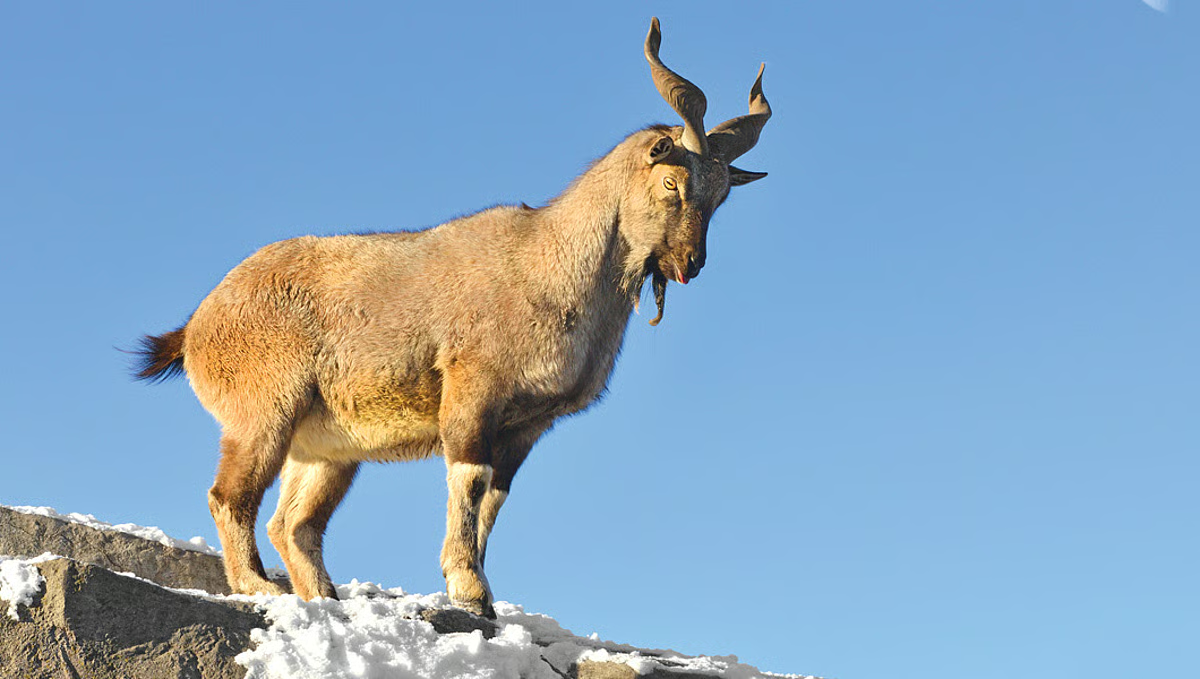
A study published in the Journal for Nature Conservation in August 2025 noted that “Markhor Capra falconeri is a range-restricted mountain ungulate and livestock has been identified as one of its major threats across the main distribution range.” Detailed research remains scarce, but markhor and domestic goats appear to have a high dietary overlap.
Their breeding season, in May and June, coincides with the annual influx of livestock, when temperatures rise and vegetation emerges after the winter melt. Between May and September, Kazinag alone receives some 15,000 sheep and goats, accompanied by herders and watchdogs during the only growing period of the year. Such numbers place heavy pressure on habitat and forage; the near-constant presence of people and dogs further disturbs these shy mountain goats.
Even so, conservation efforts are gathering pace. The state’s wildlife protection department, together with WTI, has in recent years secured meaningful gains: The designation of a national park in the Kazinag range dedicated to the markhor, the extension of the Hirpora wildlife sanctuary and the formal notifica-tion of the Tattakuti wildlife sanctuary for the species.
WTI continues to monitor key sites and work with local communities and herders to reduce threats. Its surveys indicate that the population has declined further in recent years, with only 200 to 300 animals remaining, and the Hirpora population on the edge of local extinction. Conservation efforts need to be strengthened substantially to secure at least one more viable population in Pir Panjal, alongside the Kazinag stronghold, if the species is to survive in the long term.