For more than five months, 15,000 boxes of children’s cold medicine and other vital medicines meant for kids in the Gaza Strip have been sitting in a warehouse, awaiting approval from Israeli authorities that never seems to come.
To Israeli officials, the cold medicine I am trying to deliver is a potential weapon. Israeli officials fear that Hamas will steal the bottles and transform the small amounts of glycerin in the medicine to make explosives, despite there being no evidence that armed groups in Gaza have done or could do this. Israel has refused to clarify what percentage of glycerin would be allowed, so we can’t even source an alternative that would be assured of clearance. The medicine remains in a warehouse while children in Gaza continue to die because they can’t get basic treatments.
Since the ceasefire was announced last October, Israel has embarked on a quieter war on the people of Gaza, with continued airstrikes, land grabs and destruction of entire neighborhoods, and by making our work as humanitarians near impossible. We continue to witness a humanitarian catastrophe while aid sits in warehouses just outside Gaza. The international community needs to hold Israel to commitments made in the ceasefire agreement before another child dies needlessly.
More than 2 million people are currently squeezed into an area within Gaza that is roughly one-third the size of Los Angeles. Since October, Israel demolished at least 2,500 buildings in the area it occupies, sometimes entire neighborhoods. Israel is estimated to have destroyed or demolished more than 80% of the buildings in the Gaza Strip by last fall, creating wastelands of rubble. Displaced families now live in vast tent settlements, where they face malnutrition, hunger and the spread of disease. When fires burn these temporary homes to the ground, the displaced Palestinians are often trapped.
Life for Palestinians in Gaza constricted even further last October when Israel agreed to the Trump-imposed ceasefire that left Israel in control of 53% of the enclave.
The prospect of Israel allowing Palestinians to return to their homes is fading. We see Israeli government officials encouraging activists to establish Jewish settlements on land inside Gaza that would be part of a future Palestinian state.
Israel has also refused to allow the 600 daily truck deliveries of humanitarian aid that it agreed during ceasefire negotiations would be able to enter the Gaza Strip. Israel claims that it is allowing about 450 trucks per day on average, but the U.N. says it is closer to 113 trucks per day. Before 2023, about 500 trucks entered Gaza daily, according to the U.N. On Saturday morning, in sync with the U.S.-Israeli attacks on Iran, Israel closed all Gaza crossings “until further notice.”
I have experienced firsthand the byzantine system Israel has established, which in effect prevents aid from reaching Palestinians. Time after time, my efforts to get basic lifesaving aid to the Gazan people have been thwarted by Israel’s ever-changing rules and regulations.
Partly because of Israel’s near total blockade of the strip — and partly because Israel suspended the licenses of 37 aid groups, including well-respected organizations such as CARE, Oxfam, and Doctors Without Borders — I have had a rare vantage point of Gaza as one of the few independent humanitarian aid workers directly involved in delivering food, medical supplies and tents into Gaza. All of those materials have at times faced scrutiny and been blocked.
Israel blocked efforts to get tents into Gaza because they are labeled dual-use items that could be used by militants to conceal weapons. Metal tent poles are considered suspect. Aid groups that send in green jackets have their shipments stalled because Israel also sees them as dual-use items that officials say could be used as military uniforms. These policies are arbitrary, overreaching and seemingly intentionally unclear, and the approvals process is too lengthy to be able to respond to the real-time needs of Palestinians.
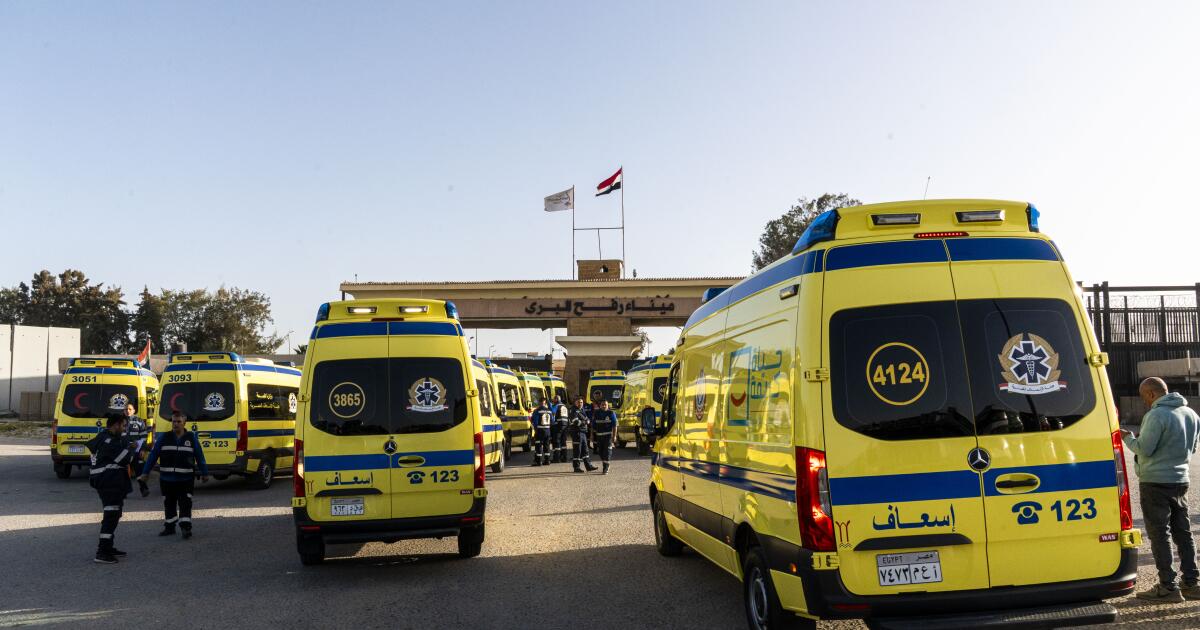
Another aspect of my work since October 2023 has been to personally evacuate critically injured people from Gaza. Israel has allowed only about 200 medical patients to leave Gaza since the southern border with Egypt reopened in early February. When patients are allowed out, Israel often blocks their caregivers — frequently mothers of sick and injured children — from going with them, usually for unspecified “security” objections. These policies split up families cruelly, unnecessarily and indefinitely. I speak to members of these separated families regularly. The devastation is immeasurable.
Israel’s chokehold on Gaza is happening at the same time that Israel is pushing to effectively annex more territory and displace more Palestinians in the West Bank. Israeli Prime Minister Benjamin Netanyahu and his government have been clear about their intentions to control the land from the Jordan River to the Mediterranean Sea.
Netanyahu has long opposed the creation of a Palestinian state. What will become of the 5.6 million Palestinians living in the West Bank and Gaza Strip? Netanyahu wants nothing more than for them to leave.
Israel’s devastating campaigns in Gaza may no longer be making major headlines or dominating people’s social media feeds, but the crimes against humanity continue. The residents of Gaza continue to need the outside world to come to their aid — no longer to negotiate a ceasefire but now to ensure aid can flow to civilians who are suffering and dying. Children’s cold medicine is not a weapon and should not be treated like one.
Amed Khan is the president of the Amed Khan Foundation, which provides humanitarian aid on the front lines of crises around the world.