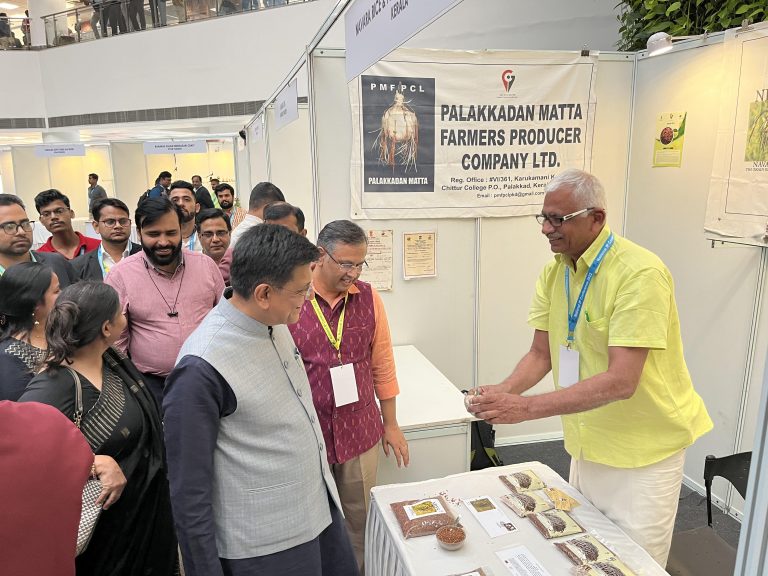
P. Narayanan Unny, the third-generation farm er who rescued a near-extinct Navara rice and built the Navara Eco Farm to revive, organically cultivate and conserve the Indigenous rice variety, died at his ancestral home in Chittur, Palakkad, on December 9, 2025. He was 67.
Unny is widely credited with not only bringing Kerala’s ancient medicinal rice back from the brink of extinction but also in leading efforts to secure its legal identity and market. Under him, the Navara Eco Farm in his hometown grew into a global reference for Navara rice’s conservation and organic cultivation.
In a report tracing Navara’s revival, Navara Rice: A Success Story, Unny recalled his early years of identifying and marketing the grain: “As rice cultivation in Kerala was a losing proposition for the farmers at that time, I made a plan to value-add and focus on cultivating Kerala’s specialty rice — the unique medicinal and health rice — Navara and the Indigenous varieties of Palakkadan Matta rice.”
While Palakkadan Matta remained popular, Navara had all but disappeared into the generic category of “red rice”. That gap in recognition, he wrote, marked the beginning of his “tireless efforts to revive the Indigenous variety and garner international recognition for it.”
Unny came from a lineage of rice specialists in Palakkad, and the 125-year-old family farm Karukamani Kalam, on the banks of river Shokanashini, had been nurtured across three generations. After his father’s passing in the mid-1990s, he took charge of the land and committed himself to conservation.
At the time, Navara cultivation had collapsed because of declining yields, loss of pure seed, and the widespread adoption of high-yielding hybrids. Unny responded with patient seed selection and purification and the multiplication and distribution of clean seed. He also organised farmers, created demonstration plots, and worked closely with research agencies. The Geographical Indication (GI) protection eventually granted to Navara, anchoring it legally to Palakkad, became a turning point in his efforts.
“It was a path breaking effort which almost made me bankrupt. There was no revenue earning from the farm for the first five years when I took up the Navara program. Some of my farmer friends advised me to stop this madness and return to normal farming,” he wrote. Yet he persisted, convinced of Navara’s medicinal value and cultural importance.
Over time, the Navara Eco Farm evolved into more than a cultivation site. It became an educational centre, hosting students, researchers, Ayurvedic practitioners and visiting farmers.
Reflecting on his mission, Unny wrote: “Navara was on the verge of extinction. Unless some real, sustained and focused effort is put in by someone, Navara was going to be a mere history rather than that in real life. Looking into the pros and cons of its not being a profitable venture but having utility in curing various ailments, I finally decided to revive its cultivation and popularisation.”
Banner image: Image courtesy of Navara Eco Farm.