
After finishing her household chores, Gita didi would take a quick bath and perform a brief pooja. Then she would settle into the angan, sharing tales of her childhood in Jamtara, where her father, and my grandfather, a doctor and government official, served his longest posting. In her telling, her friends-Chhobi, Toni, Fatik, Bappa-came vividly alive, as if they still lingered in the corners of memory.My 75-year-old Bua, my father’s eldest sister-more grandmother than aunt-lived with us as my constant companion. Widowed at the age of ten, she first stayed with my grandfather and later moved in with us after his passing. Strongly built, educated enough to read books and newspapers, a devoted foodie and an instinctive storyteller, she spoke with striking clarity of 1950s Bengal. She told me about winter picnics called Poos Bhattas, about how tender amaranth stems made the finest chorchoris, and how khichuri must have whole ghobis, not the kind that dissolve into paste. I lost count of how many times I heard the story of Toni, who, despite being a Bengali, couldn’t even fry a fish properly. Her memories were as sharp as her taste buds.We would sit in the garden under the soft winter sun, calling out to khomcha wallahs to buy little treats. Often, she craved dehrori-a sweet-and-sour, deep-fried delight her mother had perfected, though her own attempts tasted to me like a poorly made anarsa. Six years after she passed away at ninety-four, my search led me from shops to stories, and finally to the truth of dehrori as a Chhattisgarh delicacy.
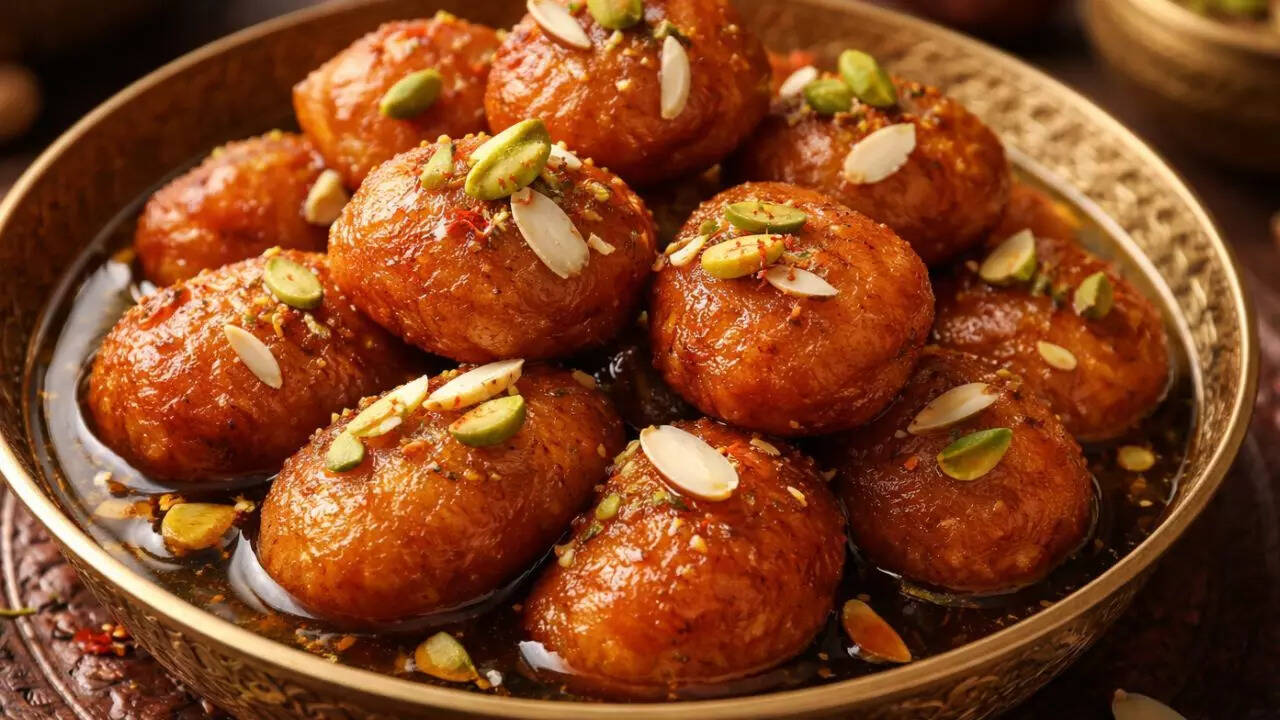
Dehrori is a traditional, deeply rooted sweet from Chhattisgarh, shaped as much by time and climate as by technique. At first glance, it resembles a rustic cousin of the gulab jamun, but its soul is entirely its own. Made from fermented rice batter rather than milk solids, dehrori belongs to a much older culinary grammar, one that predates commercial sweets and depends on patience, instinct, and the quiet intelligence of fermentation. The batter is shaped into small, flat discs and fried slowly in ghee. It is not perfectly round, uniform sweets, dehrori is unapologetically irregular. Its surface turns a warm golden brown, forming a delicate crust that gives way to a soft, slightly chewy centre. The fried pieces are then soaked in warm sugar syrup, often scented with cardamom and sharpened with a few drops of citrus, allowing the sweet to absorb flavour without losing its structure.What makes dehrori distinctive is its balance- sweet but not cloying, sour but not sharp. That faint fermented note lingers on the palate, setting it apart from richer, heavier North Indian mithais. It is a sweet that feels seasonal, best enjoyed in winter or during festivals like Diwali, when households once gathered to make it in small batches, sharing both labour and stories.Dehrori RecipeDehrori, Chhattisgarh’s cherished sweet-often likened to a rice-based gulab jamun-is made from fermented rice batter soaked in sugar syrup.
- Soak 1 cup of rice for 5 hours, drain, and grind coarsely. Mix with ¼ cup curd and ferment overnight in a warm place to make about 10 pieces.
- Boil 1 cup sugar with 1 cup water to a one-string consistency-when a drop stretches between your fingers-then add 1 teaspoon cardamom powder and ½ teaspoon lime juice. Heat ghee for frying.
- Shape the batter into small, flat discs and deep-fry until golden. Soak them in warm syrup for 30 minutes and garnish with slivered almonds or pistachios. Serve warm.
Stories like Gita didi’s-of childhood friends left behind in Jamtara, of winter picnics on Bengal’s sun-warmed grass, of voices rising through the afternoon as khomcha wallahs were called over remind us that food has never been only about recipes or measurements. It’s more about the lives lived around it, the people who cooked before us, and the moments that shaped our sense of belonging. Food repairs what time tries to erode. It gathers up fragile memories of pink-tinged winter afternoons, of elders whose cravings carried entire histories within them, and lets a dish like dehrori travel far beyond geography, from humble Chhattisgarh kitchens to the warmth of nostalgia, where stories were passed down as carefully as heirloom utensils. Perfection, is never the point. A dish endures not because it is flawless, but because memory clings to it, giving food its deepest flavour and its most lasting beauty.