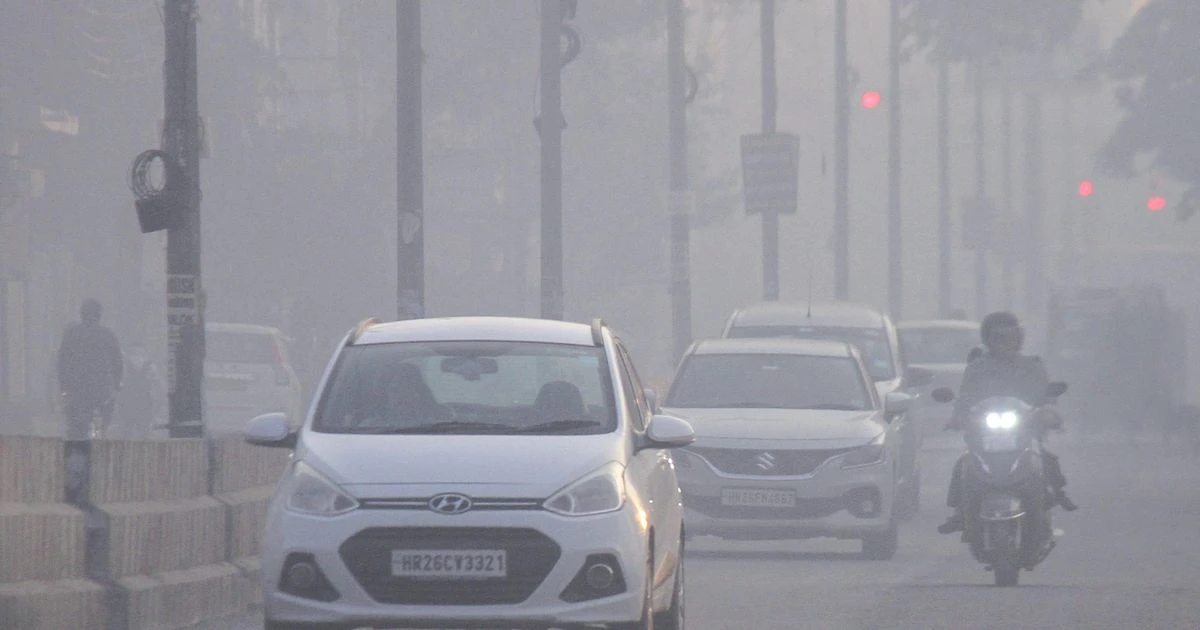
The Commission for Air Quality Management (CAQM) invoked Stage-IV actions under the Graded Response Action Plan (Grap). (Photo:PTI)
On Sunday, Delhi residents woke up to a thick layer of smog, with the Air Quality Index (AQI) nearing 500, intensifying discomfort amid already plunging temperatures. The capital’s air quality has deteriorated to severe levels, and forecasts indicate the AQI will remain in the ‘severe’ category, with only slight relief expected from Monday onwards.
Morning readings showed several areas in the severe AQI bracket, exceeding 400. According to Central Pollution Control Board (CPCB) data, Delhi’s overall AQI at 7 am on December 14 stood at 461, placing it in the ‘severe’ category, up from Saturday.
Hotspot AQI readings:
Anand Vihar: 491
Ashok Vihar: 493
Bawana: 495
Chandni Chowk: 462
RK Puram: 472
Rohini: 499
Vivek Vihar: 495
What do CPCB’s AQI categories mean?
0–50: Good
51–100: Satisfactory
101–200: Moderate
201–300: Poor
301–400: Very poor
401–500: Severe
What is causing a spike in pollution levels?
Authorities attributed the worsening air quality to low wind speeds, which trap pollutants near the ground. Weak western disturbances are unlikely to bring immediate relief. Delhi’s Decision Support System identified transport emissions as the largest contributor, followed by industrial activity, with neighbouring districts such as Jhajjar and Sonipat adding to the pollution load.
What do Stage-IV Grap curbs mean for Delhi and NCR?
The Commission for Air Quality Management (CAQM) invoked Stage-IV actions under the Graded Response Action Plan (Grap) on Saturday, effective immediately across the NCR. This is in addition to the existing Stages I–III measures. Stage IV is the strictest, and includes:
-
Ban on entry of trucks into Delhi, except for essential commodities or services -
Ban on Delhi-registered diesel heavy goods vehicles (BS-IV and below), with exceptions for essential services -
All construction and demolition activities suspended -
Schools to run classes in hybrid mode (online and offline) for Classes I–IX and XI in Delhi and worst-affected NCR districts -
State governments may implement additional measures such as closing colleges, shutting non-essential businesses, or introducing odd-even vehicle rules -
Administrative offices to operate with no more than 50 per cent staff physically present; private entities urged to implement staggered working hours
What is the Delhi weather forecast?
The India Meteorological Department (IMD) forecast partly cloudy skies for the next 48 hours, clearing thereafter. A yellow alert has been issued for Sunday, with moderate fog at many places and dense fog at isolated locations in the morning. Maximum temperatures are expected between 23 degrees Celsius and 25 degrees Celsius, while minimum temperatures will hover between nine degrees Celsius and 11 degrees Celsius.
First Published: Dec 14 2025 | 8:46 AM IST