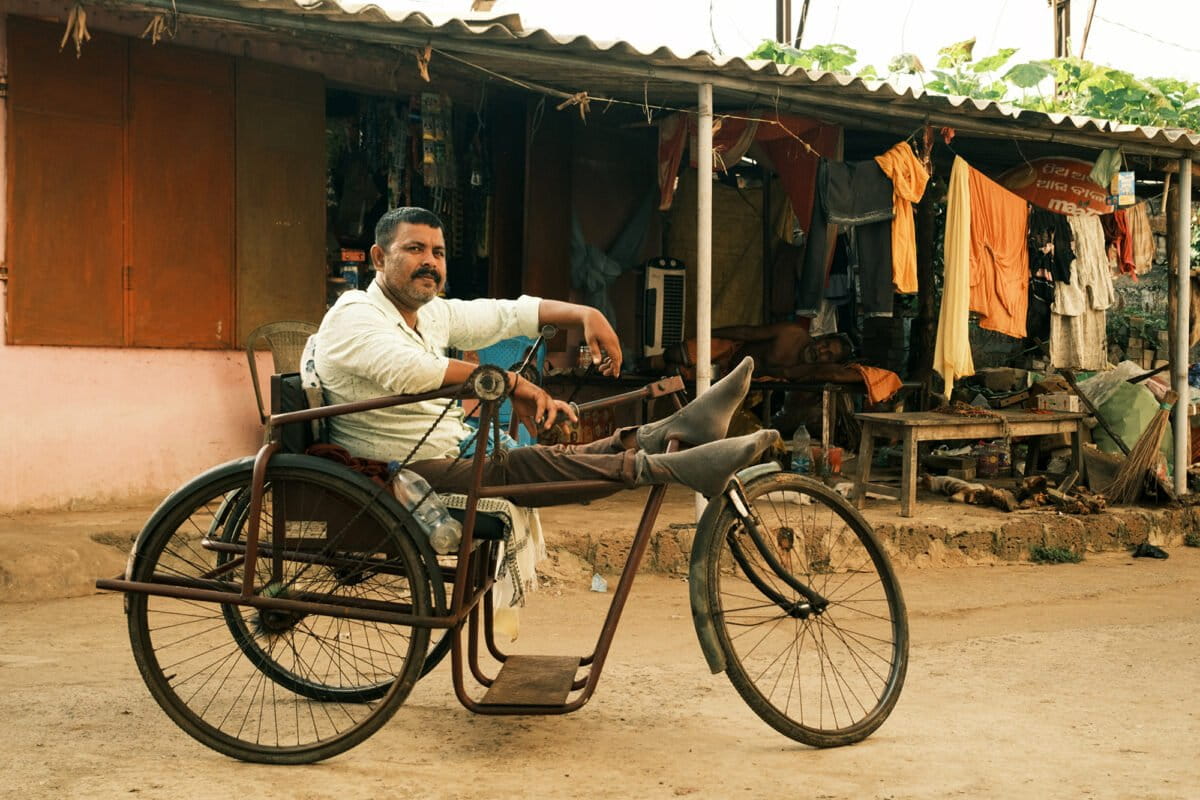
“If a disaster like a flood, earthquake, or extreme rain event occurs, I cannot even run or protect myself,” says 48-year-old Ram*, a person with a disability from Indrawati Rural Municipality, Sindhupalchok, to the north-east of Kathmandu in central Nepal. As climate change intensifies, it has upended local lives and livelihoods, disproportionately affecting people with disabilities. Migration becomes a critical means of adapting to such environmental changes, sustaining livelihoods and seeking alternatives, especially where agriculture is becoming unviable with declining yields. However, not everyone is able to migrate, and many people with disabilities are left behind.
Globally, around one billion people live with disabilities, and their mortality rates during natural disasters are estimated to be up to four times higher than those of people without disabilities. They face greater risk from climate hazards due to physical, environmental, and socioeconomic barriers, and have limited resources to adapt to climate change. Escaping this vulnerable condition relies on preparedness, inclusion, social support, and accessible systems, which many people with disabilities lack. Despite this, their needs remain largely overlooked in climate research and climate change adaptation discourse; for example, an assessment of 1,682 global empirical research on climate adaptation response identified that only 1 per cent even considered disability.
Migration as adaptation – not an option for all
There’s growing evidence of people migrating away from areas affected by climate change to cope with the often-severe impacts. The World Bank estimates that up to 216 million people globally could migrate due to climate change impacts by 2050. Financial means, skills, information, social networks, and physical ability play a pivotal role in enabling migration, which many people with disabilities lack, trapping them in climate-stressed environments. This is accentuated by the many barriers they face, which stem from physical, cognitive, and speech impairments, caregiving needs, and a lack of accessible infrastructure or support systems. There is also limited data on how climate and migration affect people with disabilities, as disaggregated data on disability are often not collected.
Ram (*name changed to maintain anonymity), once a farmer in Sindhupalchok, became wheelchair bound after an accident in the late 1990s during the Maoist insurgency in Nepal, which limited his access to timely treatment, leading to permanent disability. Today, he depends on his wife for daily care, unable to leave his home or pursue opportunities, surviving on a disability allowance in an increasingly uncertain agriculture-based livelihood. Despite these challenges, the family were able to send their two children to Kathmandu for education, where they also work part-time to support themselves.“ Many have migrated from here due to declining agricultural productivity and lack of income-generating opportunities, but it’s not an option for us with disabilities,” he shared.
Indrawati Rural Municipality has seen significant out-migration, where erratic rainfall, drought, landslides, floods, and declining agricultural productivity have forced many to move in search of off-farm and non-farm work. This has left an aging population, children, women, and people with disabilities staying behind. With many able-bodied individuals leaving communities, people with disabilities like Ram face growing isolation, left behind to face climate impacts with a weakened support system.
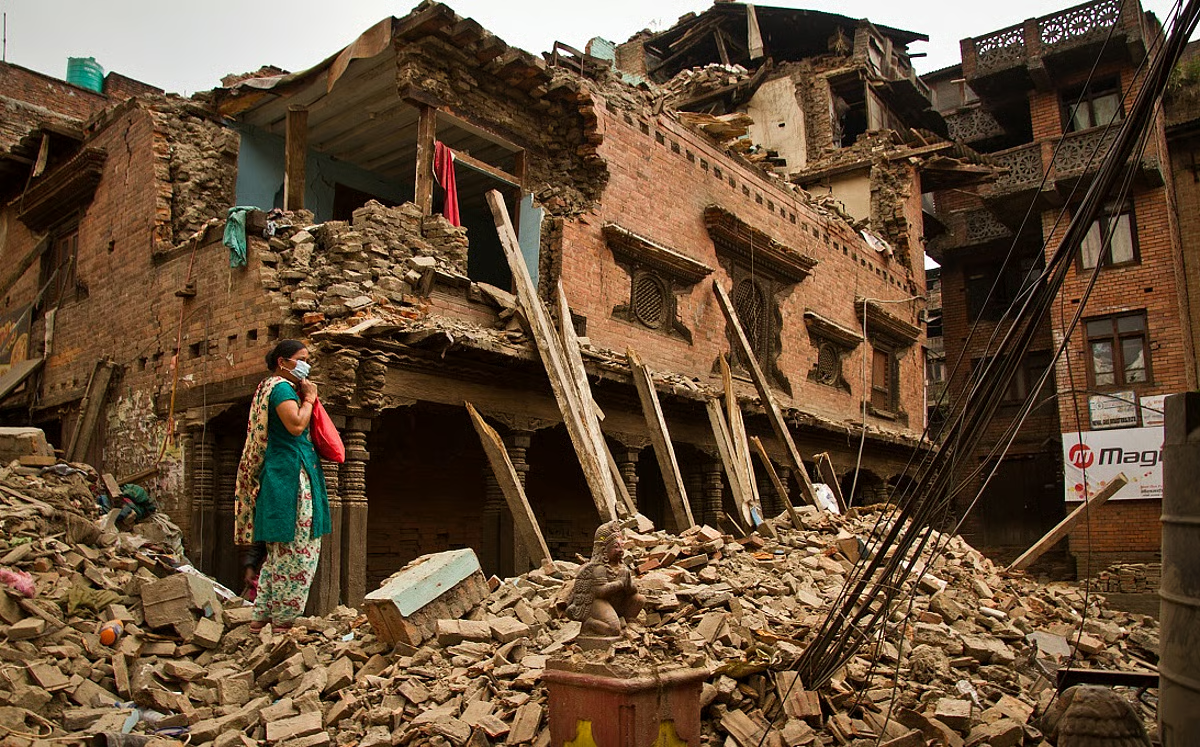
This exclusion becomes even more significant during emergencies, such as the 2015 Nepal earthquake, where villagers in Sindhupalchok were forced to decide who to rescue first from debris; the elderly population and people with disabilities were prioritised last.
Precarity for people with disabilities who migrate
Even when individuals with partial disability can migrate, they face other challenges.
Maya Magranti (name changed for anonymity), of the Dalit caste in Nepal, 35, migrated to Kathmandu despite her limited mobility from a childhood burn injury. She found unskilled work by queuing up at labour hiring points. Despite doing similar work to other labourers, she was paid less. Knowing the importance of skills, she tried to enrol in training programmes, but her efforts were dismissed due to her physical limitations. She faced stigma and discrimination for her appearance, gender, and caste. This had also hampered her schooling and social network, which further limited her ability to seek opportunities. With nowhere to turn to, she eventually returned to her village, not to opportunity but to climate-stressed agriculture and poverty. At home, she contributes to farming as much as possible, yet the declining yields and limited mobility increase her dependence on her family. Migration offered hope for Maya to contribute to the household income, but low wages, discrimination, and restricted opportunities halted her aspirations.
At the crossroads of disability-climate-migration – an overlooked gap
Globally, people with disabilities continue to remain on the margins of climate discourse. Unlike women and gender, youth, and Indigenous peoples, there is no disability constituency within the UN Framework Convention on Climate Change (UNFCC). In the Hindu Kush Himalayan (HKH) region, countries such as Nepal, Bangladesh, Bhutan, and Pakistan have recognised people with disabilities as climate-vulnerable groups in their National Adaptation Plans (frameworks to address the impacts of climate change). Although disability inclusion is acknowledged, it is yet to be effectively mainstreamed into climate finance, governance, or climate change adaptation strategies.
In addition to recognition in policy and climate change discourse, urgent action is needed to strengthen their adaptive capacities to climate change, ensure access to disability inclusive essential services, and build their households’ climate-resilient livelihoods. To inform these actions, robust data on disability and understanding their differential needs is crucial to make adaptation efforts participatory, inclusive, and evidence driven. Recognising and integrating their perspectives shifts the narrative from victims and vulnerability to agency. This is pivotal to ensure people with disabilities are not left behind in this changing climate and that their differential needs are centred in climate action.