Morse’s dissent is the more interesting case. Morse, a progressive Republican from Wisconsin and an avid Cold Warrior, had been elected to the Senate from Oregon but left the Republican Party in part because of its failure to denounce Joseph McCarthy and, in 1955, became a Democrat. In 1957, he objected, unsuccessfully, to a resolution that Dwight Eisenhower presented to Congress, seeking pre-authorization for military action in the Middle East, calling it “constitutionally dangerous.” After the Bay of Pigs fiasco, in 1962, Morse described the C.I.A. as “an unchecked executive power that ought to be brought to an end,” and warned of the executive’s increasing recourse to unauthorized military action, predicting that “we are in a situation in which we shall probably never again see Congress pass a declaration of war prior to the beginning of a war.” History proved him right.
Morse so frequently opposed unauthorized military action, and so often spoke at the end of the day, before an empty chamber, that he earned the nickname the Five O’Clock Shadow. In 1963, the week before John F. Kennedy was assassinated, he told Morse, “Wayne, I want you to know you’re absolutely right in your criticism of my Vietnam policy.” In the spring, when Johnson sought a military appropriation, Morse accused him of “trying by indirection to obtain congressional approval of our illegal, unilateral military action in South Vietnam without coming forward with a request for a declaration of war.”
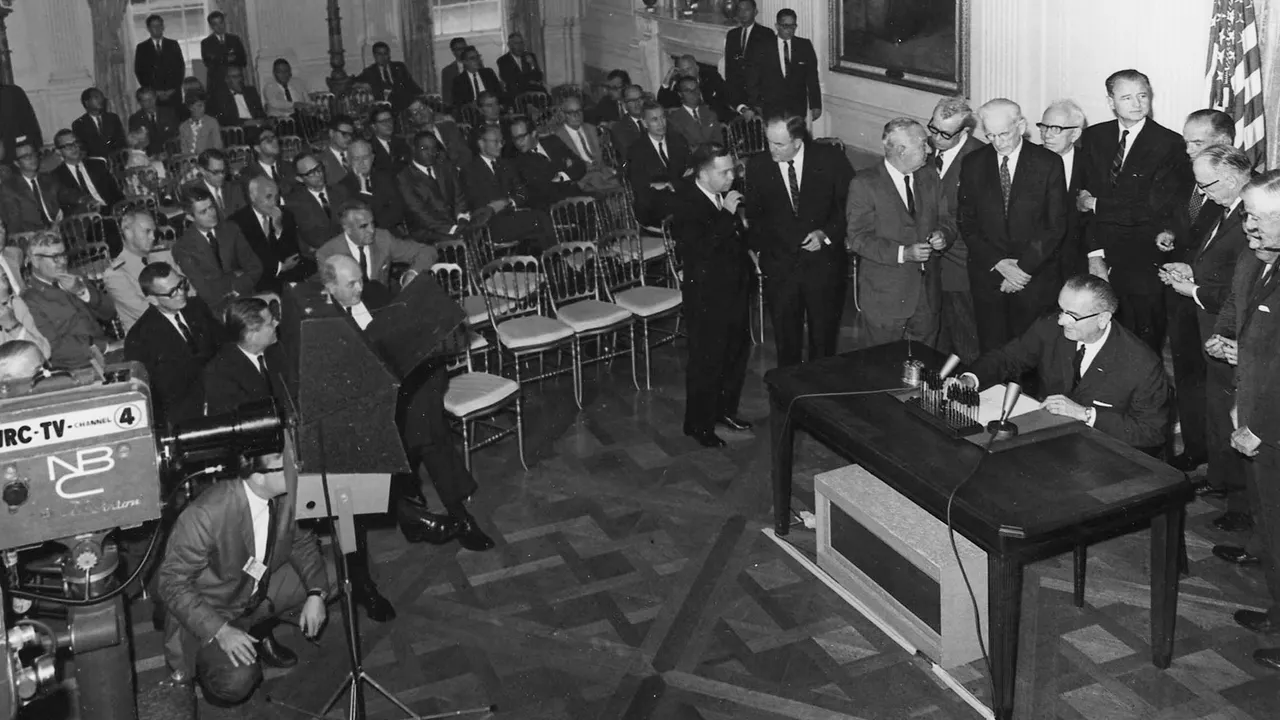
In August, Morse objected to the Tonkin Gulf Resolution on constitutional grounds, calling the resolution a “predated declaration of war” and an “evasion of congressional responsibility,” and a de-facto amendment of the U.S. Constitution. He warned his colleagues that “the American people will quickly lose their liberty if you do not stop feeding the trend toward Government by executive supremacy.” In 1965, when Johnson ordered the bombing of North Vietnam and sent fifty thousand troops to South Vietnam—“This is really war,” the President said that summer—Morse became a leading speaker at rallies in the growing antiwar movement.
Article I, Section 8, of the U.S. Constitution gives Congress the power to “declare war.” When, at the Constitutional Convention, in Philadelphia, in 1787, Pierce Butler of South Carolina raised the possibility that the President should wield this power, Elbridge Gerry of Massachusetts responded that he “never expected to hear in a republic, a motion to empower the Executive alone to declare war.” The general view of the delegates was reflected by Alexander Hamilton, in Federalist No. 75: “The history of human conduct does not warrant that exalted opinion of human virtue which would make it wise in a nation to commit interests of so delicate and momentous a kind, as those which concern its intercourse with the rest of the world, to the sole disposal of a magistrate created and circumstanced as would be a President of the United States.”
Abraham Lincoln, while serving in Congress, summarized the Convention’s thinking this way:
If a President were to be granted this kingly power, Lincoln warned, there would be no turning back: