
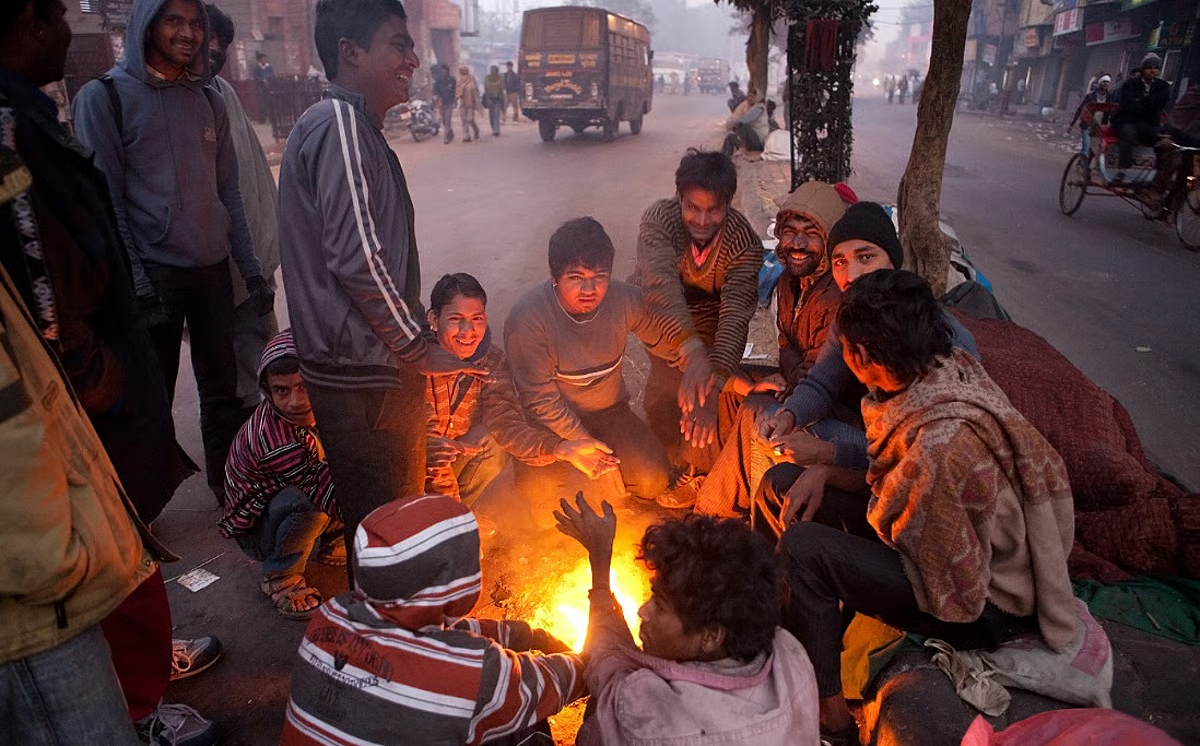
India recorded 24 cold wave/cold day events in January 2026, with no such conditions reported in February, an analysis by Down To Earth (DTE) has found. With the winter season officially ending on February 28, the total is unlikely to rise further, especially as the India Meteorological Department (IMD) has forecast maximum and minimum temperatures to remain 2-4°C above normal across most parts of the country.
Cold wave to severe cold wave conditions were last observed on January 25 in isolated pockets of East and West Rajasthan, Himachal Pradesh and Haryana, while cold day to severe cold day conditions persisted in parts of Himachal Pradesh until January 27, after which winter intensity eased nationwide
No cold wave event has been recorded in the month of February 2026. This absence of any cold wave or cold day event in February 2026 marks a clear break from recent trends according to the DTE analysis of cold waves/cold days for the period 2022 to 2025.
Between 2022 and 2025, February recorded six cold wave days in 2022, 1 in 2023, 7 in 2024 and 5 in 2025. However, with the last cold wave/cold day recorded on January 27 this year, February 2026 becomes the first in five years when a cold wave has not been recorded, according to the analysis based on the interactive atlas of weather disasters managed by Centre for Science and Environment/DTE data centre.
So overall, winter 2026 will close with 24 cold wave/cold day events reported across 15 states and Union Territories, making it the second-lowest seasonal total in the past five years after 2023, which recorded 21 days. The figure is significantly lower than the spike of 38 days in 2024 and also below the 30 days recorded in 2022 and 26 days in 2025.
The IMD declares a day as ‘cold day’ when the maximum temperature drops by 4.5°C to 6.4°C than average. If the deviation is more than 6.4°C, it is considered a ‘severe cold day’.
Similarly, a cold wave occurs occur when the minimum temperature drops by 4.5°C to 6.4°C than normal. When the minimum temperature drops by more than 6.4°C than normal, it is said to a ‘severe cold wave’.
The DTE analysis has considered all four categories.