- As climate risks intensify in the Eastern Himalayas, extensive hydropower infrastructure is increasingly at odds with the region’s ecological realities.
- The 2023 Teesta glacial lake outburst flood revealed how climate-branded infrastructure can transform natural hazards into systemic disasters.
- Gaps in climate-risk assessment, basin-scale planning, ecological safeguards, and disaster preparedness are pushing hydropower in the Himalayas towards maladaptation.
- The views in this commentary are that of the author.
Over the past two decades, hydropower has reshaped development pathways in the Himalayas. It has been aggressively promoted as clean energy that can meet climate goals, while also driving economic growth. The Hindu Kush Himalaya is widely recognised as a storehouse of untapped green energy, with estimates exceeding 3.5 terawatts (TW) of renewable potential, including nearly 882 gigawatts (GW) of hydropower.
However, this expansion is unfolding in one of the world’s most geologically fragile mountain systems. Nowhere is this tension more visible than in the Eastern Himalayas, where climate risks are intensifying rapidly. Over time, these shifting risks have exposed how large hydropower projects can amplify, rather than absorb, environmental stress. The 2023 glacial lake outburst flood (GLOF) from South Lhonak Lake in North Sikkim crystallised this contradiction. As the flood intersected with hydropower infrastructure along the Teesta, it revealed how vulnerability has been hard-wired into the landscape.
This raises an uncomfortable question: has hydropower, long promoted as a climate solution in the Eastern Himalayas, in fact been functioning as a maladaptation?
Hydropower on a geologically unstable
The concept of maladaptation describes climate responses that ultimately increase vulnerability, shift risk across space or time, or undermine long-term resilience. It is particularly relevant in the Eastern Himalayas, where the physical foundations of large hydropower infrastructure are increasingly misaligned with climatic and geological realities.
The Himalayas sit in a seismically active, high-hazard zone characterised by young geology, steep terrain, and dynamic, sediment-rich rivers. Even without considering the impacts of climate change, large, static infrastructure in such settings carries an inherent risk of inadvertently altering the flow regime and, in turn, affecting ecosystem structure and function as a whole, ultimately impacting ecosystem services, particularly for downstream communities.
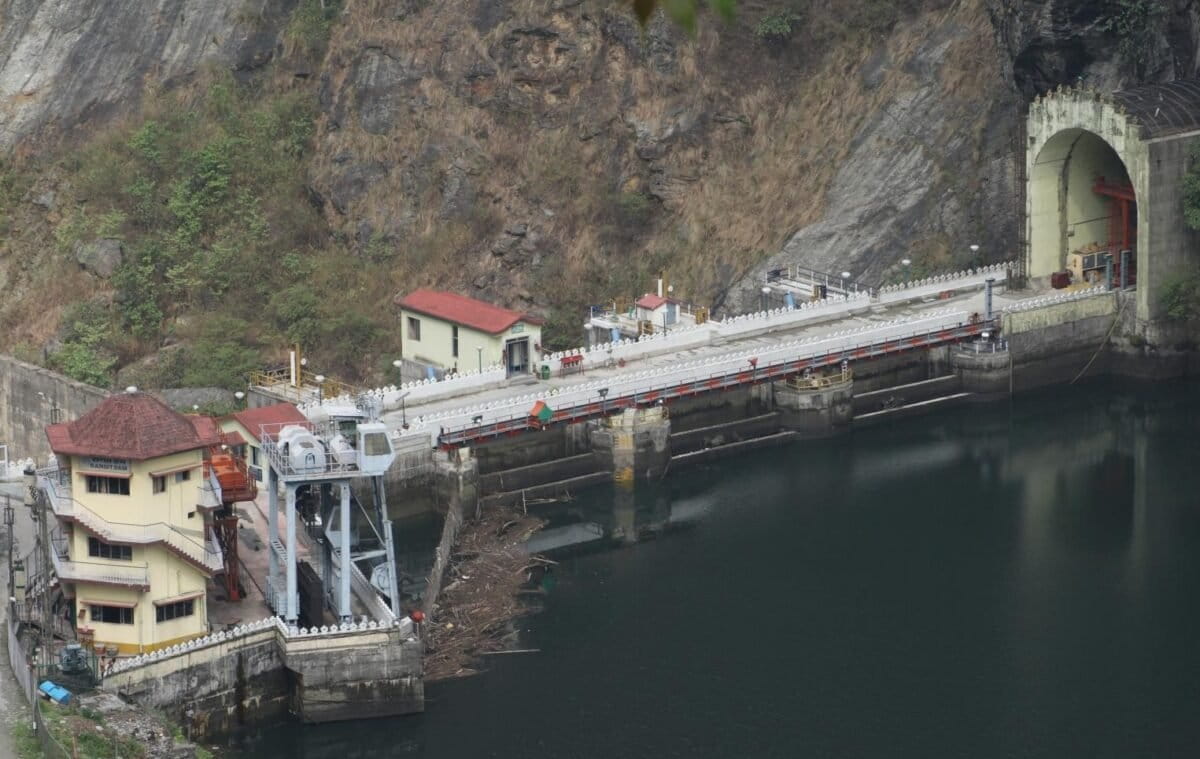
While many projects are presented as run-of-the-river, in practice, many rely on pondages that store water for hours during the day or across dry periods and release it in pulses. These artificial surges intensify erosion, destabilise riverbanks, and raise downstream risk.
A conspicuous feature of building hydropower projects is the flooding of extensive areas, where these ecological costs very quickly translate to high social costs. Reservoirs submerge extensive areas, displacing communities and cutting off access to critical ecosystem services, including fisheries, forest resources, and culturally significant river landscapes. These losses are difficult to quantify or restore through rehabilitation. When these processes of fair compensation, rehabilitation, livelihood restoration, and participatory decision-making are weak or incomplete, displacement becomes structural, and social conflict intensifies. The result is long-term social and ecological costs.
Climate change is compounding these stresses. The Himalayan region is said to be warming faster than the global average, accelerating glacial melt and destabilising precipitation patterns. Within this broader trend, the Eastern Himalayas exhibit a distinct climatic asymmetry, with glaciers here fed by the monsoon rather than winter accumulation. As accumulation occurs during warmer months, rising temperatures more readily shift precipitation from snow to rain, reducing solid ice formation and also extending the melt season, making them more sensitive to rising temperatures. Furthermore, reduced summer snow cover can further intensify melting through albedo effects. Glaciers here are therefore smaller, monsoon-fed, and less stable, and are retreating significantly faster than those in the Western Himalayas.
One visible consequence is the rapid expansion of glacial lakes. The latest Central Water Commission (CWC) data show a 20.7% increase in lake area across India between 2011 and 2024. In the Eastern Himalayas, the report further reveals that 26–52 lakes in Sikkim and 245–254 in Arunachal Pradesh have increased in water spread, among the highest numbers in the country. These changes reflect ongoing glacier melt and accelerated high-altitude warming, prompting the CWC to flag both states for priority monitoring and early-warning systems due to the elevated risk of GLOFs.
At the same time, hydropower has already reshaped river flows in the region by trapping sediment and altering natural regimes. Now, glacier melt, unstable moraines, and extreme rainfall are changing the timing, volume, and sediment loads of rivers in ways that dams — designed around historical baselines — are ill-equipped to handle. Instead, they are turning infrastructure intended to provide energy into a source of ecological and social vulnerability. Therefore, hydropower in this context ceases to be a climate solution and instead functions more as a maladaptation.
What the Teesta flood revealed
The 2023 Teesta glacial lake outburst flood was a stark demonstration of how climate hazards and infrastructure interact. A 2025 study confirmed climate change as a significant catalyst, triggering a 20-metre-high, tsunami-like flood wave that sent the equivalent of 20,000 Olympic swimming pools of water downstream, making it one of the most catastrophic events recorded in the Himalayas.
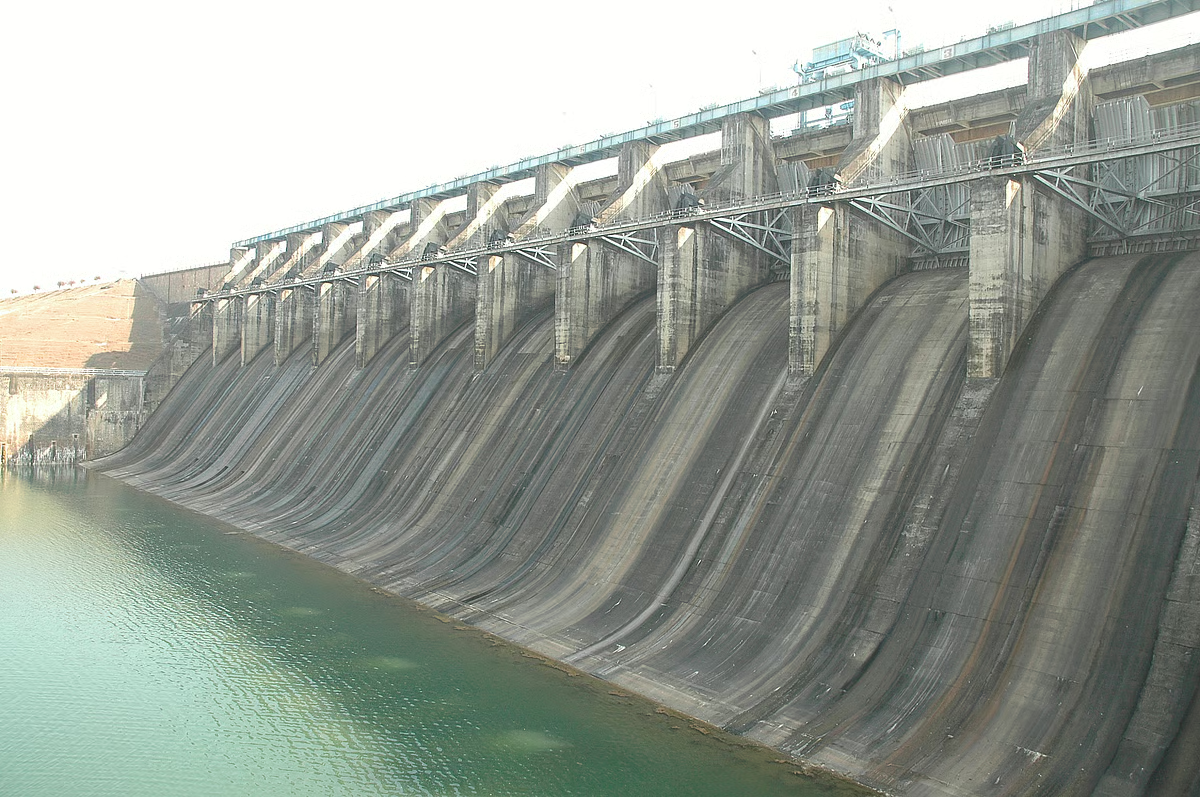
While the GLOF was the result of climate-induced glacial melting, scientists and environmentalists have noted that hydropower infrastructure exacerbated the severity of the flood, turning it into a disaster of extraordinary scale. Carrying an estimated 50 million cubic metres of water, the flood struck the Teesta Stage III dam at Chungthang. At the time, the reservoir was reportedly full, holding an additional five million cubic metres of water, and the dam breached within minutes, effectively adding a second surge to the initial wave.
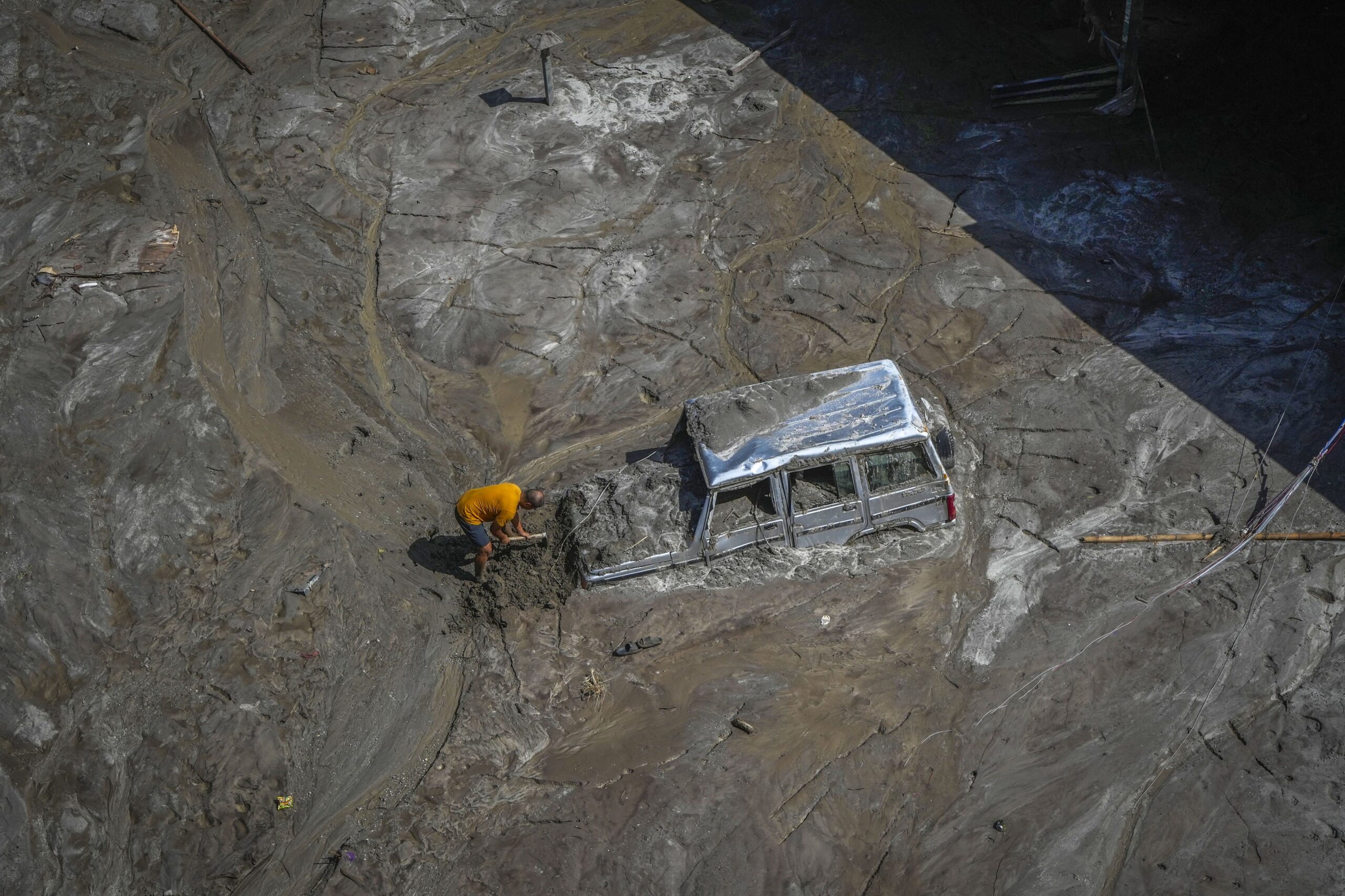
The GLOF brought massive economic and social costs. By 2017, the cost of the Teesta Stage III project had escalated to roughly ₹140 billion. Following the GLOF, the operator filed an insurance claim of approximately ₹50.84 billion for physical damage and business interruption. Downstream, facilities suffered over ₹2.34 billion in damage. Nearly 88,400 people were affected, at least 55 lives were lost, more than 2,500 homes were destroyed, and 31 major bridges collapsed. Long stretches of National Highway 10 were washed away, cutting off Sikkim and Kalimpong. At the same time, around 270 square kilometres of farmland were buried under debris, devastating agro-pastoral livelihoods that defined local and indigenous communities of the land.
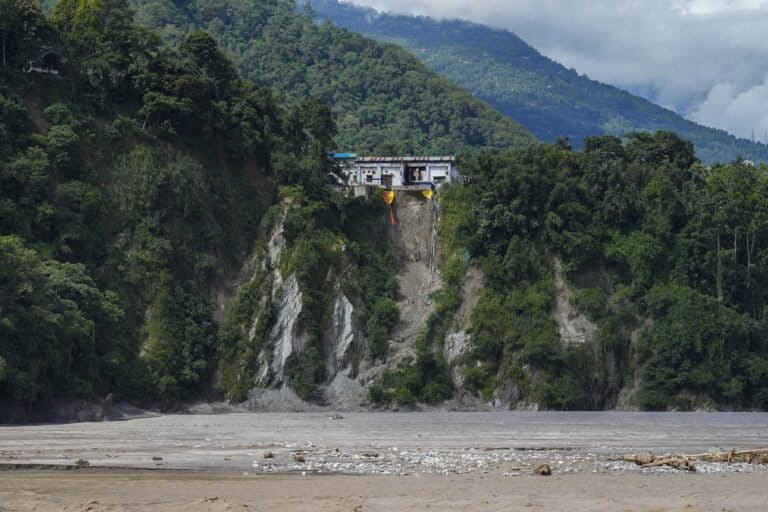
Crucially, the GLOF exposed vulnerabilities that predated the disaster. Pondage operations had already altered river structure, trapped sediment, and destabilised riverbeds. Ecosystem functions such as sediment transport, nutrient cycling, and fish migration were impaired well before the flood. During the GLOF, nearly 270 million cubic metres of debris were mobilised, raising riverbeds by up to 14 metres and permanently reducing channel capacity.
The impacts are still deeply felt. Seasonal monsoon rains now repeatedly breach banks, flooding downstream settlements such as Melli and Kalimpong’s Teesta Bazaar, as seen again in October 2025. NH-10, the primary artery for Sikkim and Kalimpong, is now defined by recurring landslides and washouts. Road failure is no longer exceptional; it is expected. Even before the GLOF, hydropower projects had already impaired river ecology by blocking migration routes and failing fish ladders, affecting more than 100 species, including Himalayan trout. The GLOF further intensified these stresses by dumping heavy sediment loads, further fragmenting aquatic habitats. The repeated reports of fish mortality in 2025 underscore cumulative ecological stress.
The deeper failure lies in how risk was assessed and governed. Environmental impact assessments did not account for climate-driven threats such as GLOFs, leaving projects designed around historical hydrological baselines that no longer reflect climate realities. Promoted as a climate solution and a driver of development, the Teesta GLOF reveals how hydropower can transform episodic hazards into entrenched vulnerability, amplify systemic risk, and reshape ecosystems. In the rapidly warming Eastern Himalayas, hydropower has institutionalised long-term ecological and social fragility — clearly functioning as maladaptation.
Planning hydropower for the Himalayas, not against them
The Teesta GLOF was not a freak accident. Multiple studies have identified South Lhonak Lake as high-risk for years, and glacial lake expansion across the Eastern Himalayas is now well documented. These are no longer rare hazards but structural features of a warming mountain system.
The central challenge is not the need for energy, but how it is planned and managed in fragile mountain systems. Current hydropower governance has largely prioritised energy infrastructure over ecological limits while ignoring predictable climate risks. This tension between development and ecology lies at the heart of recurring failures.
Strengthening governance, therefore, remains critical. Integrating disaster risk planning, real-time monitoring, adaptive reservoir operations, and meaningful community participation can ensure that hydropower contributes to energy needs without amplifying systemic risk. In a landscape as fragile as the Himalayas, the extent to which development ambitions are aligned with ecological limits will increasingly determine whether we reduce risk or reproduce maladaptive patterns.
The author works with Observer Research Foundation and writes on gender, climate change, and development with a focus on the Global South.
Banner image: A man attempts to recover a vehicle submerged in mud following floods along the Teesta River in 2023. (AP Photo/Anupam Nath)