
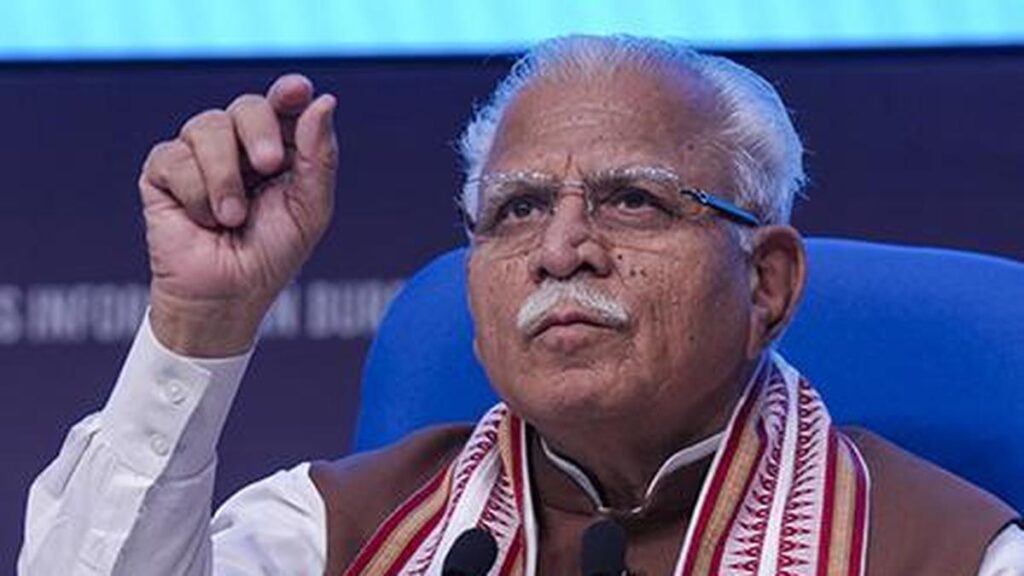
Union Minister Manohar Lal
| Photo Credit: PTI
Union Minister Manohar Lal on Wednesday (January 21, 2026) said cost-reflective tariff concept to reduce discoms’ losses is introduced in Electricity Amendment Bill, which is likely to come up for discussion and passage in the forthcoming Budget Session.
The cost-reflective tariff assumes significance in view of the long history of debt-ridden and loss-making power distribution companies (discoms) in the country.


Addressing the first annual conference of All India Discoms Association (AIDA), ‘EDICON 2026’, Mr. Lal said discoms are an important component of the electricity supply value chain which involves generation, transmission and distribution.
He stated that discoms provide B2C service and hence they are the first one to receive the complaints of customers directly for quality of service as well as other issues.
“We are bringing a provision of cost-reflective tariff to reduce loss of discoms. This will factor in all expenses (on power supply) in the power tariff which will reduce the losses to discoms…the bill is likely to come in this session (budget) of Parliament. We will try to build consensus on this for smooth passage,” he said.
He also talked about the draft National Electricity Policy 2026 which also provides for cost-reflective tariff for reducing losses and debt of discoms.
The Power Ministry on Wednesday (January 21, 2026) sought comments on the policy.
Mr. Lal suggested that cost-reflective tariff will help discoms make profit which can be used for cross subsidisation.
However, he was of the view that the cross subsidisation should be done as per rules.
The Minister pointed out discoms collectively recorded a Profit After Tax (PAT) of ₹2,701 crore in FY25 after reporting losses for the past several years since unbundling and corporatization of State Electricity Boards.
This is compared with a loss of ₹25,553 crore in FY24 and a loss of ₹67,962 crore in 2013-14.
According to the Power Ministry, the Aggregate Technical & Commercial (AT&C) losses have reduced over the years, signalling transformation.
The AT&C losses reduced from 22.62% in FY14 to 15.04% in FY25.
Further, signalling much improved cost recovery, the Average Cost of Supply–Average Revenue Realised (ACS–ARR) gap has narrowed from ₹0.78/kWh in FY14 to ₹0.06/kWh in FY25.
The average (across states) ACS has come down to ₹6.73 per unit this year from ₹6.82 per unit, the Minister said.
The Minister stressed on the need for installing pre-paid smart meters especially in government buildings. He said that about 5 crore smart meters have already been installed and the target is 20 crore.
He was of the view that excess regulation by power regulators have resulted in increase in losses of discoms and that they need to relax those regulations to boost discoms.
“Regulators want to curb the loss of discoms. This is another thing that their excess regulations are causing more losses to discoms,” he said.
He also pointed toward a recent memorandum of understanding of a power regulator with IIT Delhi for ascertaining, whether the regulations should be more or less for ensuring good financial health of discoms.
Published – January 21, 2026 02:12 pm IST