
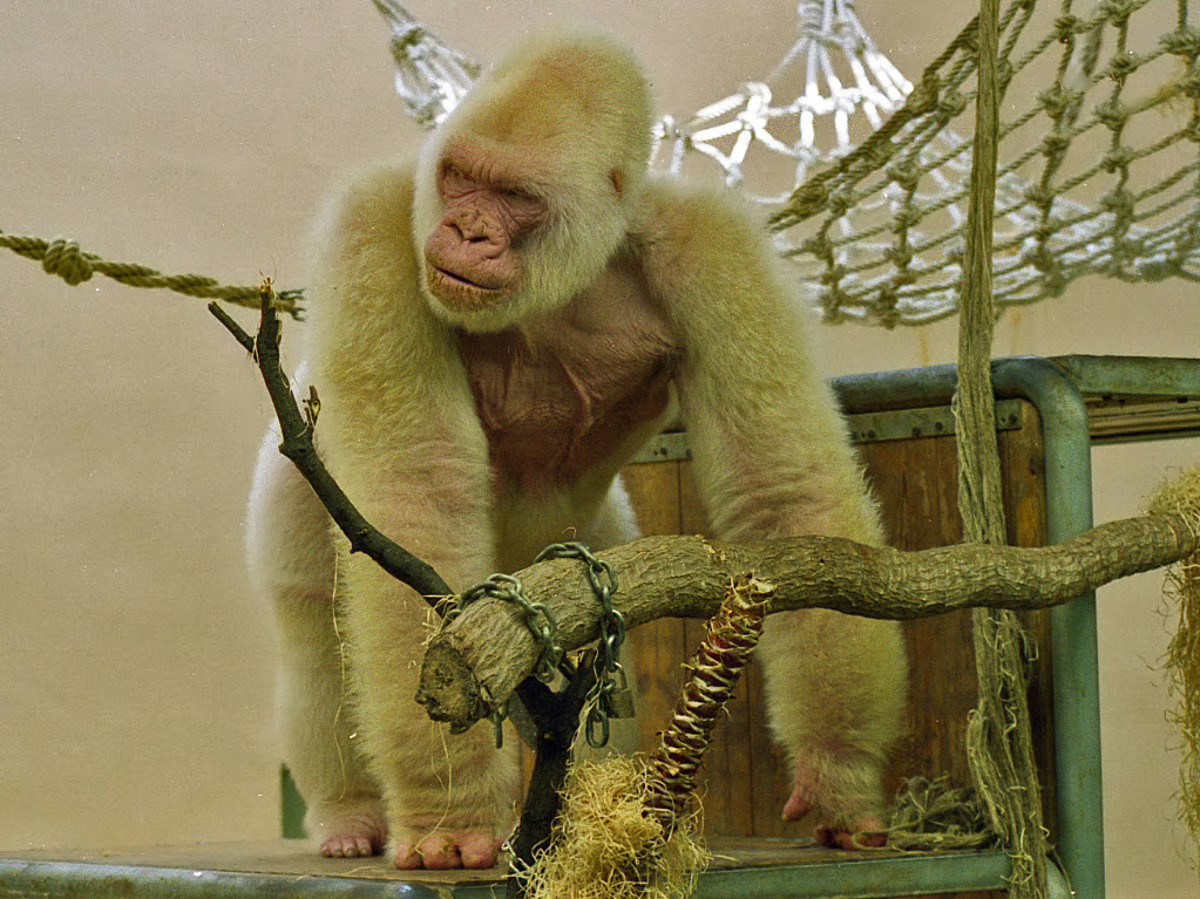
The illegal trade of live great apes is not a simple logistical exercise. These animals are agile, clever and strong, even when young. They need ongoing care and can make noises that may reveal them hidden away in cargo. But for years, these transactions have been made easier by , and . Falsifying and is another route.
What are the problems?
So why are governments not doing more? First, the organisation meant to provide oversight and monitoring of wildlife trade — the Cites secretariat — is underfunded. While the legal global wildlife trade market is , the secretariat has an . And like most international treaties, it is reliant on the collaboration of its 185 state members, with all the complexities of international politics.
State governments also don’t treat the illegal wildlife trade as high a priority as illegal drugs, — despite the . And many still operate an outdated permit system developed in the 1970s, instead of the which would provide much better protection against fraudulent permits, faster and transparent reporting, and increased collaboration with customs officials.
Moving apes around
There are, however, legitimate reasons to transfer great apes internationally. Moving second-generation, captive-bred animals from one registered zoo to another would be a typical example. Getting an export permit showing the animal as captive-born is one of the easiest ways to transport great apes internationally.
But this can also be used as a loophole. In the late 2000s, some 150 chimpanzees, bonobos and gorillas were reportedly exported , although there is no known facility in Guinea breeding either species. In this case, high-level corruption was a key factor: in 2015, Ansoumane Doumbouya, then head of the Cites management authority in Guinea, and sentenced to 18 months in prison for selling fraudulent export permits. He was later pardoned by the .
In September 2025, Cites officials visited one of the largest private animal collections in the world. , India’s wildlife sanctuary turned mega-zoo, was hailed by some as an amazing story of love and care for wildlife. But the Wildlife Animal Protection Forum of South Africa, a national network of , has been increasingly concerned about the fast-paced imports of over 2,000 wild animal species from all over the world. Vantara now reportedly keeps close to , more than any other well-known zoo.
In a recent investigation, the Indian Supreme Court absolved in relation to animal imports. But after this ruling, the Cites secretariat also visited the zoo. Its raised significant concerns about several issues relating to animal transportation involving Vantara.
Vantara that Cites gave “a clean chit” to the facility, and that it had noted that all animal transfers to the facility were “fully legitimate and transparent, in accordance with Indian law”.
The Cites report said chimpanzees were imported from the Democratic Republic of Congo and also Middle Eastern countries (via the United Arab Emirates) as captive animals. As far as the author is aware, none of these countries are known to breed chimpanzees in zoos or other captive facilities.
Even more worryingly, a bonobo from Iraq, a mountain gorilla from Haiti, and a Tapanuli orangutan from Indonesia were also acquired. There are few recognised zoos globally which breed bonobos, and none breeding either mountain gorillas or Tapanuli orangutans. There is only a single male kept in an Indonesian zoo. Based on the , the global zoo database, there is currently no mountain gorilla in zoos worldwide.
More generally, Cites has called on member countries affected by the great ape trade — both as a source and destination — to to prevent any illegal transfers. The International Union for Conservation of Nature, the world’s largest conservation alliance, “international action to protect wild great apes in their natural habitats, with a focus on addressing poaching and illegal trade”.
Introducing a modern electronic permit system and carrying out more enforcement would be important first steps to tackling these crimes. Otherwise, these species that are so close to humans will disappear in front of our eyes.
, Professor of Practice and Head of Division of Population Science,
This article is republished from under a Creative Commons license. Read the .