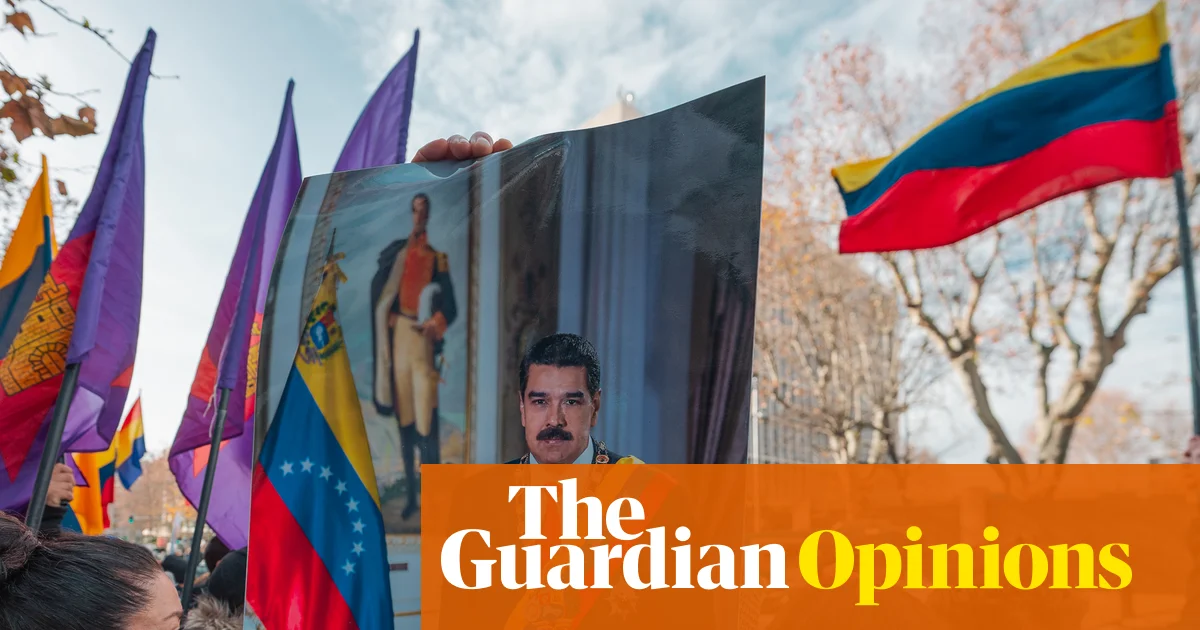
There is no two without a three, as we say in Italian. After their complicit silence on Israel’s war crimes in Gaza and their tacit acceptance of the US/Israel attack on Iran, Europeans now hesitate to condemn the US’s audacious military operation to bring about regime change in Venezuela. With few notable exceptions – such as Spain, the Netherlands and Norway – most European leaders have fudged their response. Spain, in fact, has acted without its EU partners, condemning the US attack alongside a group of Latin American countries. European governments seem unable to utter in the same breath that, although Nicolás Maduro was an illegitimate dictator, the US attack to topple him is a gross violation of international law.
The French president, Emmanuel Macron, the UK prime minister, Keir Starmer, and the European Commission president, Ursula von der Leyen, at least made reference to international law, while emphasising that they shed no tears for the end of Maduro’s regime. Others, such as the German chancellor, Friedrich Merz, strangely talked about looking into the legality of the US military action, as if there were any doubt about its nature. Worse still, Trump-friendly Italian prime minister Giorgia Meloni defined this act of external military intervention as “legitimate” self-defence against narco-trafficking.
These are all European leaders, who head liberal democracies and represent institutions that elevate multilateralism and international law as core principles. Why are they so ambiguous about such a gross violation? Even if we set global legal norms aside, does such ambiguity serve the European interest?
There are three possible explanations for Europe’s tepid response, all related to European security. None, however, stands up to scrutiny. One is that condemning the US attack would irk Donald Trump, inducing him to retaliate against Europe – by withdrawing forces from the continent and/or abandoning Ukraine. These fears may be valid. But this is a scenario that has already partly occurred, and it would be unreasonable to expect a course correction from the Trump administration at this point. We have already seen a minor US troop withdrawal from Romania, and there have been clear signals from Washington that Europe’s Nato allies should expect a significant pullout by next year.
As for Ukraine, since Trump came to office, he has repeatedly abandoned Kyiv. He publicly humiliated Volodymyr Zelenskyy at the White House last February and then temporarily suspended military assistance. In the summer, Trump laid out the red carpet for Vladimir Putin in Alaska, and in November, the US released a 28-point plan for ending the war, its terms – co-authored with Russia – tantamount to Ukraine’s capitulation. Each time, Europeans congratulated themselves for having pulled Trump back from the brink, including most recently by revising the US/Russia plan into a more palatable 20-point version. The only reason Trump has not followed through in arm-twisting Ukraine is that Putin does not want to stop the war, and Trump has no intention of pressuring him to do so. If European leaders truly believe that US promises to provide security guarantees to Ukraine are serious and would be imperilled if they criticised Trump on Venezuela, they are beyond delusional.
A second security rationale for holding back from criticising Trump on Venezuela relates to Greenland. Trump’s regime change in Caracas has been couched in what the US president has defined as a “Donroe doctrine”, a Trumpified version of the 19th-century Monroe doctrine in which the US, by first countering European colonialism in South America, gradually began acting as the newly minted hegemon in the region, coercing Latin America into its sphere of influence.
Trump’s rehashed version of the Monroe doctrine is underpinned by a self-declared interest in the western hemisphere. US imperial ambitions now lie in a geographical space that includes western Europe, and in particular Denmark’s autonomous region of Greenland. Silence over Venezuela could therefore be aimed at appeasing Trump in the hope that he won’t attempt to seize Greenland. Even if European leaders are being more vocal in support of Denmark, their ambiguity over Venezuela signals submission to Trump. And the more European countries act as colonies, unable and unwilling to stand up to Trump, the more they’ll be treated as such.
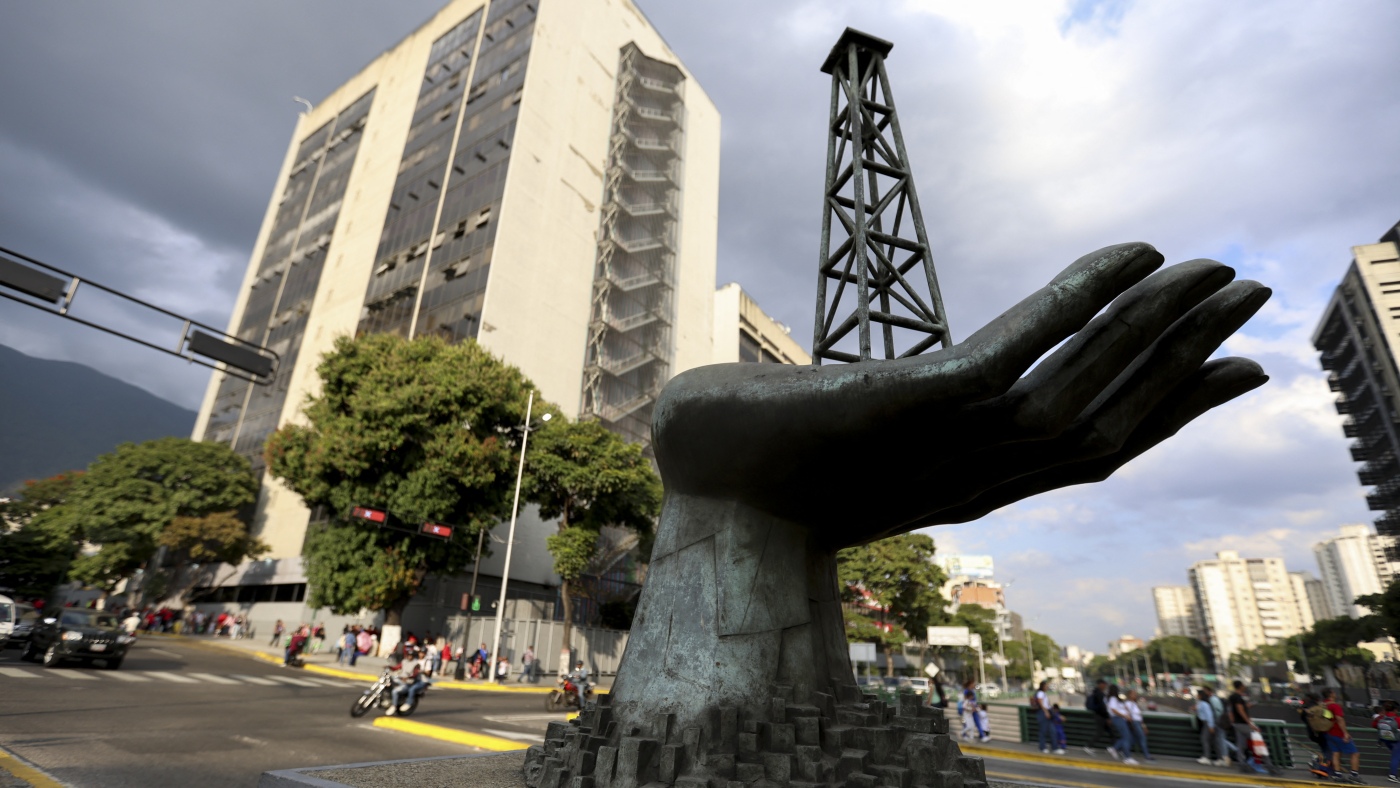
A last, and the least noble, reason for European ambiguity has to do with Venezuela itself and its close relationship with Putin’s Russia. European countries and the EU have rightly deemed Maduro a dictator, who lost and stole the 2024 election. Their opposition to the Venezuelan regime hardened after Russia’s full-scale invasion of Ukraine, in light of Putin’s ties to Maduro. At the UN, Venezuela in fact has consistently sided with Russia over Ukraine. Now, a US-led regime change in Caracas could trigger a surge in Venezuelan oil production, leading to a fall in prices and sucking lifeblood from Putin’s war machine. But are these good enough reasons not to call the US’s violation of international law by its name?
No. After Bashar al-Assad’s overthrow in Syria, Maduro’s fall in Venezuela represents a serious blow to Russia’s global ambitions, and this is good news for Europe. However, the fall of a regime, illegitimate as it may be, through an illegal military attack by a foreign country and the establishment of a quasi-colonial protectorate constitutes a violation of the most basic norms of sovereignty and independence on which European security is built. It is Russia’s dream for Europe.
True, Putin does not need Trump’s free pass to pursue such a vision. He has done so in Ukraine, as well as in Georgia and Moldova, well before Trump toppled Maduro. But there is no doubt that Trump’s green-lighting of spheres of influence – not just in words but in action – embodies the law of the jungle so dear to dictators such as Putin. For Europeans to silently condone such a vision is not just unethical. It is plain stupid.