The West Asia conflict has escalated sharply, with the United States and Israel carrying out joint strikes on Iran’s key infrastructure, including nuclear-linked sites. In response, Iran has launched missile attacks, targeting areas near sensitive Israeli locations such as Dimona and Arad. What began on February 28 has now turned into regular exchanges, with both sides repeatedly hitting military and critical facilities.
In recent days, airstrikes on Iran have intensified. Washington has also warned it could target more energy and nuclear sites if Tehran does not meet its demands, including reopening the Strait of Hormuz.
Here is a look at Iran’s nuclear programme and its main facilities:
What are Iran’s nuclear capabilities?
Iran’s nuclear programme dates back to the 1950s, when Shah Mohammad Reza Pahlavi launched it with support from the United States as part of the ‘Atoms for Peace’ initiative. A civil nuclear cooperation agreement was signed in 1957, and by 1967 Iran had set up the Tehran Nuclear Research Center with a US-supplied research reactor.
However, Washington withdrew backing after the 1979 Islamic Revolution brought a theocratic regime to power.
A decade-long probe by the International Atomic Energy Agency (IAEA) found that Iran had carried out a “range of activities relevant to the development of a nuclear explosive device” under Project Amad between 1989 and 2003. Some work continued until 2009, but the agency later said there were “no credible indications” of an active weapons programme after that.
Under the 2015 nuclear deal negotiated during former US president Barack Obama’s tenure, Iran was allowed to enrich uranium up to 3.67 per cent — suitable for civilian energy but far below the 90 per cent needed for weapons. However, after the US withdrew from the deal under Donald Trump, talks have largely stalled.
Iran’s major nuclear sites
Natanz enrichment facility
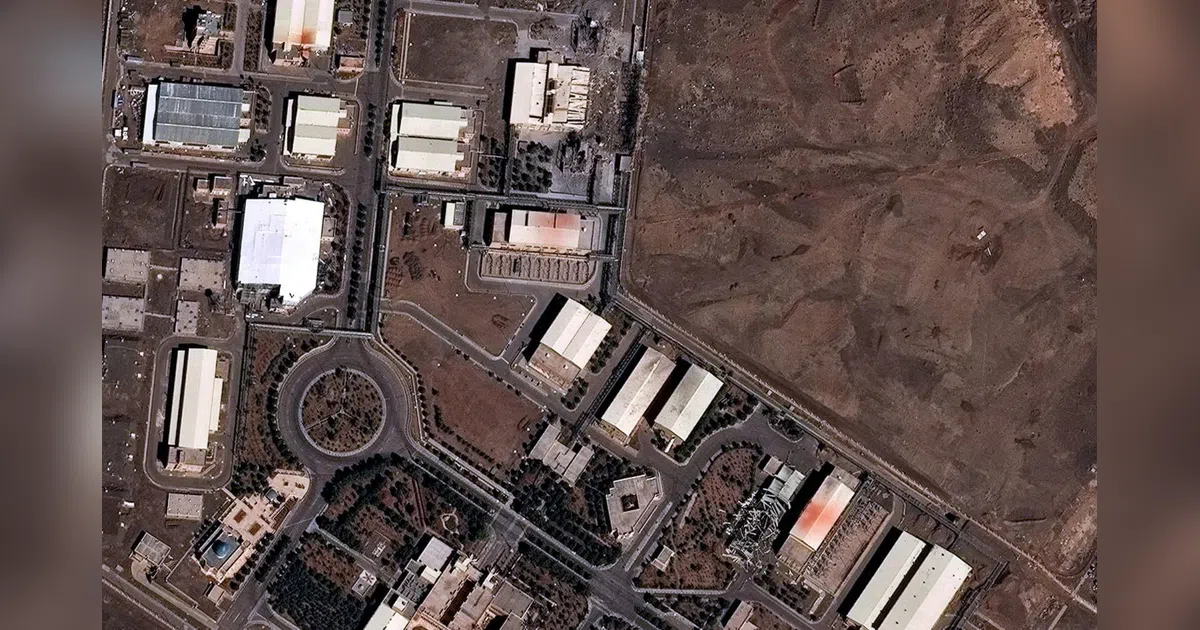
Located about 220 km southeast of Tehran, Natanz is Iran’s main uranium enrichment hub. It includes the underground Fuel Enrichment Plant (FEP) and the above-ground Pilot Fuel Enrichment Plant (PFEP).
The FEP is designed for large-scale enrichment and can hold up to 50,000 centrifuges. Around 16,000 are installed, with 13,000 currently operating, enriching uranium to about 5 per cent. The facility lies deep underground, making it harder to destroy, though it has faced past sabotage, including a 2021 explosion and power outage that Iran blamed on Israel.
The smaller PFEP hosts a few hundred centrifuges but is used for higher-level enrichment, reaching up to 60 per cent.
Fordo enrichment facility
Fordo, about 100 km southwest of Tehran, is a smaller but heavily fortified enrichment site built inside a mountain near Qom. Its underground location makes it more resistant to airstrikes.
Iran was not allowed to enrich uranium at Fordo under the 2015 deal, but it now operates around 2,000 centrifuges there, many of them advanced models. Some are enriching uranium to 60 per cent. The US, the UK and France revealed in 2009 that Iran had been secretly building the site.
Bushehr nuclear power plant
Bushehr, on the Persian Gulf coast, is Iran’s only operational nuclear power plant. Construction began in the 1970s under the Shah and was later completed by Russia.
The plant uses Russian-supplied fuel, which is returned after use, reducing proliferation risks. Iran is also building additional reactors at the same site. Bushehr is monitored by the IAEA.
Isfahan Nuclear Technology Centre
Situated about 350 km southeast of Tehran, this facility is a key part of Iran’s nuclear programme. It includes research reactors, laboratories and uranium processing units.
The site can convert uranium into uranium hexafluoride, which is used in centrifuges for enrichment. It also stores enriched uranium and has equipment capable of producing uranium metal, a sensitive process linked to weapons development.
Khondab (formerly Arak reactor project)
Khondab is a partially built heavy-water reactor. Under the 2015 deal, construction was halted and its core was filled with concrete to make it unusable.
Iran has told the IAEA it plans to restart the redesigned reactor by 2026, with safeguards to limit plutonium production.
Tehran research reactor
Located in Tehran, this research reactor was supplied by the US in 1967 under the “Atoms for Peace” programme. It was initially designed to use highly enriched uranium but was later modified to run on low-enriched fuel.
2025 strikes on nuclear sites
In June 2025, Israel launched ‘Operation Rising Lion’, targeting key nuclear and military facilities across Iran, including Natanz.
Soon after, the United States carried out strikes under ‘Operation Midnight Hammer’, hitting Natanz, Fordo and Isfahan with bunker-buster bombs and cruise missiles. The IAEA confirmed that all three sites were hit.
The attacks caused “severe damage” to infrastructure and equipment. At Fordo, sensitive systems were reportedly destroyed, though the facility itself remained intact. At Natanz, above-ground structures and power systems were badly hit, while underground sections largely survived.
According to Pentagon estimates, the strikes may have delayed Iran’s nuclear programme by one to two years, but did not eliminate it.