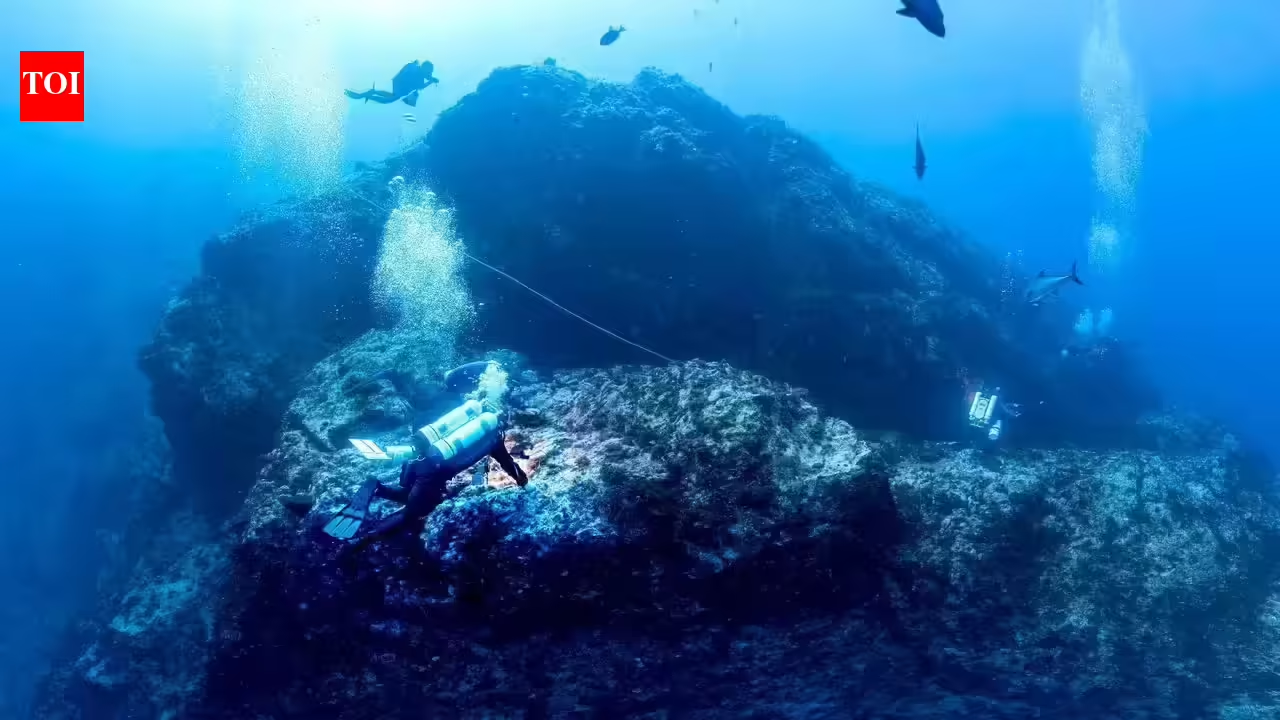
Beneath the ocean’s rolling surface, there are mountains. Not the snowy peaks you hike, but vast, underwater volcanoes rising from the seafloor. Some tower more than a kilometre high. Some even poke above the water as tiny islands. Scientists say there might be over 100,000 of these “seamounts” scattered across the globe, but fewer than 0.1% have been explored.These mountains are more than just rocky structures, but they’re living cities. A diver or researcher could swim past and barely notice anything at first. As reported by the BBC, there are more than 100,000 undersea mountains spread across the globe from the frozen waters of the North Atlantic to the abyssal depths of the tropical Pacific.
Why seamounts are shark hotspots
Seamounts aren’t flat; they rise sharply from the deep. Some have ridges, craters, and flat tops. The currents hit these slopes and stir the water like giant mixing spoons. Cold, nutrient-rich water rises. Tiny plankton blooms, fish come to feed, and then the predators follow.Sam Weber, a marine scientist, spent years around Ascension Island, which itself is the tip of one such undersea volcano. He says the Southern Seamounts nearby had 41 times more sharks than the surrounding open ocean. “It was like living in a small village underwater,” he reportedly said.Scientists debate why sharks congregate here. One idea is the “oasis hypothesis,” where the seamounts create life, right there. Energy is generated on the mountain itself. Another is the “hub hypothesis,” where sharks feed elsewhere and return, like commuters checking back into a station. Weber thinks both might be true. Some sharks stay. Others come and go. One tagged silky shark reportedly left at night to hunt, travelled up to 100km, then returned in the morning. Almost like checking in.There’s even talk of a “service station hypothesis.” Sharks can’t stop swimming. Upwelling currents may let them float, save energy, then head back out to feed. Makes sense, right? Floating on nature’s conveyor belt.
Seamounts: A fragile underwater city
It’s not just sharks. The mountains host everything from corals to whales, turtles to tunas. Some species are slow-growing. Bottom trawlers can destroy them in hours, leaving bare rock where vibrant ecosystems once thrived. It can take decades for these areas to recover. Some species might never return.And there’s a halo effect. Even a few kilometres from the summit, predator numbers remain higher than in the open ocean. The seamount acts as a safe point, as reportedly pregnant marbled electric rays gather, and deepwater corals thrive on slopes thousands of metres down.
Conservation efforts
Conservation is picking up. Portugal created a protected area around Gorringe. Ascension’s waters are off-limits to commercial fishing. The UN is calling for a global stop to bottom trawling on seamounts by 2026. Still, experts say partial protection isn’t enough. Whole ecosystems need safeguarding. Sharks need their mountains. And the mountains, it seems, need the sharks too.