Why are these extreme events happening?
These episodes are triggered when general warming in the Arctic combines with atmospheric patterns that can intensify melting. The gradual rise in temperatures sets the stage, but it is specific weather patterns, such as prolonged blocking anticyclones, that turn a hot summer into an extreme event.
Blocking anticyclones occur when an area of high pressure remains stationary for several days, diverting normal weather systems. This causes atmospheric stability and clear skies, allowing warm air from the south to rapidly raise surface temperatures.
In some cases, the arrival of masses of humid air generates warm clouds that radiate heat towards the ice, further accelerating melting. These , making it likely that these weather systems will reoccur.
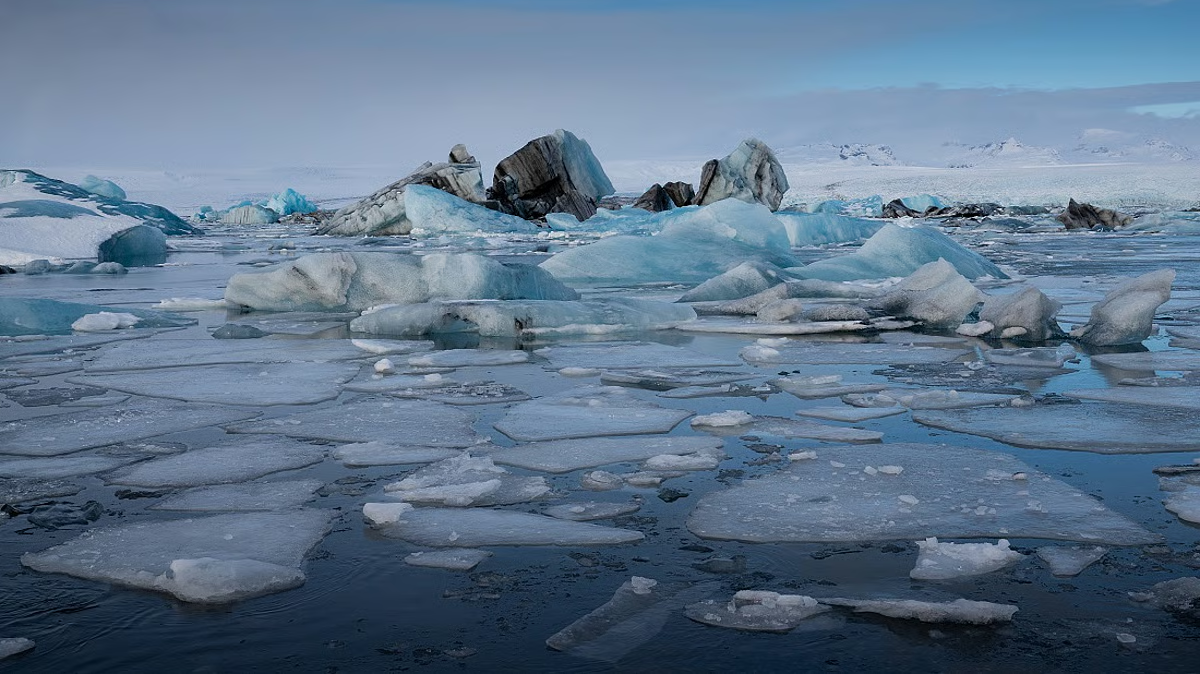
Each episode also leaves a physical mark on the ground, as melting removes recent snow and exposes darker, less reflective ice. This decrease in reflected sunlight, known as , intensifies the absorption of solar energy, causing the next melt to act on a more vulnerable surface. This causes a feedback loop that accelerates mass loss and contributes to the rapid warming that now characterises the Arctic.
Furthermore, since around the 1990s, summer melting has intensified and spread to high-altitude areas that historically remained below freezing throughout the summer. Today, the isotherm (the line indicating the altitude at which the temperature is 0 °C is rising higher and higher, shifting the melting zone deeper into glaciers and reducing the size of areas that previously acted as accumulation reservoirs.