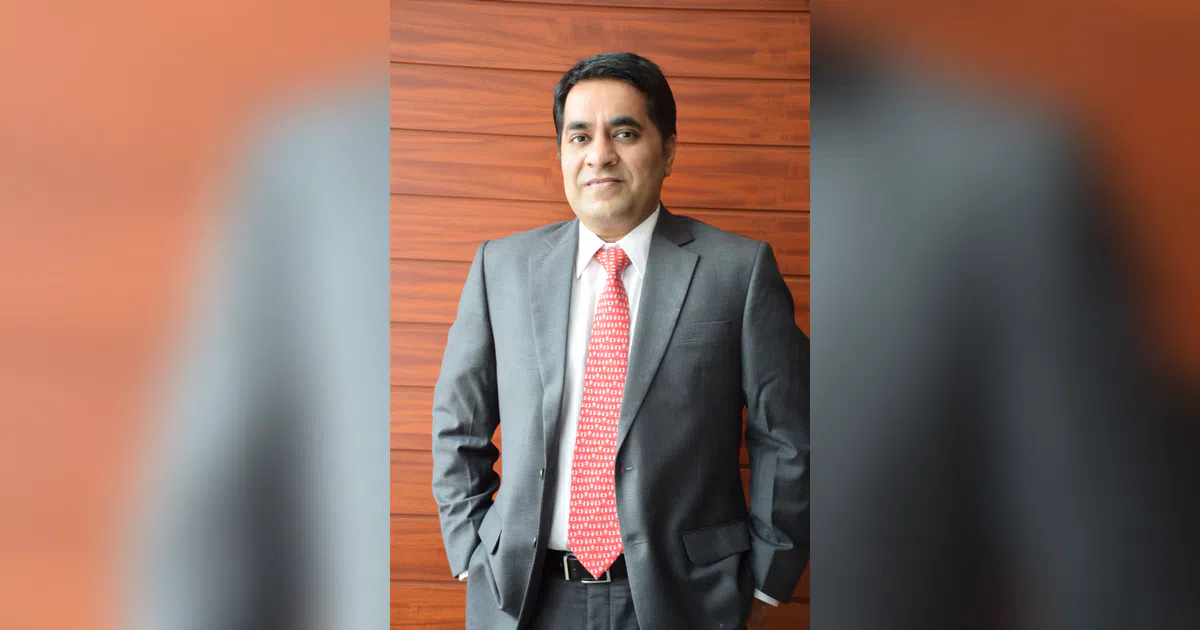
It has been a forgettable March for stock market investors amid the ongoing geopolitical conflict in West Asia. Rajat Rajgarhia, managing director and chief executive officer for institutional equities at Motilal Oswal Financial Services, tells Puneet Wadhwa in an email interview that investors should be favourably allocated to equities and deploy in these times. Edited excerpts:
Returns from equity as an asset class have not been too impressive lately. Why should one still stick to this asset class then?
Equity as an asset class provides return over a period of time. They do not give linear returns every year, but do give strong returns as one holds. Moreover, if an investors builds an equity portfolio in these times, the returns become even better over a period of time, due a favorable pricing environment. Historically, buying into equities during such times have always delivered strong returns.
Do you think Indian markets can gradually slip into a bear phase before staging a slow comeback?
Across asset classes – equity, commodities, debt, and real estate—which one could be the next big money spinner for Indian investors from a 12-month perspective?
Debt returns are steady and predictable, but not match what equities will deliver over a period of time. Commodities, mainly gold and silver have delivered extremely strong returns over last 18 months and unlikely to repeat this performance. Equities from the levels where we stand today, should be the preferred asset class. As earnings growth recovers and global events subside, India should see good inflows from FIIs, while domestic flows continue. This will further help the performance.
Should investors prefer large-cap, mid-cap, or the small-cap segment?
What’s the outlook for FII flows into emerging markets, including India, for the rest of 2026?
FII flows have been very negative in 2026. In March itself, they have sold almost $9 billion. The allocation towards India has been declining over last couple of years. This is unlikely to change in the near term as global concerns put further pressure on emerging market (EM) equities.
Before this war, the primary concerns has been low growth and high valuations, which are slowly getting resolved. However, we think that over the medium-to-long term, we will see significant FII allocation as the market grows, earnings recover and several new opportunities emerge.
Primary markets have been an important source of allocation, too. With multiple larger issuances by the top business franchisees come for initial public offer (IPO), this will draw more money.
For FII’s, the favored markets over last two years have been countries that were beneficiaries of new age tech and artificial intelligence (AI). US, Korea, Japan and Taiwan have been significant outperformers over India. Once the narrative changes, we should see more focus on India.
Have you started lowering estimates for corporate earnings growth for fiscal 2026-27 (FY27) amid the geopolitical developments?
While the global commodities have been volatile, we are just 3 weeks into this war. It may be a bit early to change growth assumptions. If we see these trends persist for another month or so, the macro assumptions will see a downgrade, which in turn will lower the corporate earnings growth. However, our earnings profile is also quite divergent and domestic dependent. Barring Oil and related products, we should see bit more resilience than what markets are fearing today.
Your overweight and underweight sectors?
Remain positive on Financials – Banks, NBFCs & Capital markets. Credit growth is recovering and lenders will have opportunity to grow well in a high quality credit environment. This will drive re-rating for the sector. Capital market plays are multi-year structural themes to ride the big savings pool.
Autos will do well post the GST cut and higher consumption. Select categories of consumption will be favored like Hotels, Quick Commerce and Airlines etc. We like Renewables as the opportunity and growth rates remain very high. EMS is another theme where stocks look attractive post recent correction.
Our key Underweight remains Staples as growth remains very low, large IT as sector growth rates continue to moderate. Amongst dark horses, Cement should be watched as housing / Infra could boost demand. Another sector to watch could be QSR, where companies have lagged over the last two years, and could see recovery in the year ahead.