
The Paris-based startup wants to build the space equivalent of shared mobile infrastructure, allowing operators to offer satellite connectivity without handing the keys to Starlink.
French satellite startup Univity has raised a €27m a Series A round, backed by venture firm Blast, European deeptech fund Expansion, and Bpifrance’s Deeptech 2030 fund – part of the French State’s France 2030 industrial programme – alongside two family offices.
Founded in 2022 by Charles Delfieux, Univity is building what it describes as a wholesale space infrastructure: a neutral, shared satellite network that telecom operators can use to offer high-speed internet from space directly to their own customers – rather than being squeezed out by consumer-facing rivals like SpaceX’s Starlink.
The company places its satellites in Very Low Earth Orbit (VLEO) – below 375km above Earth, closer than most commercial constellations fly. That shorter distance, it says, means faster signal round trips, better performance on smartphones and connected vehicles, and smaller, cheaper ground equipment. Univity also uses operators’ existing 5G spectrum, meaning the service slots into mobile networks they already run, rather than competing for crowded frequencies.
Univity says this is essentially the space version of shared network infrastructure – the kind telecoms operators are already comfortable with on the ground. Carriers get to sell space-based connectivity under their own brand, keeping them central to the market rather than reselling someone else’s service.
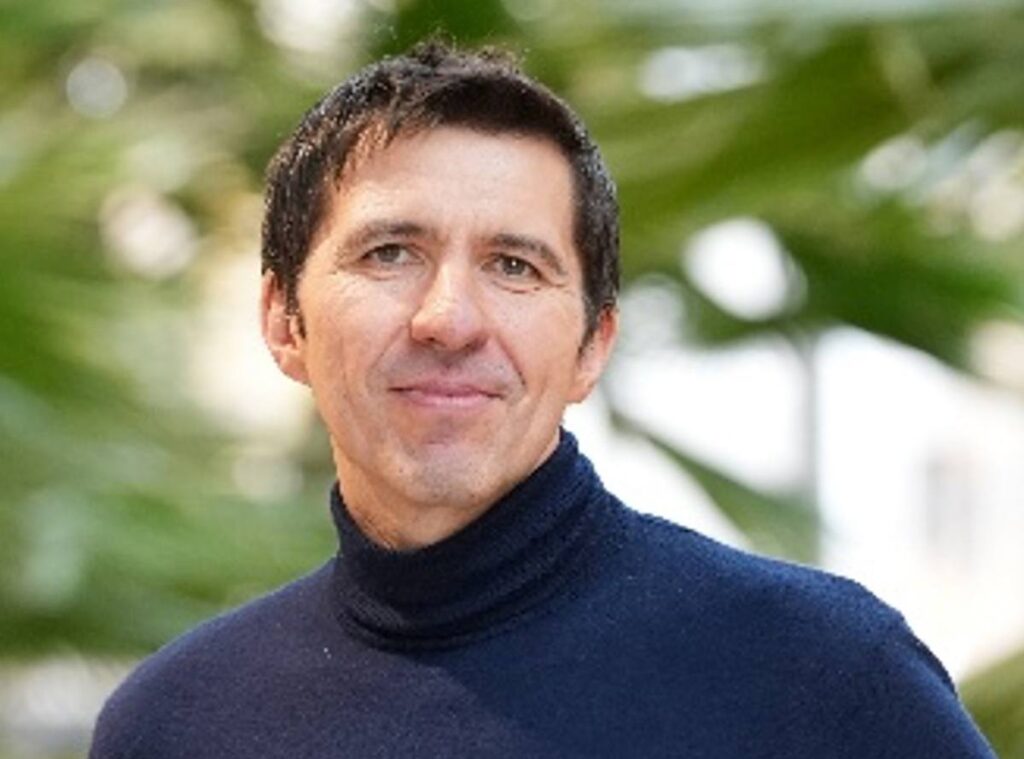
“Our ambition is to enable operators to leverage space as a natural extension of their terrestrial 5G networks, combining performance, competitiveness, and sovereignty,” said Charles Delfieux, founder and CEO of Univity.
The fresh capital will fund the execution of uniShape, UNIVITY’s flagship VLEO 5G demonstration programme developed with French space agency CNES.
Two satellites will be built, launched and operated in orbit to validate an end-to-end high-throughput service – including direct-to-smartphone connectivity – something the company says will be a world first.
The investment will also go towards growing the team and getting commercial operations ready for a 2028 scale-up, it says
“Univity is not just innovating. It is redefining the architecture of global communications,” said Anthony Bourbon, founder of Blast.
Stéphane Lefevre-Sauli, senior investment director at Bpifrance, added that Univity’s work in VLEO and 5G spectrum is “critical to enabling telecom operators to remain competitive and independent” and that the investment “fully addresses national and European sovereignty challenges in connectivity.”
The Series A brings Univity’s total funding to over €60m after it was awarded a €31m contract from CNES in September 2025. CNES (Centre National d’Etudes Spatiales) is the French government space agency. The company launched its first 5G mmWave payload in June 2025. Two prototype satellites are due for launch in 2027, with plans for the full constellation to be rolled out between 2028 and 2030.
Don’t miss out on the knowledge you need to succeed. Sign up for the Daily Brief, Silicon Republic’s digest of need-to-know sci-tech news.