A surprise raid on the capital in the dead of night, ending with the capture of the country’s leader. By the following day, the invading power announces it will rule the nation for an indefinite period.
That was how Vladimir Putin envisaged his full-scale invasion of Ukraine playing out in February 2022. Instead, it was Donald Trump who pulled it off in Venezuela, in an operation condemned by many as illegal, whisking away the Kremlin’s historic ally Nicolás Maduro, who now faces trial in New York.
In public, Russian officials have reacted with anger, condemning the attack as a flagrant violation of international law and a dangerous precedent. But beyond the rhetoric, there is a sense of grudging respect – and even envy – at the effectiveness of the coup that Moscow itself once imagined, but failed to execute because of a series of intelligence blunders and Ukraine’s strong resistance.
“The operation was carried out competently,” wrote the pro-Kremlin Telegram channel Dva Mayora, which has close ties to the Russian military.
“Most likely, this is exactly how our ‘special military operation’ was meant to unfold: fast, dramatic and decisive. It’s hard to believe [Valery] Gerasimov planned to be fighting for four years,” it added, referring to Russia’s chief of the general staff.
Such commentary has fed a mood of soul-searching among pro-war voices, with some openly questioning how Russia’s promised blitzkrieg in Ukraine morphed into a protracted and deadly war.
Olga Uskova, a pro-Kremlin tech entrepreneur, said she felt “shame” on Russia’s behalf in the face of how brazen the US intervention appeared to be.
“In the space of a day, Trump arrested Maduro and seemingly wrapped up his own ‘special military operation,’” she wrote.
Margarita Simonyan, Russia’s chief propagandist and the head of RT, also weighed in on Telegram, saying Moscow had reason to “be jealous”.
For more than two decades, Venezuela sought to cultivate a network of anti-American allies – from Russia and China to Cuba and Iran – in the hope of helping to shape a new axis capable of standing up to Washington.
Yet despite Russia’s foreign minister pledging support for Maduro’s regime as recently as late December, few serious analysts ever expected Moscow to come to his rescue in any meaningful way.
Bogged down in Ukraine, Russia has, over the past year, watched other key allies fall from power or weaken sharply – from Bashar al-Assad in Syria to an increasingly weakened Iran – laying bare the limits of the Kremlin’s reach.
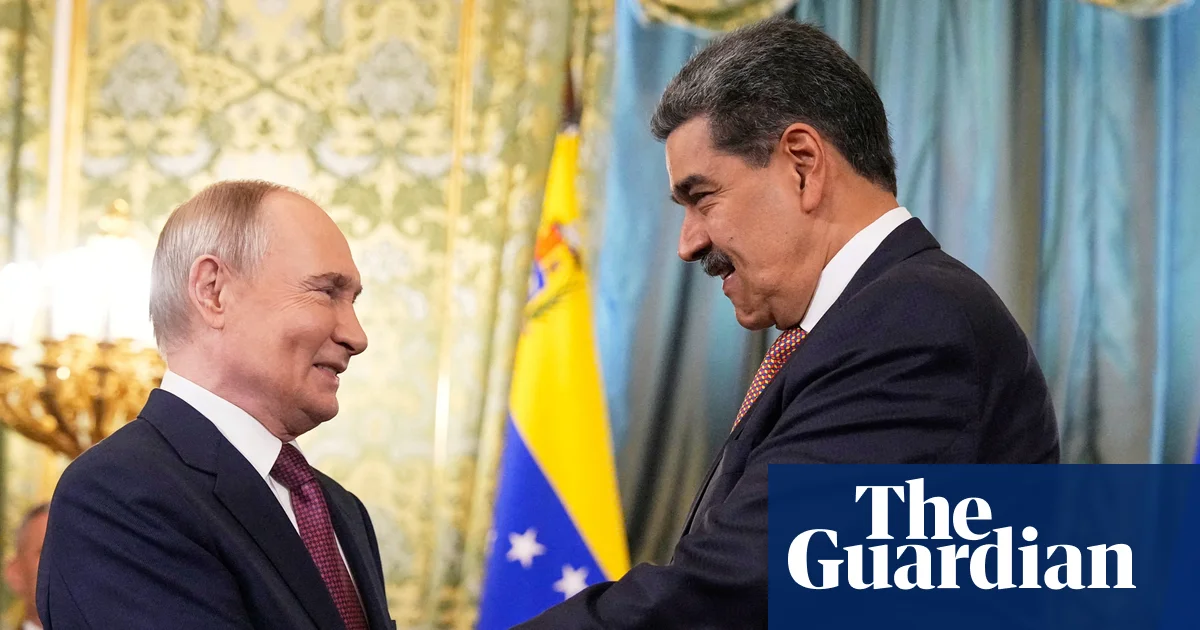
“For Russia, the situation is deeply uncomfortable,” said Fyodor Lukyanov, a foreign policy expert who advises the Kremlin. “Venezuela is a close partner and ideological ally, and Maduro and Putin have longstanding ties, leaving Moscow with little choice but to express outrage at US actions. Yet providing any real assistance to a country so distant, and operating in a fundamentally different geopolitical reality, is simply not feasible – for technical and logistical reasons.”
There is also a more practical calculation.
Putin’s priority, analysts say, is Ukraine – and maintaining a good relationship with Trump on that front far outweighs the fate of Caracas. Despite Moscow’s pledges to defend Maduro, the Kremlin had scant appetite to risk angering Trump over a distant theatre.
“Putin and Trump are currently focused on a far more consequential issue for Moscow: Ukraine. And for all the Kremlin’s sympathies towards Caracas, it is unlikely to upend a much larger strategic game with a critical partner over what it sees as a secondary concern,” Lukyanov said.
Still, Russia’s loss of Venezuela carries several tangible costs for Moscow. If a US-friendly government were to emerge in Caracas, American military and defence specialists could gain access to large parts of the Venezuelan armed forces’ arsenal, including advanced Russian-made systems supplied over the past decade.
Those include S-300VM air-defence systems delivered in 2013, as well as an undisclosed number of Pantsir and Buk-M2 systems transferred in late 2025.
Moscow has also extended billions of dollars in loans to Venezuela, much of which it is now unlikely ever to be recovered.
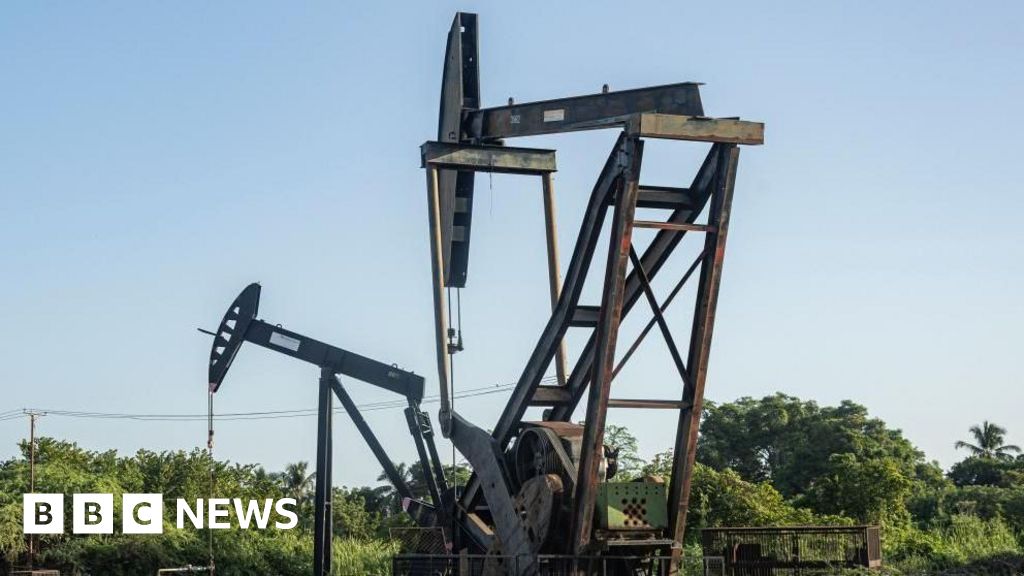
A more pressing concern for Moscow, however, is oil: US access to Venezuela’s vast reserves could push global prices lower, threatening one of Russia’s most important sources of income.
“If our American ‘partners’ gain access to Venezuela’s oilfields, more than half of the world’s oil reserves will end up under their control,” wrote Oleg Deripaska, a powerful Russian billionaire industrialist, on Telegram. “And it appears their plan will be to ensure that the price of our oil does not rise above $50 a barrel.”
Still, some in Moscow see room for a bleak kind of optimism. Trump’s kidnapping of Maduro, they argue, could deal a final blow to the rules-based international order and usher in a more nakedly 19th-century-style world – one in which power, rather than law, shapes outcomes and the globe is divided into rival spheres of influence, a model long championed by Russia.
“Team Trump is tough and cynical in advancing its country’s interests,” Dmitry Medvedev, Russia’s former president and one of its most hawkish voices, wrote approvingly. “Removing Maduro had nothing to do with drugs – only oil, and they openly admit this. The law of the strongest is clearly more powerful than ordinary justice.”