
Published by Bloomsbury India
It is a truth universally acknowledged that seeking private medical care in India, much like in countries that rely heavily on corporatised healthcare, can be deeply injurious to one’s financial health. This is hardly surprising in a system where government health expenditure remains below 2 per cent of gross domestic product (GDP), while a significant share of total health spending is paid out of pocket by patients desperate to beat illness.
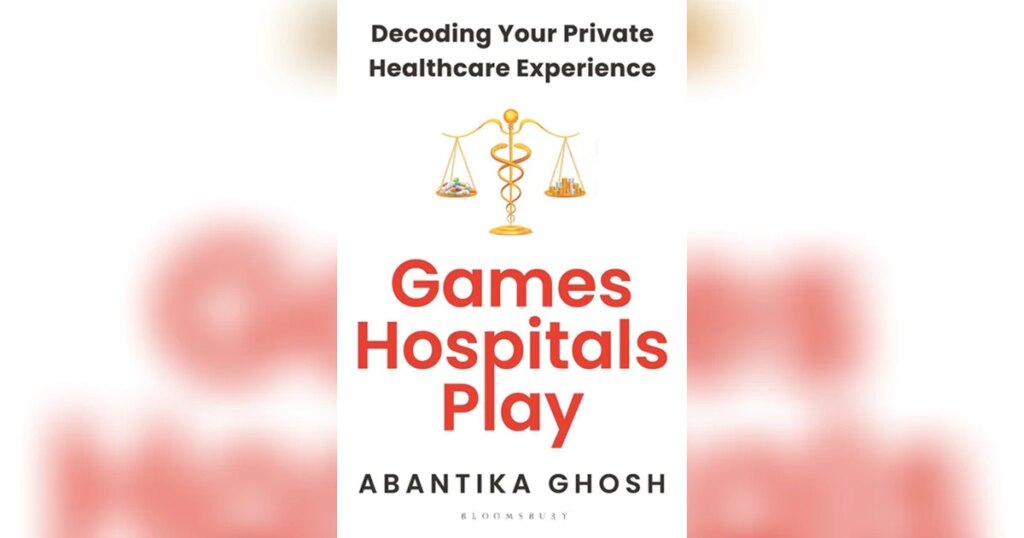
As a society, we have become so accustomed to shelling out large sums of money for healthcare that few protest or ask questions. Meanwhile, the public-private partnership (PPP) model is only becoming more pervasive, extending its influence into medical education as well. Games Hospitals Play: Decoding Your Private Healthcare Experience, by Abantika Ghosh, a health journalist and public policy professional, is a call to action for everyone who believes health should not be treated as a commodity.
We live in a time when nearly every hospital visit is a reminder that the side-effects of inflated bills are often long-term, with stories of patients reeling under medical debt crushingly common, and no cure in sight. It is this all-too-familiar insecurity that people feel about private hospitals that inspired the book, Ms Ghosh writes.
We know that India operates in a complex space where public health infrastructure is unable to keep pace with its population, and the wide leash given to private players to fill that void, despite repeated calls for stronger regulation, has sent costs spiralling out of control. The Covid-19 pandemic exposed this reality even more starkly.
Meanwhile, the government insurance scheme to rope in private hospitals in public healthcare, the Pradhan Mantri Jan Arogya Yojana (PMJAY), is fraught with problems. Over 400 million Indians — the missing middle — have no health insurance.
The book tackles questions that are familiar, but remain important: Can I trust private hospitals? How does insurance really play out? Why do we end up paying far more than initially imagined? How much of it is legal, and how much of it unethical? There are no easy answers here, and while Ms Ghosh doesn’t provide a ready prescription, she meticulously exposes the corrupt and shadowy workings of the industry.
Mining court documents, insider accounts and investigative reports, she unpacks the ways in which the medical ecosystem has been shaped by market forces and profit-driven modern practices, where luxury healthcare of the highest order can be bought with deep pockets even as millions suffer for lack of access to proper medical care.
In a slim volume, the book examines key aspects of the role private hospitals play in a country with a steadily rising disease burden. It is part playbook — offering a helpful guide on how to navigate the complex web of medical care and what to be watchful for — and part revelation, with dozens of voices exposing dubious business practices, including patients, doctors, hospital officials and medical experts.
The devil, as always, is in the details. Ms Ghosh examines hospital billing practices, combing through instances of even basic medicines, equipment, and bed charges being marked up exorbitantly. When patients are presented with mind-boggling, itemised bills at the end of the stay, it is nearly impossible to decode or contest them. And yet many do. Ms Ghosh brings together some of the landmark cases that have helped spark a wider conversation around this long-standing issue.
Going deep into the more complex issue of how surgeries are billed to serve the interests of private hospitals, including “surge pricing”, a urologist confirms what we have long believed: Handsomely paid surgeons are often under pressure from hospital administrators to meet high targets by pushing for unnecessary and “emergency” surgeries. She also examines the phenomenon of the “star doctor” as the proverbial golden goose, with patients charged a premium for care from these highly feted medical professionals who may not even be present during the said surgery, but it serves as the perfect business model that hospitals profit heavily from.
Overtreatment, preventive health check-ups as money spinners, tricky referrals from one doctor to another, and the popular “multidisciplinary approach” — which sounds like a sensible strategy, but is far less straightforward in practice— all come under scrutiny.
She also analyses how hospital packages, over-testing, monitoring and post-hospitalisation at-home care have emerged as tools to draw patients deeper into the system. The book is most engaging when it cautions the reader with behind-the-scenes accounts and insider perspectives. Where it stumbles is in pulling these strands into a cohesive narrative that remains consistently compelling, without being weighed down by details that distract from the central issues. That said, for anyone curious about how hospitals actually work, beyond what’s visible to patients, this is well worth reading.
The reviewer is a Delhi-based independent journalist