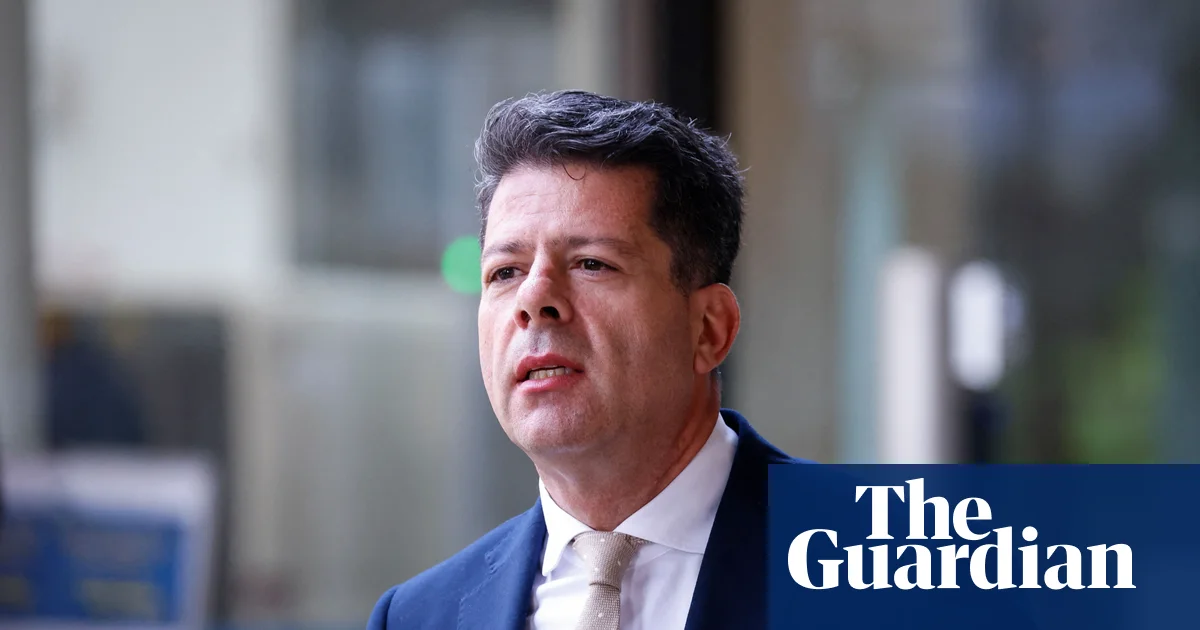
The chief minister of Gibraltar made a series of “grossly improper” and “sinister” interventions to interfere in a live criminal investigation in order to protect his friend, mentor and business partner from the consequences of a search warrant, a public inquiry has found.
The retired England and Wales high court judge and inquiry chair, Sir Peter Openshaw, concluded that Fabian Picardo acted to protect James Levy KC when police were at Hassans law firm, where Levy was a senior partner, with a search warrant.
The warrant relating to Levy concerned an investigation into an alleged plot to steal a state security contract. He was never charged.
Openshaw said that while the Royal Gibraltar police (RGP) officers were at Hassans, Picardo summoned the commissioner of police, Ian McGrail, to his office and “berated” him while in a “towering rage” in “a grossly improper attempt to interfere in a legitimate police investigation and operation”.
McGrail retired a month after the May 2020 incident and the inquiry aimed to establish whether he was forced out.
The retired judge said: “I reject Mr Picardo’s defence of his actions. I do not think that he was protecting the reputation of Gibraltar; I think it far more likely that he was moving to protect Mr Levy, his life-time friend and ‘mentor’, from the likely consequences of the warrant being executed or his phones being interrogated.”
Picardo was also found to have shared confidential information with Levy’s lawyer about what he thought was the director of public prosecutions’ advice on the warrant as well as information about police disciplinary regulations that appeared aimed at targeting McGrail or the senior investigating officer on the case, which Openshaw described as “sinister”.
He said there was “a very high risk” of Picardo’s duties as chief minister conflicting with his interests as a friend and business partner of Levy.
Nevertheless, the retired judge found that Picardo’s actions had not “in fact interfered with the visit of the RGP to Hassans; they carried on precisely as had been planned. I conclude that there was no actual interference with the RGP’s actions on 12 May.”
The search warrant under scrutiny related to alleged hacking and sabotage of the national security centralised intelligence system and into a conspiracy to defraud Bland Ltd, the private company that was operating the system, in order to benefit another firm, 36 North Limited.
Hassans owned a third of 36 North Limited – which had also held security contracts with the government – and, through the law firm, Picardo and Levy owned equity interests too.
The inquiry heard that Picardo and the then interim governor, Nick Pyle, claimed to have lost confidence in McGrail over a series of issues including his handling of a fatal collision at sea involving an RGP vessel in March 2020. However, Openshaw said the “real reason” was the police application for a search warrant against Levy and Picardo’s genuine belief that McGrail had lied to him about the investigation.
The report found that Picardo believed that McGrail told him the DPP had advised the RGP to apply for a search warrant, even though McGrail did not say this “in clear and unambiguous terms”.
Openshaw said McGrail did mention engagement with the DPP but “did not lie” and Picardo’s decision “that Mr McGrail had to go” was “in part based on a misunderstanding” that the police commissioner had deliberately lied.
Picardo claimed the government had been completely exonerated. “The report finds that there was no actual interference with the RGP’s investigation by me, by anyone on my behalf or by any officer of the government and no conspiracy to remove him [McGrail] from office.”
Openshaw said of McGrail: “I conclude that one of the main reasons that he retired was that he felt under pressure to do so because he knew that the chief minister and the governor had lost confidence in him, but he did so only because he knew he was being unfairly compelled to do so because neither they nor the GPA [Gibraltar Police Authority, the policing watchdog] had followed the proper procedures. He was, in effect, being forced out.”
He said the procedural irregularities including a failure to examine McGrail’s extremely serious allegations of political interference, “might have been cured” but refused to say whether it would have changed the outcome for McGrail.