Commercial LPG supplies have also been adjusted to ease pressure on household consumption. The government has restored 50 per cent allocation of commercial LPG to sectors such as restaurants, hotels, industrial canteens and food processing units, while prioritising hospitals, educational institutions and community kitchens. In addition, 48,000 kilolitres of kerosene have been allocated to states and Union territories to support low-income households through the public distribution system.
Authorities have also intensified enforcement to prevent hoarding and black-marketing. Under the Essential Commodities Act, 1955 and the LPG Control Order, 2000, state governments have been directed to monitor supplies closely and take action against violators. Around 3,500 raids were conducted across several states, including Bihar, Haryana, Karnataka, Tamil Nadu and Uttar Pradesh, leading to the seizure of more than 1,200 LPG cylinders. Public sector oil companies have also conducted surprise inspections at over 1,800 fuel stations and LPG distributorships to ensure smooth supply.
On the maritime front, the Union Ministry of Ports, Shipping and Waterways said it is closely monitoring vessel movements and the safety of Indian seafarers in the region. About 22 Indian-flagged vessels carrying 611 Indian seafarers remain in the western Persian Gulf, while more than 547 seafarers have already been repatriated. A 24-hour control room operated by the Directorate General of Shipping has handled over 3,700 calls and 7,000 emails related to maritime safety.
The Union Ministry of External Affairs said it is maintaining close contact with the Indian community across West Asia, with missions operating round the clock to provide assistance. Since the conflict began on February 28, more than 350,000 passengers have returned to India from the region. Several airspaces remain closed, including those of Kuwait and Bahrain, but special flights are being arranged through Saudi Arabia. Officials said six Indian nationals have died and one remains missing, with diplomatic missions coordinating with local authorities for repatriation and assistance.
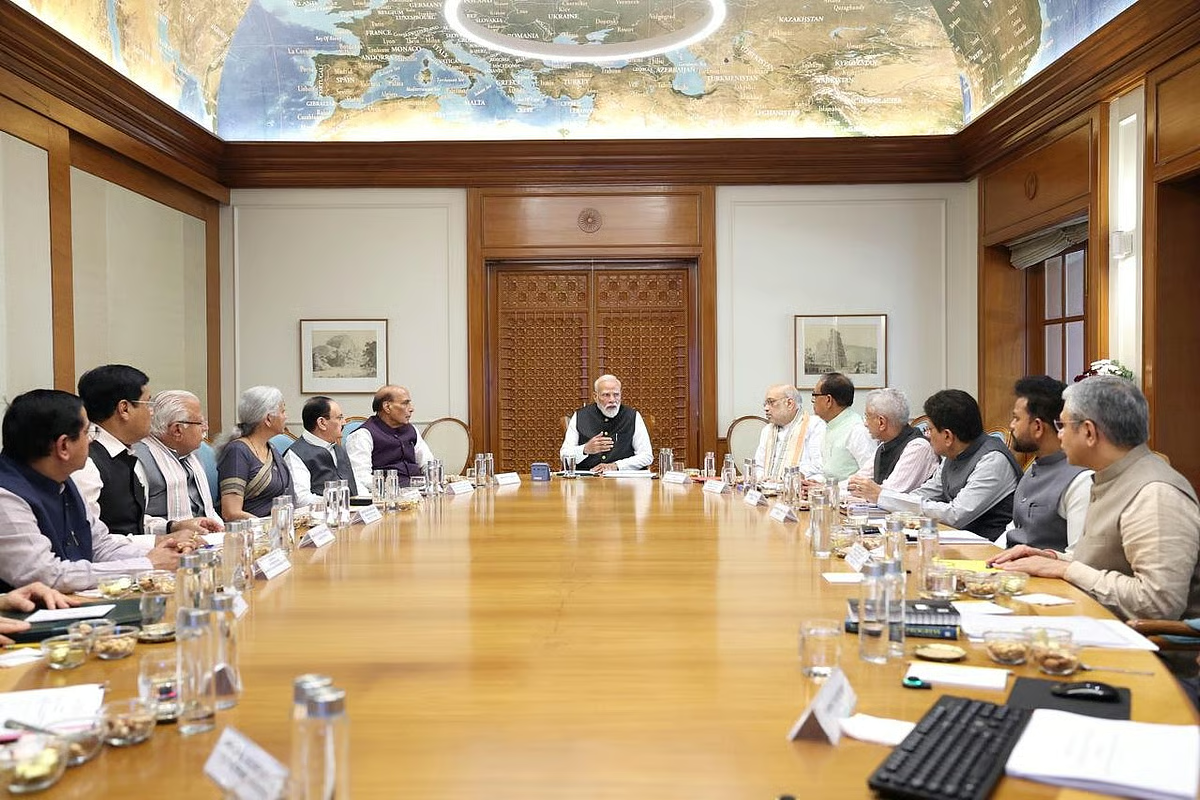
Prime Minister Narendra Modi on March 22 chaired a meeting of the Cabinet Committee on Security to review the impact of the conflict and India’s preparedness. Officials assessed potential implications for sectors including energy, fertilisers, agriculture, shipping, trade and supply chains, as well as food and fuel security ahead of the upcoming Kharif season.
The government said coal stocks at power plants remain sufficient to avoid electricity shortages, while ministries are exploring alternative sources for imports of chemicals, fertilisers and petrochemical feedstocks. The prime minister directed the creation of dedicated ministerial and inter-departmental groups to coordinate response measures, emphasising a whole-of-government approach to minimise disruption to citizens and prevent hoarding of essential commodities as the conflict continues to unfold.