
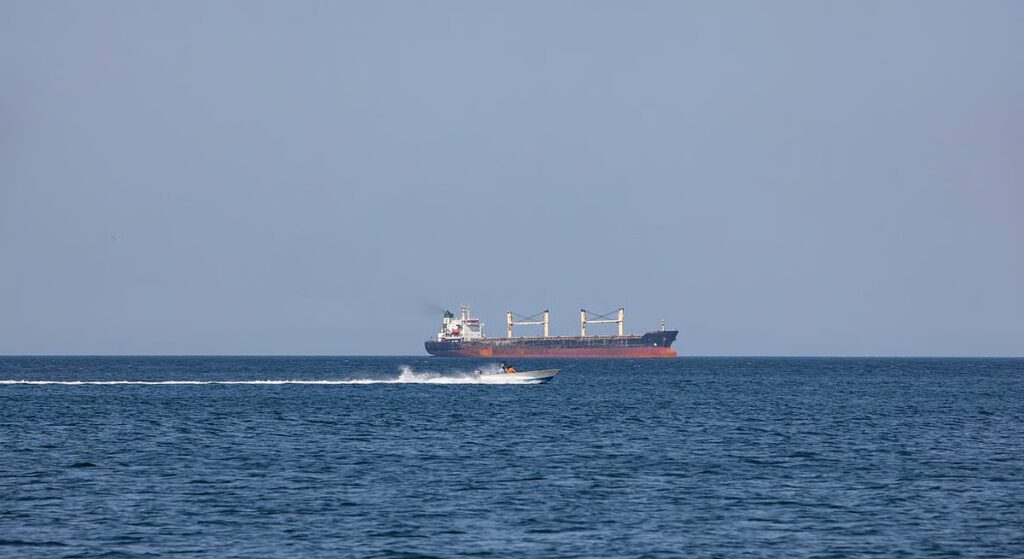
The analysis found that annual trade flows worth around $1.2 trillion from five Gulf countries (Iran, the United Arab Emirates, Qatar, Kuwait, and Bahrain) could be affected by a prolonged closure, a statement by Complexity Science Hub Vienna noted.
Most of these trade flows consist of energy products—crude oil, liquefied natural gas (LNG), and refined petroleum products—which together account for roughly $800 billion of the affected trade.
Duration of disruption is crucial
The researchers used an agent-based maritime transport model to simulate different blockage scenarios for the strait.
The key finding was that the duration of the disruption is the decisive factor.
· Up to two weeks: economic effects likely limited
· Around one month: noticeable disruptions in global shipping
· More than four weeks: disproportionately increasing impacts due to cascading effects in global supply chains
Delays affecting individual ships can propagate across multiple transport chains, causing congestion at ports and delays in international trade.
Europe moderately affected overall
The European Union imports around $47 billion annually from the Gulf countries analysed in the study.
The countries most exposed include:
· Italy: about $9.8 billion per year, mainly LNG imports from Qatar
· Belgium: a major European gas and trading hub
· France, Germany, and the Netherlands: moderate levels of import dependence