- The Union Environment Ministry issued a directive enabling private entities to conduct plantation activities on leased forest land, reclassifying it as forestry activity.
- Experts warn that commercial tree planting differs from ecological restoration and could harm biodiversity, local livelihoods, and undermine forest-dwelling communities’ rights.
- The policy change aims to increase forest cover and align it with India’s Green Credit scheme, which lets entities generate credits from tree planting to meet legal compliances.
In early January, the Union Environment Ministry issued a letter to all states and union territories informing them that private entities could lease forest land and carry out plantations for commercial benefit without paying any penalties, marking a shift in how India’s forests have been traditionally managed.
Forestry activities, including plantations, have typically been carried out by the forest department, since forests are considered to be publicly owned. But the letter makes the application of India’s primary forest conservation law more flexible, by allowing non-government entities to lease forest land — with permission — for the purposes of restoration or silviculture, and reclassifying it as “forestry activity.”
“This step would lead to partnerships between government and non-government entities to undertake afforestation on degraded forest lands and therefore will help increase India’s green cover,” an FAQ document regarding the provision, provided to Mongabay-India by a Ministry spokesperson in response to a series of questions, says.
However, forest restoration experts have raised concerns about the conservation objectives of this change, as well as its implications for forest-dwelling communities who depend on forest resources. The amendment was brought in to “sustainably harness” forest resources with the possibility of profit-sharing, but also to “harmonise” existing laws with the newly launched Green Credit programme – a controversial scheme that allows private entities to generate credits from tree planting to meet legal compliances.
“Planting trees is not the same as ecological restoration. Commercial tree plantation in natural ecosystems can actually be ecologically harmful. The documents in the public domain cause concern by highlighting commercial aspects more than protection and ecological restoration,” said Anand Osuri, a restoration practitioner and researcher with the Nature Conservation Foundation.
“We urgently need policies that support and help scale up ecological restoration. Silviculture and other forms of economically oriented tree planting could play a role when targeting agricultural and agroforestry landscapes. But expanding commerce in the name of restoration in protected natural landscapes will critically harm biodiversity, local livelihoods, and climate and water security,” he added.
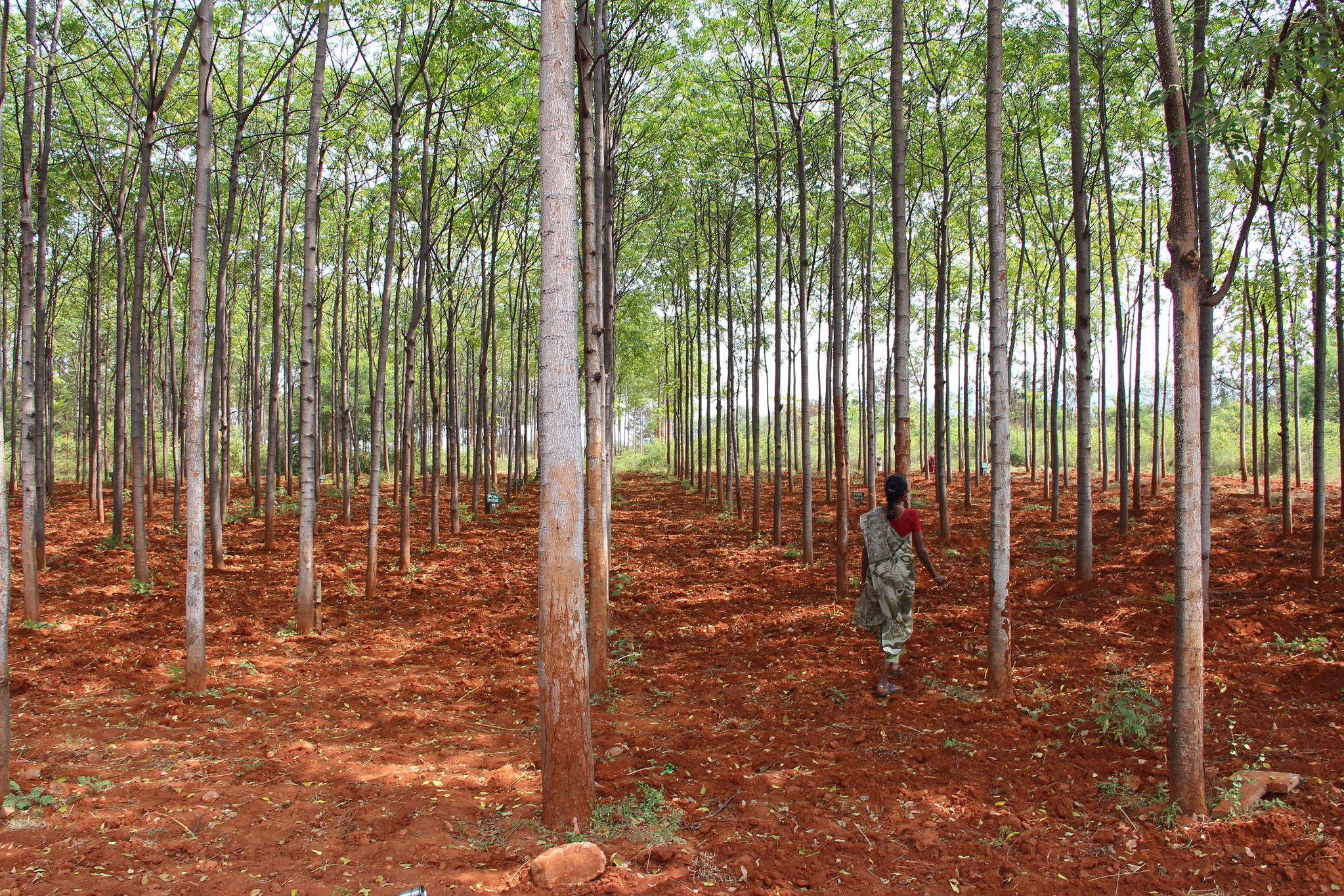
Raising commercial plantations
The Forest Advisory Committee, an autonomous expert body that vets requests for forest clearance for development projects, discussed the issue of leasing forest land to private entities in a meeting on December 2, after it was approached by the government to review prevailing guidelines on the issue.
The government approached the Committee because it had “received representations from various entities seeking permission to undertake afforestation in degraded landscapes,” which could be aligned to the forest department’s Working or Management Plan. The Working Plan is a document that prescribes the management of forests under each department’s working circle for a 10-year period.
Guidelines issued in 2023 under the amended Forest (Conservation) Act) prohibit private entities from leasing forest land to raise commercial plantations without prior approval of the central government, because it is considered a “non forestry activity.” This means diversions for this purpose were subject to pay compensation in the form of Net Present Value, while meeting other requirements under the law.
However, when it approached the Advisory Committee, the government sought advice on whether this provision should be changed, to keep up with the “evolving” forest restoration landscape in the country.
During the meeting, the FAC noted that the guidelines on leasing forest land resulted in “restrictions” for private entities willing to conduct afforestation, or plant “low rotation crops” under the supervision of state forest departments. “Such restrictions may also result in an increased dependence on imports of pulp, paper, and paperboard,” the FAC said.
The FAC cited the silviculture of Forest Development Corporations — state-owned enterprises established to manage, harvest, and market timber and non-timber forest products — as models for state forest departments to follow when collaborating with private entities to harvest forest resources. If the primary objective of these plantations is “restoring forest land, while also meeting the requirements on a sustainable basis, [it] cannot be construed as entirely commercial or non-forestry activity,” the FAC reasoned.
It went on to say that when it came to the utilisation of harvests, “the concerned State Government may formulate a mechanism for sharing the revenue earned from such plantations, which may further be utilised for the rehabilitation and restoration of forest landscapes.”
Social exclusion
Ashwini Chhatre, Associate Professor of Economics and Public Policy at the Indian School of Business, says forests should be seen as sources of wealth and prosperity, and that restoration offers an important opportunity to do so. “But there is no mention of the people who live in and use these forests, and that is a red flag because it will definitely lead to conflict,” he said, adding, “Both the Forest Development Corporations, when extracting forest products, and the Forest Development Authorities, when carrying out plantations, have been the source of social conflict around the country,” he told Mongabay-India.
This view was seconded by Gautam Aredath, a policy analyst working on forest rights and community forest governance at ATREE, who said that using the Forest Development Corporation’s operations as a precedent to justify this change was “misguided.”
“In several cases, including Gadchiroli and Manpur, FDC operations have actively undermined Adivasi and forest-dwelling communities’ rights under the Forest Rights Act to access, use and manage their customary forests. Expanding commercial interest in forest land will intensify this type of conflict.”

Commercial plantation crops were first classified as non-forestry activity in 1988 because leases to companies raising commercial plantations resulted in conflicts with local communities and environmental degradation. The provision to strengthen regulation around leasing forest land for commercial plantations followed a case against Harihar Polyfibres, a Birla group enterprise that had leased forest land to raise eucalyptus plantations.
Though the Ministry’s FAQ says that allowing private entities to carry out plantations on forest land will strengthen “India’s long-term commitment to forest restoration… while supporting livelihoods through sustainable resource frameworks designed by the States,” it makes no mention of complying with the Forest (Rights) Act (FRA), which was instituted in 2005 to recognise the rights of forest-dwelling communities in accessing forest resources.
“If the net effect of this amendment is to bypass FRA compliance needed for leasing forest land, which is already weakly enforced, it is a serious accountability lapse. Actors seeking to participate under this framework would have to reflect on their own commitments to environmental justice and forest rights,” said Aredath.
According to Chhatre, the best way forward would be to make local communities party to the lease agreement. “A forest producer company that is owned by people who are dependent on the forest, and have the necessary experience and knowledge to carry out the tasks themselves, is likely to be not only more successful and efficient in forest restoration, but also lead to dramatically lower social conflict, if managed well.”
Ecological concerns
Both the circular and minutes of the FAC meeting use forest restoration and “silviculturally available sustainable harvests,” interchangeably to refer to tree planting on forest land leased to private entities. However, these two activities often serve different objectives.
“Silviculture is the cultivation of a few selected species for commercial purposes such as timber. Silviculture design and management focuses on maximizing the survival and growth of those few species. Ecological restoration aims to revive an ecosystem in its entirety, not just in terms of the structure of its vegetation, but also its biological diversity, its functions, processes, and interactions that characterise the original natural ecosystem,” explained Osuri.
The Ministry’s FAQ explicitly states covering 33% of the country’s geography with forests — a goal set in 1988 by India’s National Forest Policy — as the rationale for the policy change. But focussing on tree planting and canopy cover alone risks overlooking a range of other benefits that can come from restoring whole ecosystems, said Osuri. Research co-conducted by Osuri found that plantations with greater species richness stored more carbon compared to species poor plantations.
“Policies that promote commercial tree planting in protected natural ecosystems should not be confused for ecological restoration. If one wants to restore such ecosystems then often the best strategy is to simply control threats and disturbances, introduce a variety of native plants if required, and let nature do the rest,” he said.
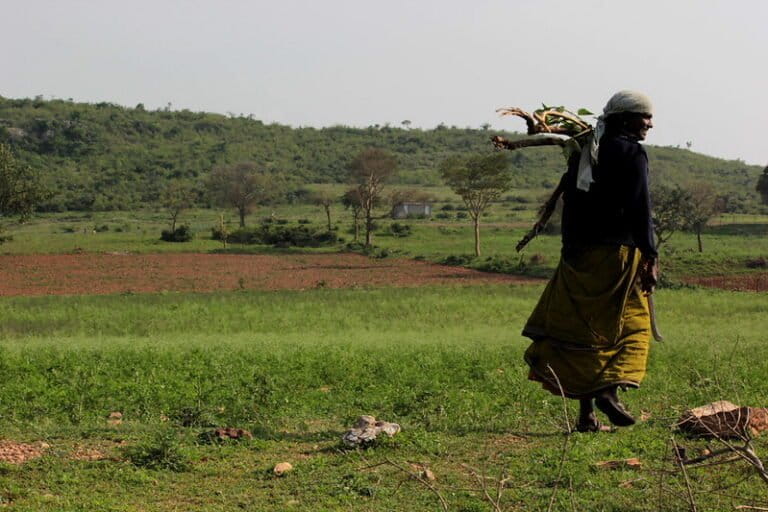
The ambiguity around the objectives of the provision could also inadvertently lead to competition between restoration and silviculture work. “In theory, while non-profits genuinely interested in restoration may participate, they are likely to operate in a space dominated by commercial incentives favouring commercial species, monocultures, and short-rotation crops, which may not restore ecosystems at all. One has to see what kind of frameworks state governments develop to operationalise this, but this appears to be the overall policy direction,” said Aredath of ATREE.
An ongoing protest against the renewal of forest land leased to the Mysore Paper Mills in Karnataka highlights the inherent conflicts in restoring landscapes for biodiversity, and planting selective tree species for economic gain. The Mysore Paper Mills, which was operational from 1980 to 2020, occupied between 33,000 and 20,000 hectares of evergreen forest land to grow acacia plantations in Karnataka’s Shivamogga. Though the factory to which the timber was supplied was closed in 2015, the state government is seeking to renew the lease for another 40 years.
“Acacia plantations are anti-ecological in nature. Due to these plantations, the evergreen forests of Karnataka, especially the Malnad districts along the Western Ghats such as Shivamogga, Chikkamagaluru, and also parts of North Karnataka, have been destroyed, and the fertility of the soil has been severely degraded,” K.P. Sripal, a lawyer and activist in Karnataka who raised the alarm about the damage from the plantations, told Mongabay-India over WhatsApp.
“In areas where acacia trees are grown, native forest species do not regenerate. Birds do not build nests on these trees, and wild animals do not inhabit or shelter beneath them. A movement was launched in May 2020, demanding that the 20,000 hectares of forest land still leased in the name of Mysore Paper Mills be returned to the Forest Department and that natural forests be restored,” he added.
Green credit scheme linkage
The FAC also said the guidelines needed to be amended to accommodate the Green Credit Scheme’s rules, which require participating entities to directly plant trees and increase canopy cover to 40% on land parcels in order to generate credits. These green credits can then be used to meet compliances under corporate social responsibility (CSR), environmental, social and governance (ESG) frameworks, or meet compensatory afforestation requirements under the Forest (Conservation) Act, if applicable.
“The ecological benefits that will come from letting private entities carry out plantations in the name of green credits needs to be questioned, especially since plantation, afforestation, and restoration work are the key competencies of the forest department,” said Prakriti Srivastava, a former Indian Forest Service officer from the Kerala cadre. “There’s more than enough funds with the government to do these plantations. In fact, much of the funding is unspent. If the government plantations are a failure, it’s because there’s a lack of intent,” she said.
A report by the Supreme Court’s Central Empowered Committee found that the Compensatory Afforestation Fund Management and Planning Authority (CAMPA) had achieved 85% of its plantation targets, but only 67.5% of funds had been utilised.
Linking the value of forests to tree-based carbon and green credits overlooks other avenues for income, said Chhatre. “The first thing we need to do is stop thinking of forests as equal to the sum of all trees, and to stop thinking of wood as its most valuable resource. Focussing on building livelihoods out of native species like bamboo and karanja (Pongamia), for example, can help foster restoration and wealth, without the destruction of fast-growing species like eucalyptus.”
Read more: A heat map-based plantation programme turns into a missed opportunity
Banner image: A commercial plantation for plywood production. Image by James Anderson, World Resources Institute via Flickr (CC BY-NC-SA 2.0).