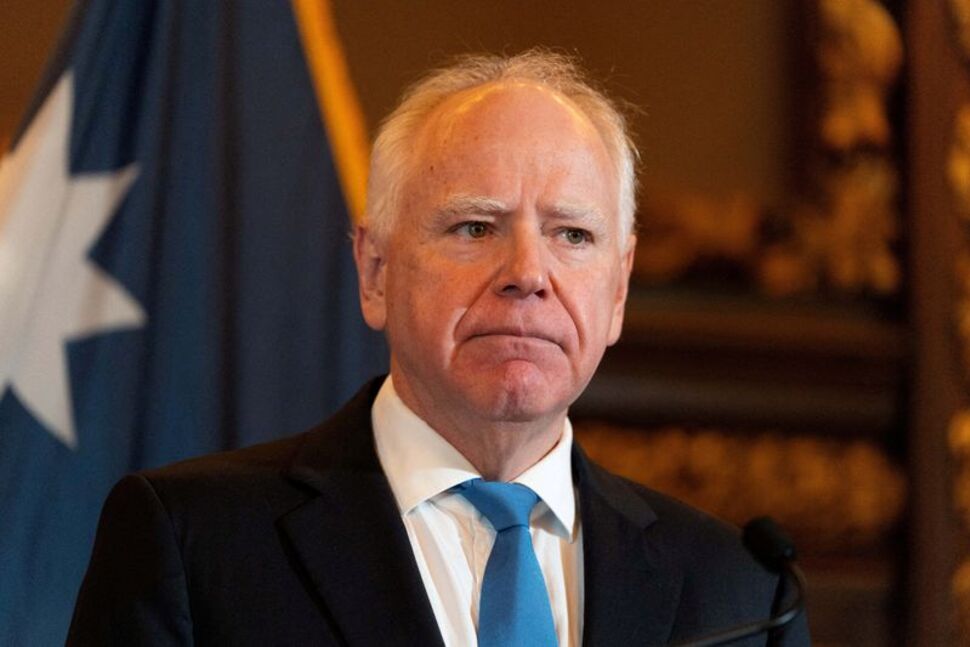
WASHINGTON, Feb 10 (Reuters) – Minnesota Governor Tim Walz said on Tuesday he expected the federal immigration crackdown by President Donald Trump’s administration in his state may end within days, after conversations with Trump administration officials.
Trump’s crackdown has faced criticism from local officials and human rights groups over what they say is a violation of due process and legal rights.
Minnesota has also seen large-scale protests after federal immigration officers last month fatally shot U.S. citizens Renee Good and Alex Pretti in Minneapolis. The videos of the shootings sparked outrage across the country.
Walz said he spoke on Monday with Trump’s border czar Tom Homan and on Tuesday with the Republican leader’s chief of staff Susie Wiles.
“Minnesota has asked that this surge of folks leave. I spoke with Tom Homan yesterday. I spoke with Susie Wiles, the president’s chief of staff this morning,” Walz said in a press briefing.
“We’re very much in a ‘trust but verify’ mode. But it’s my expectation – and we will hear more from them I think in the next day or so – that we are talking days, not weeks and months, of this occupation,” he said.
The Department of Homeland Security, of which the Immigration and Customs Enforcement agency is a part, referred questions to the White House, which did not respond to a request for comment.
The Trump administration deployed about 3,000 federal immigration agents in Minnesota by the end of January and Homan said last week about 700 would be withdrawn.
“It would be my hope that Mr. Homan goes out before Friday and announces that this thing is done, and they’re bringing (it) down and they’re bringing (it) down in days. That would be my expectation,” Walz said.
Trump has cast his actions as aiming to tackle fraud and improve domestic security.
Rights groups say the crackdown has created a fearful environment, particularly for minority communities like the Somali community in Minnesota that Trump administration officials have repeatedly attacked.
They also say Trump has used isolated fraud cases as an excuse to target immigrants while dismissing Trump’s ability to tackle fraud, citing pardons from the president to those who have faced fraud convictions in the past.
(Reporting by Kanishka Singh in Washington; additional reporting by Kristina Cooke and Bo Erickson; Editing by Lincoln Feast.)
Copyright 2026 Thomson Reuters.