
NEW DELHI: GST collections rose 6.1% to Rs 1,74,550 crore, driven by a surge in levies on imports. The numbers, that do not include compensation cess, which has been withdrawn for all goods barring tobacco and pan masala, provide confidence to govt that the mop up (for sales in Nov) has increased despite an overhaul of the tax regime, which saw rates slashed on 375 goods and services. In Dec 2024, including compensation cess, the overall collection was estimated at Rs 1,76,857 crore. Compared to that level, the collection in Dec 2025 was 1.1% higher at Rs 1,78,788 crore (including Rs 4,238 crore cess from tobacco and pan masala) – indicating that the tax cuts have boosted consumption. Govt had said that collections may be affected for a few months but will start rising as consumption picks up.

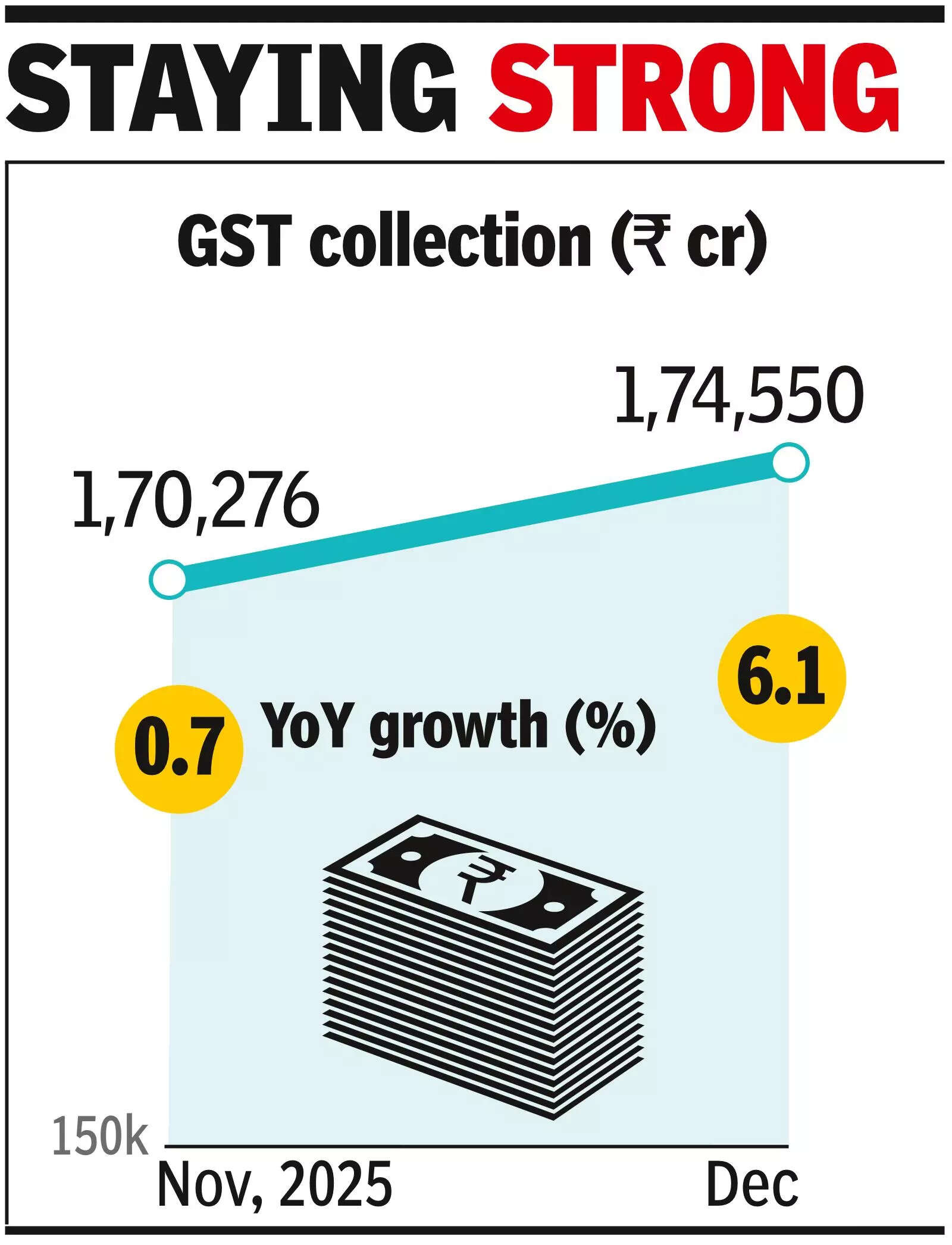
Staying strong
“Gross collection growth of 6.1% (Dec) and 8.6% on cumulative basis (Aril-Dec) indicates that consumption has certainly been on the upswing and the volume growth in many businesses is making up for the lower rates associated with these volumes. Healthy GDP data indicates that economic growth has increased and the lower (GST) rates are encouraging increased consumption in many sectors,” said M S Mani, partner at consulting firm Deloitte India. The numbers showed that collections from domestic sources in Dec 2025 were 1.2% higher at Rs 1,22,574 crore, while those from imports rose 19.7% to Rs 51,977 crore. “The current moderation in domestic GST collections growth aligns with expectations following govt’s GST rate rationalisation, a move prioritising long-term tax harmony over immediate gains,” said Saurabh Agarwal, tax partner at EY India. On a net basis, GST collections were 2.2% higher at Rs 1,45,570 crore as refunds shot up 31% to Rs 28,980 crore, especially on domestic collections. While restructuring GST, govt had also sought to harmonise refunds. Maharashtra, Uttarakhand, Gujarat, Haryana, Sikkim and Bihar reported healthy double-digit growth, while Chhattisgarh, Jharkhand and Odisha saw the sharpest decline.