
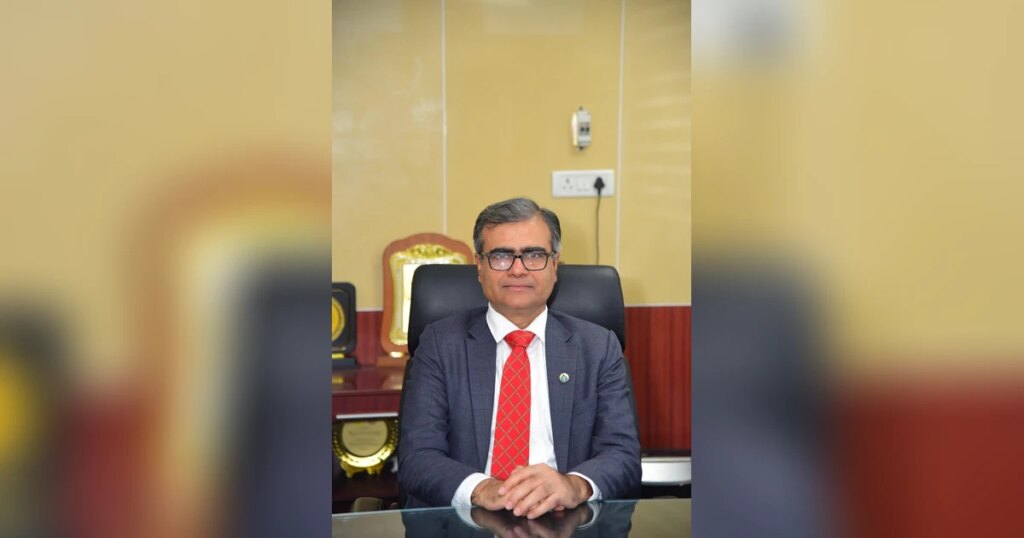
Dhupar said the bank is receiving extensive support from its sponsor, Punjab National Bank (PNB), and expressed confidence about approaching the capital markets regulator by the end of the year. Edited excerpts:
What kind of preparation is underway at Haryana Gramin Bank for the proposed listing, and by when can it be expected?
Haryana Gramin Bank is among the three RRBs selected for listing, and we are working at a fast pace under the guidance of our sponsor bank, Punjab National Bank. We have recently created a dedicated IPO cell within the bank. PNB has deputed a company secretary and chartered accountants to assist us with due diligence and preparation of the proposal. We are hopeful of approaching the Securities and Exchange Board of India (Sebi) soon. Recently, the Department of Financial Services also held a review meeting on the subject, and we are closely following all directions issued by the government.
How do you see listings changing the dynamics of RRBs?
Listing will bring about a structural shift in the functioning of RRBs. It will enhance visibility, improve transparency and open up opportunities to expand lending into newer areas such as corporate, auto and MSME segments, while remaining focused on our core mandate. Importantly, it will strengthen compliance, risk management and accountability. Post-listing, we also expect an improvement in our CASA ratio, and over time, RRBs will be less dependent on the government or sponsor banks for funds required for expansion. Overall, it will significantly improve the outlook for RRBs.
Given your presence in an agrarian state, how has the bank performed in agriculture lending?
Our agriculture advances stood at Rs 11,967.46 crore, registering a 9.84 per cent year-on-year growth. Lending under the Agriculture Infrastructure Fund (AIF) has also shown steady traction. Between April 1, 2025, and December 31, 2025, we sanctioned loans worth Rs 8,523.28 lakh across 438 accounts, of which Rs 7,560.78 lakh was disbursed through 391 accounts. In the previous financial year (April 1, 2024, to March 31, 2025), sanctions amounted to Rs 9,999.45 lakh across 435 accounts, with disbursements of Rs 9,882.30 lakh through 431 accounts.
What about the overall business book?
Overall, the bank’s total business increased from Rs 40,037.80 crore in December 2024 to Rs 44,309.45 crore in December 2025, reflecting a 10.67 per cent year-on-year growth. Total deposits rose to Rs 26,085.47 crore, up 8.36 per cent year on year, while the CASA ratio stood at 50.02 per cent in December 2025. Total advances grew 14.15 per cent year on year to Rs 18,223.98 crore, supported by strong growth in the retail portfolio.
How has the bank performed under Kisan Credit Card and MUDRA loans?
As of December 31, 2025, Kisan Credit Card (KCC) advances stood at Rs 9,611.18 crore, with NPAs of Rs 192.86 crore, translating into an NPA ratio of 2.01 per cent. MUDRA loans had an outstanding exposure of Rs 1,661.43 crore, with NPAs of Rs 44.95 crore, resulting in an NPA ratio of 2.71 per cent. While asset quality remains comfortable overall, stress levels are relatively higher in the MUDRA and KCC segments, which we are addressing through closer monitoring and recovery efforts.
How do you assess the MSME book, and what are your targets?
Our MSME advances stood at Rs 668.08 crore, recording a strong 30.29 per cent year-on-year growth and 9.88 per cent growth over March 2025. MSMEs remain a key focus area for us, and we are actively expanding our outreach in this segment. We are targeting an increase in the MSME portfolio to Rs 1,000 crore by the end of the current calendar year, supported by simplified processes and improved credit delivery.