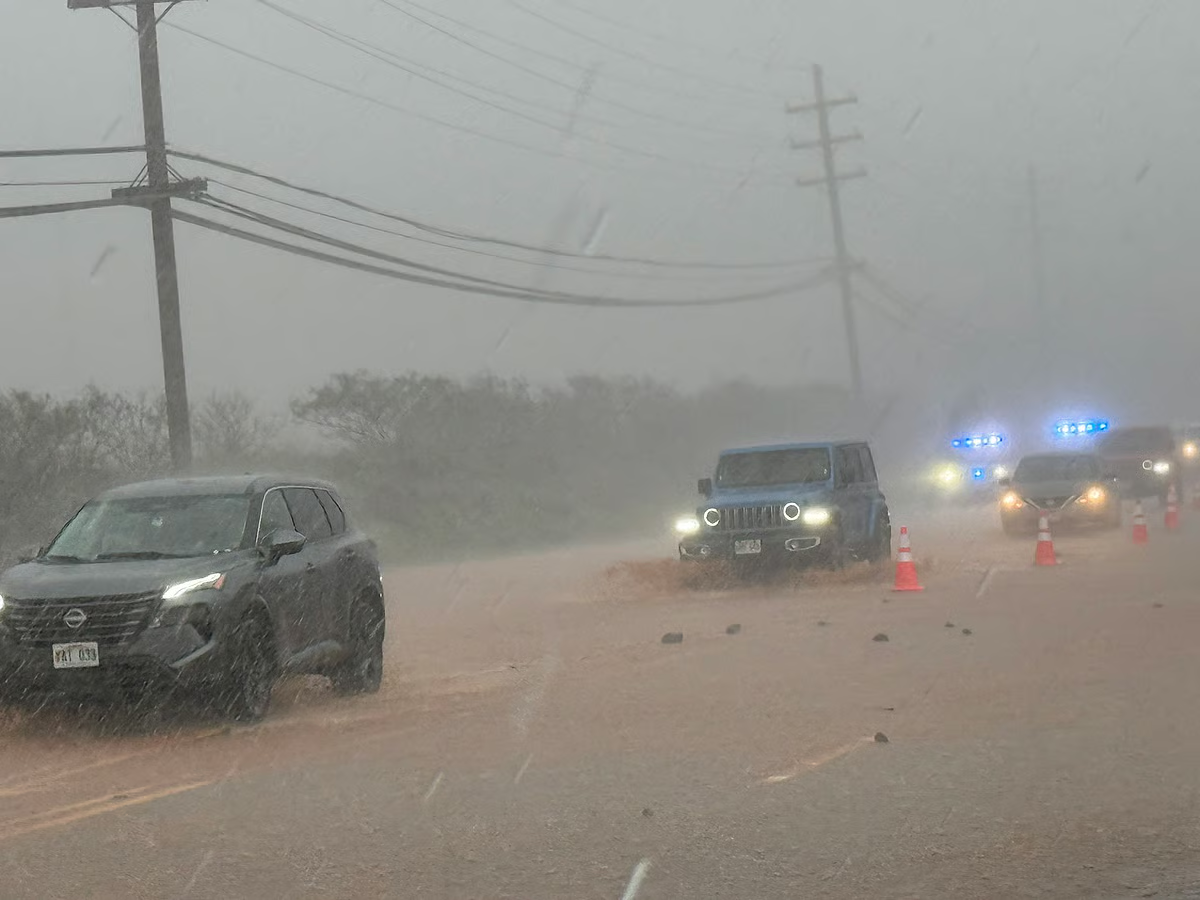
The United States state of Hawaii has just witnessed its worst flooding in the past 20 years as southerly or southwesterly winds brought in moisture-laden air, deluging the island chain in the past two weeks, according to the US government.
“Last week’s Kona Low brought 10+ inches of rainfall to the Hawaiian Islands. Saturated soils and heavy rainfall are leading to ongoing flash flooding in parts of the island chain. The wet pattern will continue for the next few days. Turn around, don’t drown,” the National Weather Service Honolulu said in a social media post.
“Hawaiʻi — we are still in this. A statewide flood watch remains in effect through Sunday, and today continues to bring the risk of major flash flooding, especially on Oʻahu and across Maui County. Conditions remain dangerous because the ground is already saturated, meaning it will take much less rain to trigger flooding, road closures and damage,” Hawaii’s governor Josh Green said in a post on X.
While there have been no deaths or injuries or people going missing, more than 200 people have been rescued, according to officials. Dozens of homes have been damaged on March 20 although the true scale of the destruction is yet to be estimated.
According to NBC, Green said the cost of the storm could top $1 billion, including damage to airports, schools, roads, people’s homes and a Maui hospital in Kula.
“This is going to have a very serious consequence for us as a state,” Green said at a news conference, NBC reported.
Green called the flooding Hawaii’s most serious since 2004 when floods in Manoa inundated homes and a University of Hawaii library.
A ‘Kona low’ in Hawaii is a weather phenomenon characterised by a low-pressure system that brings sudden changes in weather and can lead to heavy rainfall, strong winds, and flooding. These storms typically form in the winter and can affect areas that are usually dry, such as the Kona District on the Big Island. The winds shift from the usual trade winds to southerly or southwesterly winds, pulling in warm, moisture-rich air, which can result in intense weather conditions.