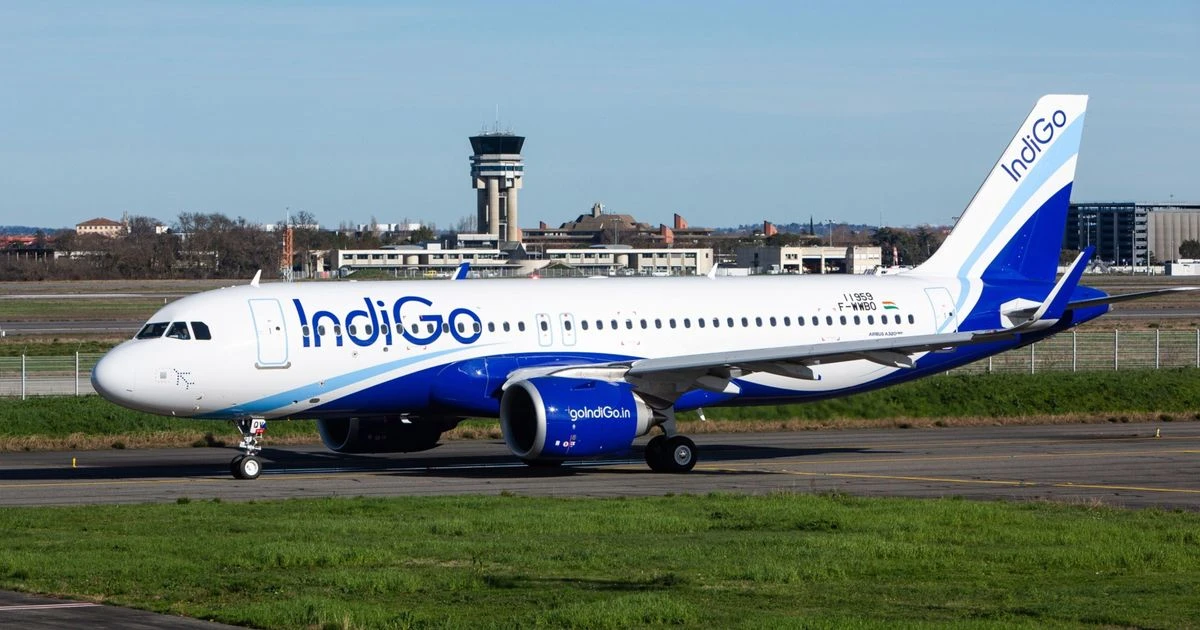
IndiGo, the airline that positioned itself as one of India’s largest carriers in just two decades, has been in the headlines for all the wrong reasons. The airline, which controls over 60 per cent of India’s domestic market, has visibly been affected by its lean-staffing or ‘buffer-deficit’ model.
The crisis surfaced when IndiGo started cancelling hundreds of flights nationwide, leaving thousands of passengers in lurch. It faced one of its biggest operational setbacks, driven by misjudged pilot requirements under updated regulations.
But how did the airline grow to become India’s largest carrier in a market where running an airline has historically been difficult? Here’s a look at IndiGo’s two-decade journey as a lean, low-cost carrier and how it landed in troubled waters.
IndiGo’s early steps
With a vision to build a disciplined, no-frills, low-cost airline, IndiGo was founded in 2005 by Rahul Bhatia—an Indian entrepreneur and co-founder of InterGlobe Enterprises—and Rakesh Gangwal, a US-based aviation veteran and former chief executive of US Airways Group. The airline received its first aircraft in July 2006 and began operations a month later, on August 4, 2006, with a single aircraft and a clear low-cost strategy.
In June 2005, IndiGo placed a major order for 100 Airbus A320-200 aircraft worth $6 billion at the Paris Air Show. The BBC described the new airline as backed by “high-quality executives” expected to be “a successful new player”.
From the beginning, IndiGo emphasised on-time performance and high aircraft utilisation, helping it become India’s largest carrier by market share in December 2012.
How sale-and-leaseback model fuelled IndiGo’s expansion
A key factor behind IndiGo’s rise was its strategic use of the sale-and-leaseback (SLB) model to maintain cash flow. The airline purchased new aircraft, sold them to leasing companies for upfront cash, and leased them back for six to eight years.
The SLB strategy kept the fleet young, generated immediate revenue, freed capital for expansion, reduced balance-sheet debt and shifted maintenance risks, supporting IndiGo’s profitability in a competitive market.
By 2014, IndiGo joined Air India and Jet Airways in operating a fleet of 100 aircraft and crossed 35 per cent domestic market share by FY15.
What changed after IndiGo went public?
The company went public in October 2015, where it raised more than $450 million and was heavily oversubscribed. The airline demonstrated profitability and the lowest cost structure among its peers.
Between 2016 and 2021, IndiGo continued expanding its fleet.
IndiGo’s regional and international growth
In 2017, IndiGo introduced ATR 72 aircraft under the UDAN scheme to strengthen regional connectivity. Fuel-efficient turboprops linked smaller Tier-II and Tier-III cities, supporting the government’s aim of affordable air travel. Routes such as Hyderabad–Mangaluru and services to Shillong, Agra and Hindon improved accessibility.
IndiGo gradually expanded internationally using A320/A321 aircraft. In 2019, it announced a major order for 300 Airbus A320neo-family aircraft, including the long-range A321XLR, to support future medium-haul routes.
According to a Times of India report from 2019, the A321XLR enabled IndiGo to plan new routes such as Delhi–London, which further cemented its position as a global low-cost carrier. The order aligned with its strategy of fleet modernisation and international expansion through partnerships.
How did IndiGo navigate the pandemic years?
The Covid-19 pandemic severely affected the aviation sector, and IndiGo faced major operational losses. It shifted towards cargo operations by converting A321 aircraft into freighters.
Post-pandemic, IndiGo focussed on cost-cutting measures and fleet adjustments to stabilise finances. The airline returned to profitability by FY23, carrying 100 million passengers.
IndiGo was ranked the 15th most punctual airline globally in 2022 by the Official Airline Guide (OAG).
Market leadership and global ambitions
IndiGo displayed a strong show in recent years. It placed a record-setting order for 500 Airbus A320-family aircraft in 2023 and committed to long-haul operations with 60 Airbus A350-900 aircraft. It expanded international routes, added code-share partnerships and operated around 2,000 daily flights with over 65 per cent market share.
This dream run continued until the December 2025 meltdown.
What fuelled the recent crisis?
On December 3, at least 150 flights were cancelled across Delhi, Bengaluru, Hyderabad and Mumbai. The pattern repeated for days.
Long queues, stranded passengers, missing baggage and cancellations even after boarding led to severe disruption. For thousands, the mass cancellations led to missed weddings, business commitments and medical needs, along with costly last-minute bookings and days of uncertainty without clear timelines.
IndiGo acknowledged widespread issues and attributed them to a combination of minor technical glitches, winter-related schedule changes, adverse weather, increased aviation congestion and new crew-rostering rules. It has also committed to offering full refunds to passengers whose flights were cancelled.
The government also took punitive action by slashing IndiGo’s winter flight schedule by 10 per cent. Aviation regulator DGCA has also set up a panel to probe the matter.
For an airline that grew by promising punctuality and efficiency, the ongoing turmoil highlights the limits of an aggressive, low-cost operating model. How IndiGo adapts now will determine whether it can sustain its dominance in the Indian skies.