
Did you know when India began the process of electrical railway development in the country? It began in 1925. This initiated the first electrical train in India with a 1,500 Volt DC system that ran between Bombay Victoria Terminus & Kurla Harbour. This initial start of electrical trains may have been short in range, but it paved the way to more efficient railway transport.
The decades that followed, however, passage was rather slow. Electrification, for instance, only reached 388 route kilometre (RKMs) by the time India finally gained independence, with steam locomotives mainly in use, followed by diesel locomotives. The growth, though steady, intensified in the latter decades when Indian Railways began effectively focusing on a change towards cleaner methods of train operation.
The impact has been far more impressive than one can imagine. It’s interesting to note that the pace of electrification accelerated from an average of approximately 1.42 km per day in 2004-2014 to around 15 km per day in 2019-2025, which marked a paradigm shift in the pace of network evolution.
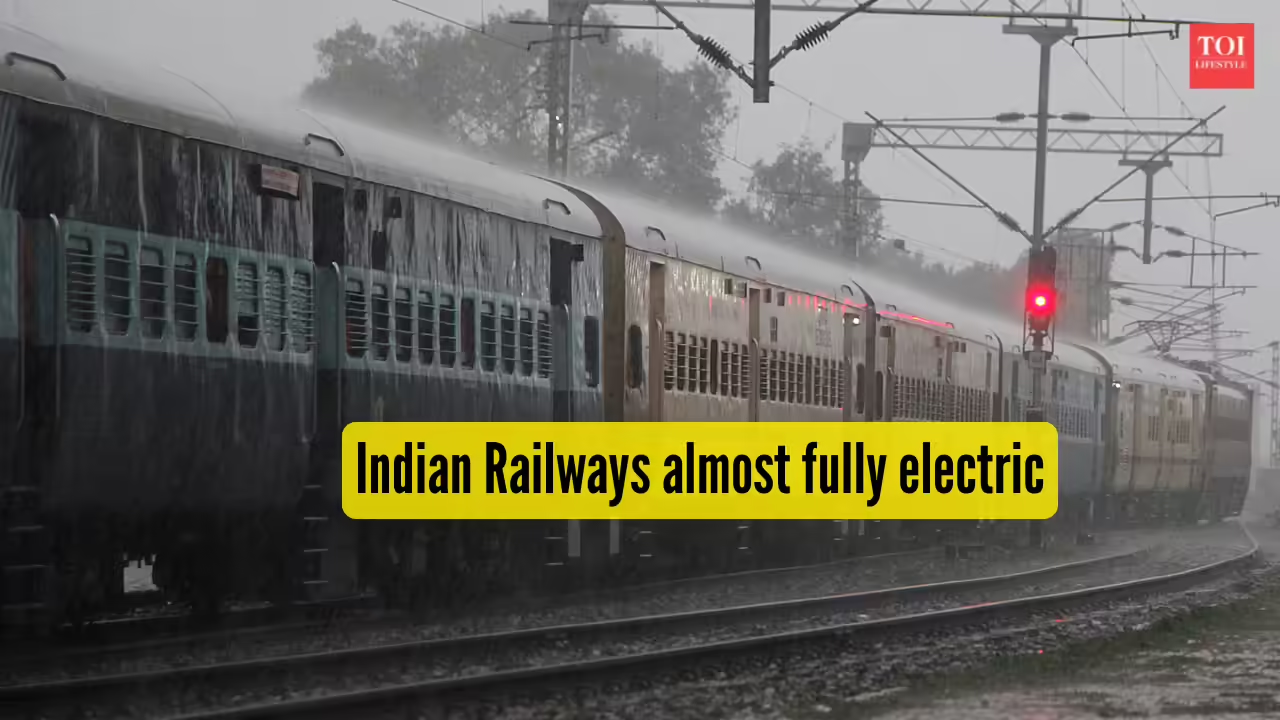
The share of electrified routes improved from 24 percent in 2000 to 40 percent in 2017, which further increased to 96 percent by the end of 2024. And eventually as of November 2025, India has electrified 69,427 RKMs, comprising approximately 99.2 percent of its rail network, with 46,900 RKMs accomplished in 2014-2025.
Here, we take a look at some of the leading countries that have achieved significant progress in this regard. For more clarity, visit this official page.
How it compares with Switzerland, China and Japan
msid 128063826imgsize 1445730.cms .avif
Thank you for reading this post, don't forget to subscribe!