
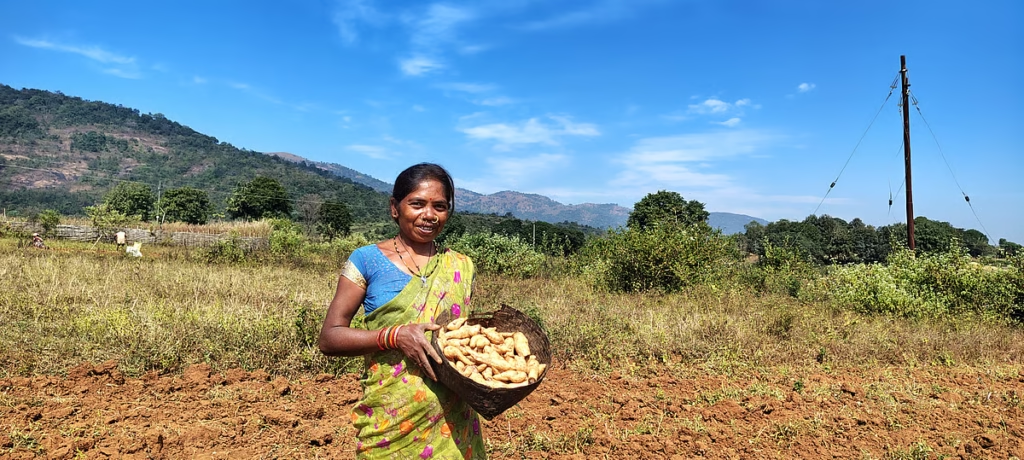
In recent years, sweet potato cultivation in the region has received institutional support through a pilot initiative titled “Revival and Sustainable Intensification of Forgotten Food and Neglected Crops in Odisha.” The programme was launched in 2024 and implemented by Watershed Support Services and Activities Network (WASSAN) with the support of the Department of Agriculture and Farmers’ Empowerment, Government of Odisha. The programme focuses on strengthening indigenous climate resilient crops that are often overlooked in mainstream agriculture.
As part of the initiative, a sweet potato seed production demonstration field of three acres was established in Darlabedha village in Chitrakonda to ensure the availability of healthy planting material. The field now produces quality sweet potato vines that are supplied to farmers in Salgamput and its neighbouring villages such as Kusumput, Mutluguda and Purlubandh.
“Good quality vines make a big difference,” said Sadhuram Hantal, a farmer in the village. “The vines we receive now are healthy and disease-free. Pest problems are lower and yields are better. Many farmers in our area are showing interest in cultivating this crop.”
The project team of WASSAN, the facilitating NGO promoting neglected crops, have provided technical guidance to farmers on field preparation, crop spacing, pest management and post-harvest handling. According to farmers, these improvements and timely extension services have helped increase productivity while maintaining traditional cultivation practices. “The guidance has reduced losses and improved our harvest,” said Bhagirathi Khara, another farmer in the village. “With better quality produce, we also get better prices in the market.”
Each farmer cultivates sweet potatoes on about 2 acres of land. On average, around 10 quintals are harvested per acre. The produce is sold in local weekly markets at approximately Rs. 30-35 per kilogram. For Salgamput’s residents, sweet potato cultivation represents a resilient livelihood system shaped by generations of indigenous knowledge.
National scenario
Sweet potato cultivation remains a significant part of agriculture, especially in rainfed and tribal regions. India produces about 1.3 million tonnes of sweet potato annually, ranking among the world’s top ten producers, according to the Food and Agriculture Organization.
Odisha is one of the leading producers, contributing nearly 25–30 percent of national output. The state produces around 335,000 tonnes annually from about 34,000 hectares, according to the Ministry of Agriculture and Farmers Welfare. The crop is widely cultivated in upland and rainfed districts, where its short crop cycle and ability to grow in marginal soils make it an important food and income source for small and tribal farmers.
Research highlights the dual role of Sweet potato as a nutrient-dense food and climate-resilient crop. Studies show that orange-fleshed varieties contain high levels of β-carotene, and consuming 100–150 grams daily can meet most vitamin A requirements, helping reduce vitamin-A deficiency and improve maternal and child nutrition.
Meanwhile, agronomic research finds that sweet potato can tolerate drought and poor soils, and produce high yields per unit area, making it suitable for smallholder farming in climate-stressed regions. Rising atmospheric carbon dioxide may even increase storage-root yields by 46–75 percent, suggesting strong potential amid climate change.
Rasmi Ranjan Sahoo works as a Program Officer for Watershed Support Services and Activities Network (WASSAN), in Malkangiri, Odisha
Views expressed are the author’s own and don’t necessarily reflect those of Down To Earth