

In November-December 1994, Tamil Nadu found itself at the centre of an extraordinary political storm—one that unfolded over just a week, but left behind lasting questions about power, authority, and intimidation. The drama played out almost entirely in two locations separated by just a few kilometres: Madras Airport and the Taj Coromandel in Nungambakkam.
At the heart of the confrontation was T.N. Seshan, then Chief Election Commissioner of India, a man already feared and admired in equal measure for his relentless campaign against electoral malpractice. Tamil Nadu was ruled at the time by the AIADMK, led by Chief Minister Jayalalitha (as her name was spelt then). Relations between Seshan and the ruling party were strained, and events soon showed just how combustible that tension had become.
On November 27, 1994, Seshan landed at Madras Airport from New Delhi at 9.20 a.m. What should have been a routine arrival quickly turned into a standoff. Senior police officers informed him that hundreds of AIADMK supporters had gathered outside the airport and along the route to the Taj Coromandel, where he was to stay, waving black flags in protest. The police, citing serious law-and-order concerns, refused to move him immediately.
A huge posse of policemen keeping at bay the AIADMK cadres who had gathered to show black flags to the then Chief Election Commissioner of India, T.N. Seshan, outside the Madras Airport on November 27, 1994
| Photo Credit:
The Hindu Archives
The trigger
The anger stemmed from alleged defamatory references to former Chief Ministers C.N. Annadurai and M.G. Ramachandran in Seshan’s in-the-news biography, Seshan: An Intimate Story, written by K. Govindan Kutty. The protests were not merely symbolic. Roads were blocked near Kathipara Junction and Tirisoolam, disrupting traffic and delaying an Indian Airlines flight to Bangalore (now Bengaluru) scheduled for 11.45 a.m., as passengers struggled to reach the airport.
Stranded for eight hours
For nearly eight hours, Seshan remained effectively captive inside the airport terminal. As the drama unfolded, he made it known that he viewed the situation as a grave failure of governance and intended to report the matter directly to President Shankar Dayal Sharma and Prime Minister P.V. Narasimha Rao. It was only around 5 p.m., after the crowd was finally brought under control, that he was escorted to his hotel.

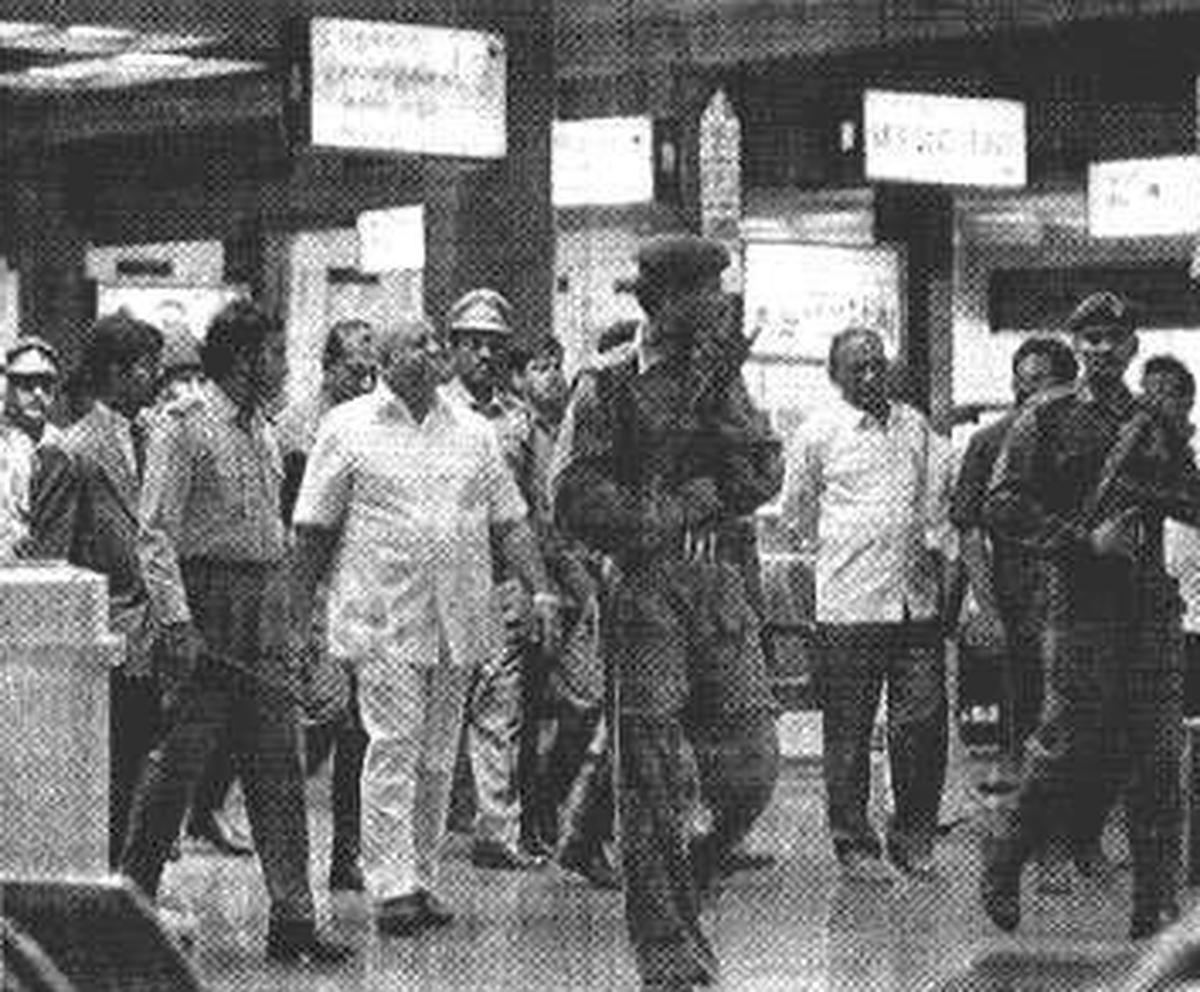
Then Chief Election Commissioner of India, T.N. Seshan, walking through the lounge of the Madras airport on November 27, 1994 surrounded by security personnel, as AIADMK party cadres wait outside with black flags.
| Photo Credit:
The Hindu Archives
Jayalalithaa’s accusations
The political fallout was immediate and fierce. On November 29, Chief Minister Jayalalitha announced that her government would send its own report to the President and the Centre, accusing the Chief Election Commissioner of threatening senior State officials and demanding action against him. In a sharply worded statement reported by The Hindu, she accused Seshan of passing off a personal visit to attend a wedding as an official tour, applying—she said—a “different yardstick” to himself than to elected leaders.
Her criticism grew more personal. Describing Seshan as the “epitome of unbridled egotism,” she accused him of using demeaning language that insulted Tamil Nadu’s culture and damaged the State’s prestige.
She alleged he had rejected a police offer to take an alternative route from the airport and also spoken in a threatening manner to Chief Secretary N. Haribhaskar and DGP S. Sripal. His conduct, she claimed, had forced the police to resort to a lathi charge, including on women protesters. She said the police had to resort to a lathi charge on demonstrators including women because of his visit. “Why had the CEC rejected the alternative route? One could recognise his tremendous ego when he insisted on the route being cleared of thousands of demonstrators for one person to travel,” she charged.
Seshan’s meeting with President, PM
Seshan, for his part, took the matter straight to the top. After returning to New Delhi, he met Prime Minister Narasimha Rao on December 2 and later that day held a private, half-hour-long meeting with President Sharma at Rashtrapati Bhavan to present his version of events.

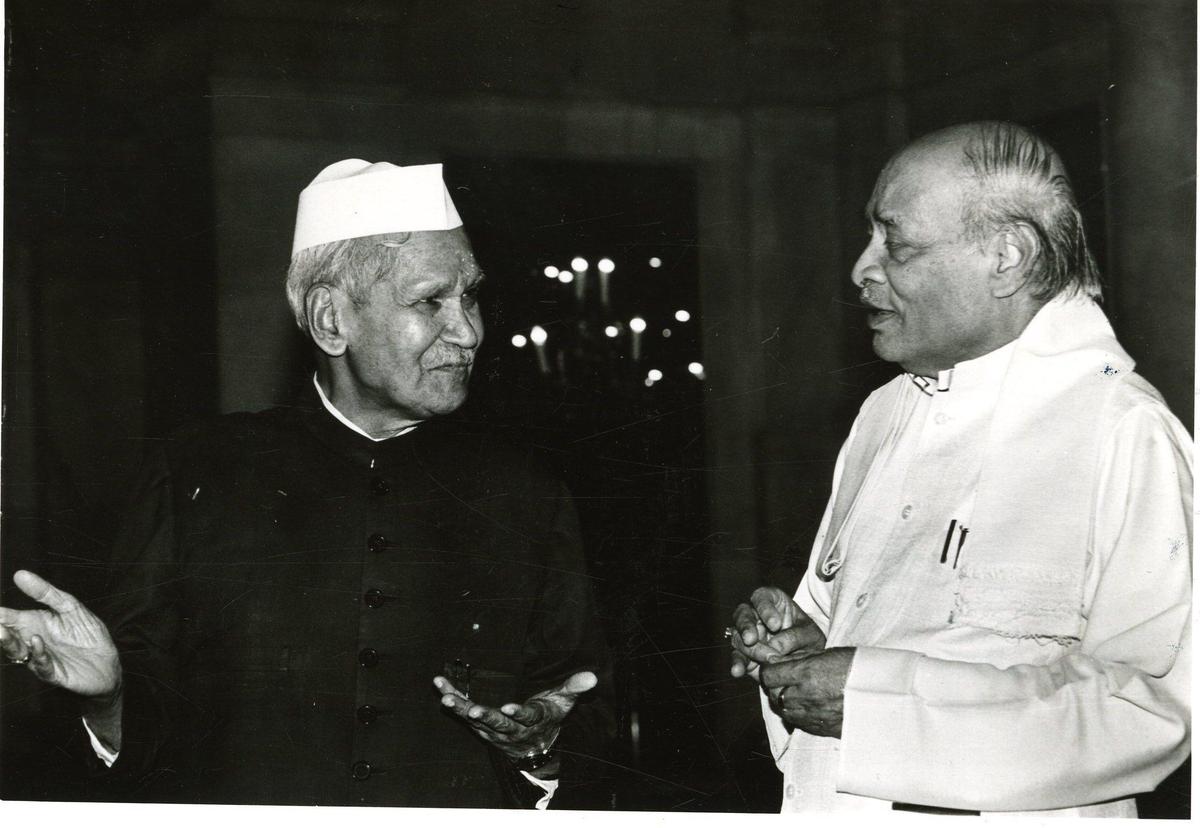
Then President Shankar Dayal Sharma with the nPrime Minister P.V. Narasimha Rao at New Delhi in 1996
| Photo Credit:
The Hindu Archives
By then, Jayalalitha had already sent her report, accusing him of “high-handed behaviour” and of causing embarrassment to officials and hardship to the public.
Even as this war of words played out in Delhi, events in Madras took a far more ominous turn.
Attack on Taj Coromandel
Late on the night of December 1, around 11.30 p.m., the calm outside the Taj Coromandel was shattered. Nearly 150 men arrived at the star hotel in autorickshaws, some dressed in black, many carrying weapons. They blocked traffic on Nungambakkam High Road and stormed the hotel.
According to reports in The Hindu, the attackers split into groups. One group forced its way into the car park, assaulting security personnel, smashing telephones, and damaging vehicles. Another destroyed lighting fixtures along the driveway, threatened staff, and broke through glass doors to enter the lobby. Hotel employees acted quickly, ushering guests to safer areas and locking wedding attendees inside rooms.
A warning
After leaving behind a trail of destruction—damaged property, dozens of vandalised vehicles of guests, and a shaken staff and guests—the attackers fled in about 25 auto rickshaws. Shortly after midnight, an anonymous caller telephoned the hotel and delivered a chilling message: the attack was a warning not to host Seshan again.
The following morning, the hotel management sought the Chief Minister’s personal intervention and police protection. At a press conference, Shankar Menon, vice-president of the Taj Group of Hotels (South), said a formal letter had been handed over to the Chief Minister’s office regarding the incident.
The report also noted that Seshan was always booked in the hotel as a State guest by the Tamil Nadu government’s protocol department. His bills were settled by the State government, and it was only at the request of the department concerned that Seshan was hosted in the hotel for two days on November 27 and 28, 1994.
Karunanidhi’s comment
On December 4, Revenue Minister and AIADMK deputy general secretary S.D. Somasundaram publicly condemned the attack, denied any involvement by his party, and insisted that the AIADMK believed only in democratic methods. He accused political opponents of exploiting the incident and said responsibility could be fixed only after a detailed investigation. Responding sharply to DMK leader M. Karunanidhi’s remark that Tamil Nadu was being run like an “Idi Amin government,” Somasundaram retorted that Karunanidhi could claim credit for teaching even Idi Amin.
In the weeks that followed, nearly 15 people were arrested in connection with the attack, some of whom were later released on bail. But the episode—beginning with a delayed airport arrival and ending in a violent hotel rampage—remained one of the most startling confrontations between constitutional authority and political power in Tamil Nadu’s recent history.
Published – December 24, 2025 06:00 am IST