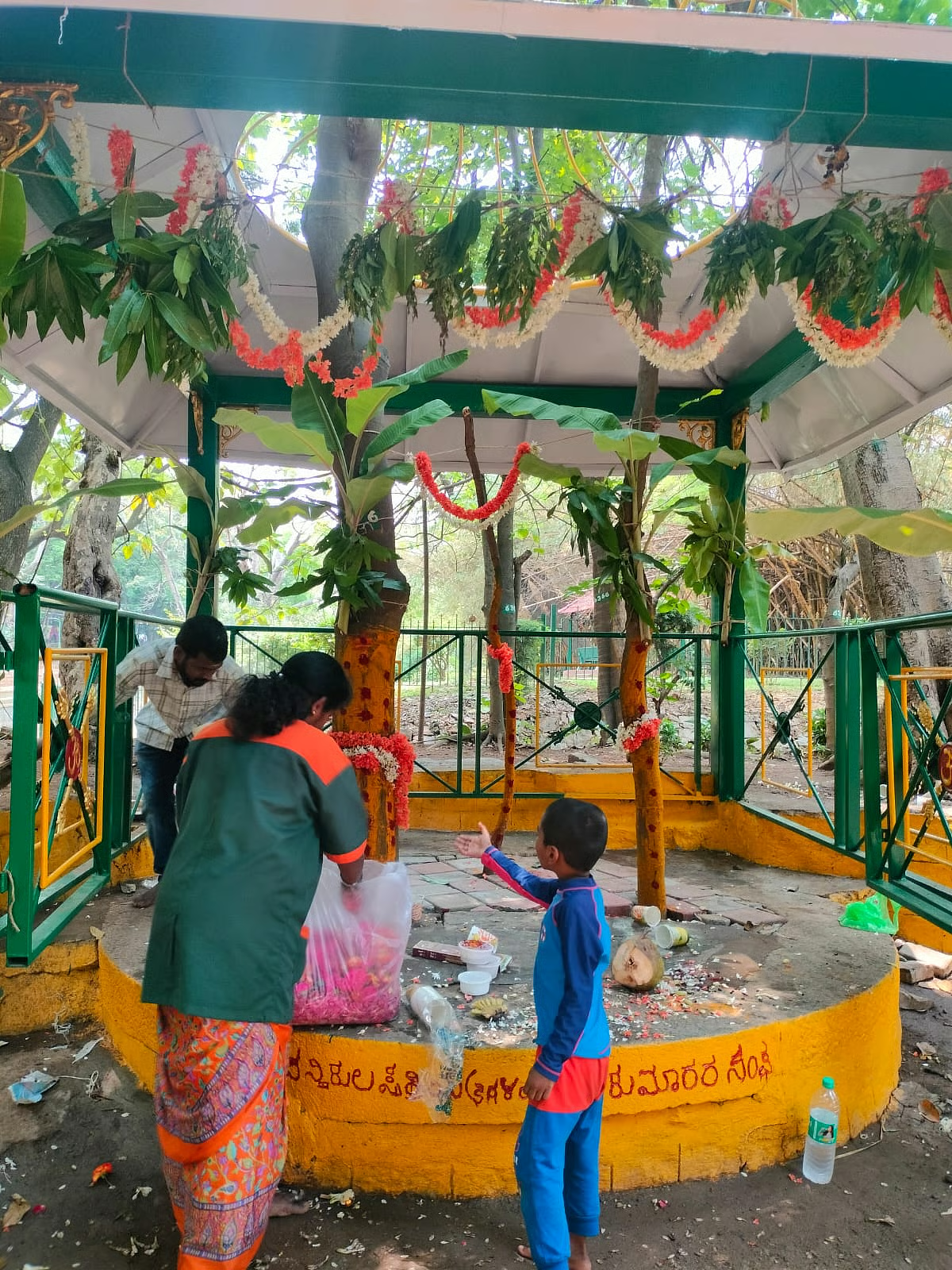
By the time I had walked over, they were beginning to distribute the prasaadam (consecrated food) consisting of cooling ingredients for summer such as a refreshing salad of cucumber and lentil (kosambari), buttermilk with a lot of onion and slices of watermelon. There was an immediate sense of being one with nature: Everyone was walking barefoot on wet earth, they had a deep understanding of seasonal cycles and kept track of lunar phases.
The community has been historically recognised for their expertise in agriculture and horticulture. When Hyder Ali and Tipu Sultan were building Bengaluru, they called upon these local farmers to develop a landscaping marvel at the famous tourist spot Lalbagh Botanical Garden. To this day, many of the trusted nurseries outside Lalbagh are run by people from the Thigala community.
Thus, flora is central to every part of this festival. On the sixth day of the festival, women from the community build lamp covers with fragrant jasmine flowers. These lamps lead the way during the night-time processions across the city. The jasmine flowers also adorn the mud pot (karaga) — a vessel symbolising Draupadi’s presence — which balances atop the head of the priest who channels her power.
The story of why the Thigala community is among the few who worship Draupadi is layered. The community, recognised in Karnataka’s Other Backward Classes list, self identifies as vanhikula kshatriyas. They fought to protect Draupadi from a demon (Timirasura) who was tormenting her, said Anantha Padmanabha, who was attending the festival as a veerakumara (warrior). “When the Pandavas began their journey towards heaven, Draupadi had fallen behind because she was walking slower. Enchanted by her beauty and finding her alone, the demon Timarasura begins tormenting her. This is when she created the male veerakumaras who valiantly fought and killed Timarasura. So, we consider ourselves as her descendents.” The myth, however, does not make clear the origin of the female members of the community, who observe symbolic widowhood during the period.
As she departed for heaven, the veerakumaras pleaded with her to stay. She promised to return each year for three days during Chaitra Purnima, Padmanabha said.