
Washing dishes during winter can feel extremely uncomfortable as cold water continuously hits your hands. Even in warm water, many people notice their fingers go numb, stiff, or painfully cold after just a few minutes. This everyday chore then becomes even more difficult for people who have sensitive skin, poor circulation, or even joint pain. Cold hands reduce grip strength and slow down the movement, making the dishwashing task exhausting rather than feel like a routine.
The good news is that you don’t have to spend a lot on tools or make huge changes to fix this problem. A few smart habits, light adjustments, and proper protection will keep your hands warm and comfortable even while washing dishes in peak winter.
Why do hands freeze while washing dishes
Hands freeze during dishwashing primarily because of the longer exposure to cold or lukewarm water. Water draws temperature off the skin more quickly than air does. During winter, blood flow to the fingers is reduced to save body heat. Hence, hands become more sensitive to cold. Frequent contact with water, along with wet skin and low room temperature, aggravates the effect. Use of harsh soaps while washing the dishes strips the skin of natural oils, making the skin even more sensitive.
Tricks to keep hands safe from going numb
To make sure your hands are safe and the task of washing dishes is not too difficult to perform, you can use some easy tricks. These won’t let any harm occur to your hands.
- Warming your hands before you start
Before washing the dishes, run your hands under warm water for a minute and gently rub your hands together to increase blood flow. Starting with warm hands decreases the shock of temperature change. This helps you stay warm for a longer time during dishwashing.
- Using coconut or mustard oil

Using natural oils can help you shield your hands from cold water. A thin layer of coconut oil or mustard oil applied to the hands before washing up acts as a shield to the skin. This protects the skin from dryness by locking in moisture and minimising exposure to cold water and strong detergents. Don’t forget to wash your hands with mild soap after you are done.
- Moisturise after washing dishes
If your skin is healthy, it will help warmth better. And to keep it healthy, apply a thick layer of moisturiser or hand cream after dishwashing. It helps in restoring the skin barrier. Well-moisturised skin holds heat better and feels less stiff.In the cold season, it is necessary that you take a break while washing huge piles of dishes. You can dry your hands, warm them briefly and then continue with your task. This prevents stiffness and loss of heat.
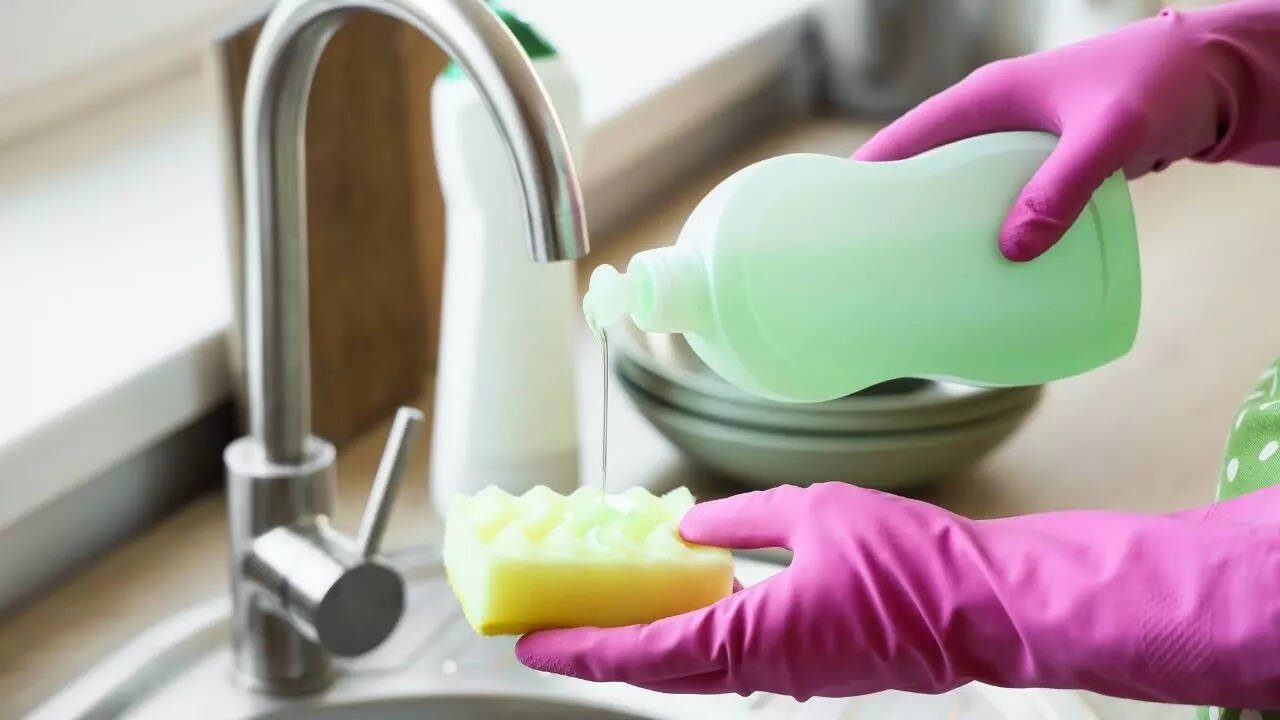
Not all dishwashing gloves offer the same protection. Gloves with a thicker insulating material and soft inner lining will help retain heat longer to keep your hands warm for a longer period. These gloves prevent cold water from touching your skin and protect against strong detergents. Insulated gloves are especially helpful during winter mornings or when you have to wash dishes for a long time. The surrounding environment matters more than it seems. A cold kitchen will make it more difficult to keep your hands warm, even with gloves on. If possible, close windows, eliminate drafts, or use a small heater. A warm room maintains blood circulation and prevents your hands from getting cold quickly.