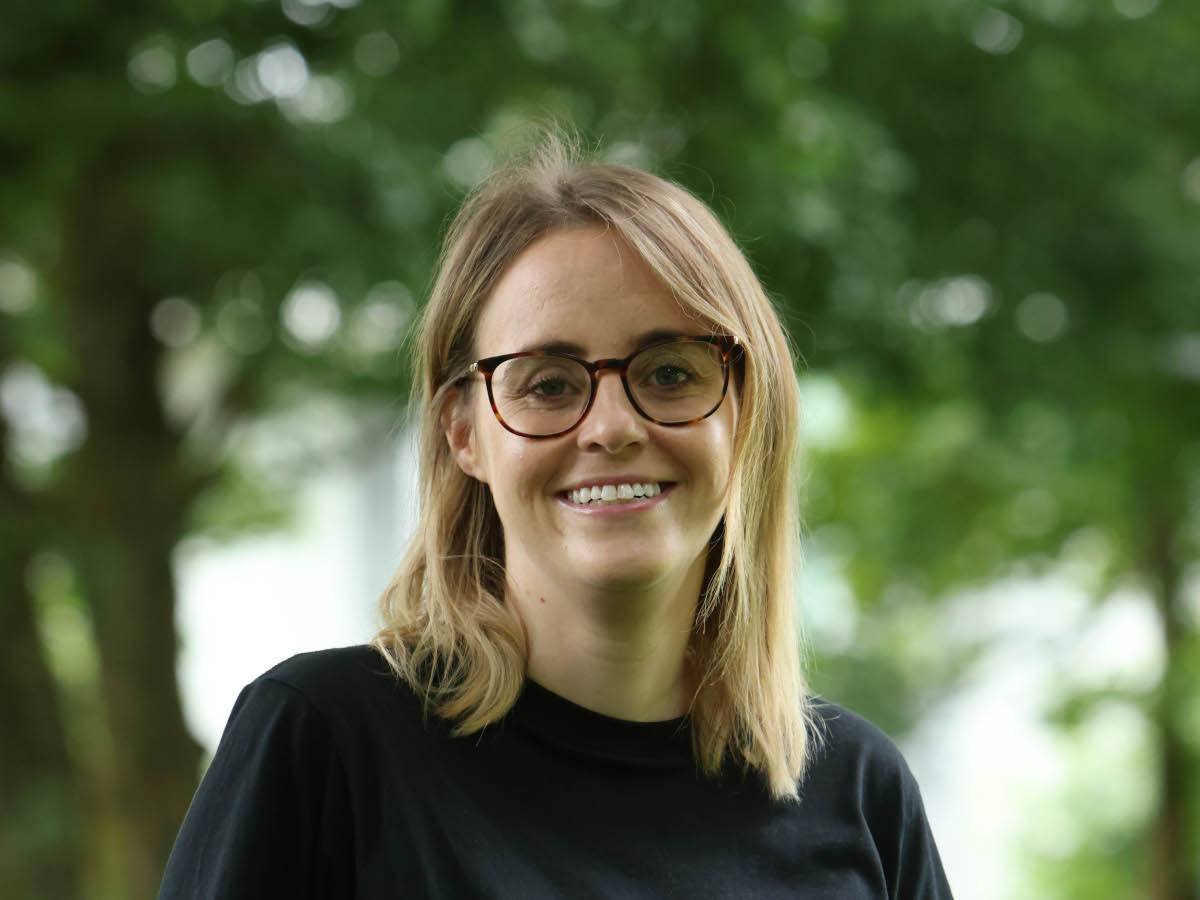
This researcher says that clinical trials are the ‘engine of medical progress’ but they need to be a lot more representative to improve patient outcomes.
For health psychologist Dr Eimear Morrissey, the events of recent years have made people more aware of clinical research and how it’s conducted. “People are asking sharper questions about how studies are done, and that kind of attention can be very healthy for science,” she tells SiliconRepublic.com.
“Where things are still less clear, though, is around who is represented in research and who isn’t.
“Most people assume that [clinical] trials naturally include a wide mix of participants, and it often comes as a surprise to hear how much variation there actually is.”
This increase in public engagement is an opportunity, Morrissey thinks, “for researchers to be more transparent about how evidence is produced and to explain why inclusion matters in the first place”.
Morrissey is acting director of the MSc in evidence-based future healthcare at the University of Galway. Her research draws on psychology, health systems research and participatory approaches to understand how people manage long-term conditions and how evidence can be better aligned with their lived realities.
She has an MSc and PhD in health psychology from the University of Galway. Morrissey says that these degrees helped shape her belief that “rigorous evidence and person-centredness should not sit in tension”. She works directly with patients and the public to co-develop and refine interventions, in particular for type 1 diabetes and hypertension.
She is also the coordinator of ‘EDICT: Advancing Equity, Diversity and Inclusion in Clinical Trials’, a Horizon Europe MSCA Doctoral Network focused on transforming how trials are designed and conducted across Europe.
Tell us about your current research.
EDICT brings together partners across Europe to address long-standing gaps in who gets represented in clinical research. Although clinical trials are the engine of medical progress, many continue to exclude people whose experiences, health needs, and social contexts differ from the ‘ideal participant’ model. This affects older adults, ethnic minority communities, women, people with multimorbidity or disability, rural populations and those who face practical or linguistic barriers to participation. These patterns are not only inequitable; they limit the relevance and trustworthiness of the evidence that health systems rely on.
EDICT builds directly on the principles that have shaped my work from my PhD onwards – that high-quality evidence must be person-centred, inclusive and grounded in the realities of the people whose lives it aims to improve.
The programme will support 16 doctoral researchers to develop new ways to design, conduct and evaluate clinical trials so that they better reflect the populations they seek to serve. This includes creating more meaningful ways to measure diversity in trials, developing methods and technologies that support fairer recruitment and retention, and working with communities, clinicians, regulators and industry partners to embed these approaches into everyday practice.
My role involves shaping the scientific direction, governance and training environment of the network. A core part of this is ensuring that EDICT remains rooted in the participatory, equity-focused and person-centred methodologies that have guided my own research – and that the solutions we develop are practical, implementable and capable of supporting systemic change across the European clinical trials landscape.
In your opinion, why is your research important?
My current work has been driven by a simple reality: the people who most need to be represented in clinical evidence are often the ones least likely to appear in it.
When trials routinely exclude older adults, ethnic minority communities, people with multimorbidity or disability or anyone who faces practical barriers to taking part, the evidence we produce becomes narrower and harder to apply in real-world settings. That has scientific consequences, but it also affects trust, access and fairness.
EDICT is important because it tries to address these issues at their foundation. Rather than attempting small adjustments to individual studies, it looks at the broader structures shaping how trials are planned, run and interpreted. The programme brings together researchers, communities, regulators and industry partners to think about what meaningful inclusion actually looks like in practice and how to design methods and systems that support it.
In the short term, this means producing practical tools: better ways of assessing who is (and isn’t) being recruited, approaches for reducing avoidable exclusions and methods that help trial teams work more effectively with diverse populations.
Over the longer term, the aim is to shift how researchers, funders, ethics committees and health systems define ‘high-quality evidence’ so that person-centred and inclusive practices become the expectation.
Ultimately, the value of this work lies in strengthening the usefulness of the evidence we generate.
Trials that reflect the people they are intended to inform are more relevant, more trustworthy and more likely to improve outcomes in everyday healthcare.
What inspired you to become a researcher?
I’ve always been curious (nosy!) and wanted to understand the ‘why’ behind everything. That instinct is what first pulled me towards psychology and eventually into a PhD, where I focused on how people manage long-term conditions and how evidence can support (or sometimes unintentionally complicate) that process.
As I moved through my PhD and then into two postdoctoral roles, it became increasingly obvious that the voices and experiences we most needed to understand were often missing from the research we relied on.
As the programme manager of D1 Now, I worked with a ‘Patient and Public Involvement’ (PPI) panel of young people living with type 1 diabetes which brought this into really sharp focus. The Young Adult Panel were open, honest and direct about what did and didn’t work for them, and it fundamentally shifted how I thought about research design, intervention development and the purpose of evidence.
What are some of the biggest challenges or misconceptions you face as a researcher in your field?
One of the biggest challenges is the idea that exclusion in clinical research is somehow inevitable or justified. In practice, many of the groups who struggle to take part in trials aren’t excluded for clear clinical reasons but because of long-standing habits in how studies are designed, resourced or run. Once you see it, it’s hard to unsee.
There is also a common misconception that involving people meaningfully – whether through PPI, community partnerships or more flexible trial processes – will slow everything down or make studies unmanageable. My experience has been the opposite. Working directly with young adults with type 1 diabetes, for example, showed me that people often have very practical, thoughtful suggestions that improve both the science and the experience of participating.
Another challenge is the gap between what we assume people need and what they actually say they need. Researchers can be very confident in their understanding of ‘barriers’ or ‘motivators’, but when you speak to participants or people with lived experience, you often hear something much more nuanced. Bridging that gap requires time, trust and a bit of humility.
Finally, there’s the broader issue of fragmentation. Trialists, clinicians, regulators, funders and communities often work in parallel rather than together. That makes it harder to fix exclusion at a system level – and exactly what EDICT is trying to change!
Don’t miss out on the knowledge you need to succeed. Sign up for the Daily Brief, Silicon Republic’s digest of need-to-know sci-tech news.


