In 2022, I had a job at an estate agents in Paris selling ridiculously expensive flats, and decided I needed to do something more meaningful with my life. I resigned, and six months later arrived in Guinea.
In hindsight I was a young kid, full of anger, not happy with his life. That 26-year-old is definitely not me now – and it was living with primates that changed my life.
I ended up at the Chimpanzee Conservation Centre, a five-hour drive from the nearest town in the middle of the jungle. I lived in a cabin surrounded by 66 chimpanzees and my job was to care for them. The chimps would constantly erupt with these “hoo hooo” noises in the night. One would start and then they’d all be at it. I miss that nightly racket now.
I was only supposed to go for three months, but ended up staying for 11.
Living in that cabin, I was fully alone for the first time – and completely immersed in watching these animals. The thing that fascinated me most about chimps was how they processed anger. They can fight really hard – hit each other, steal food from each other – but they always make peace about five minutes later. I have made peace with myself and with people I felt hate for. I learned from these primates there is no point being angry or living in the past.
I came to accept and welcome my emotions like chimps do: when they are afraid they just scream, when they’re happy they do a different kind of scream. They don’t control it, and it’s so nice to see – especially if they are about to get food. It’s like little kids at Christmas. I live with my emotions much more easily now than I did before.
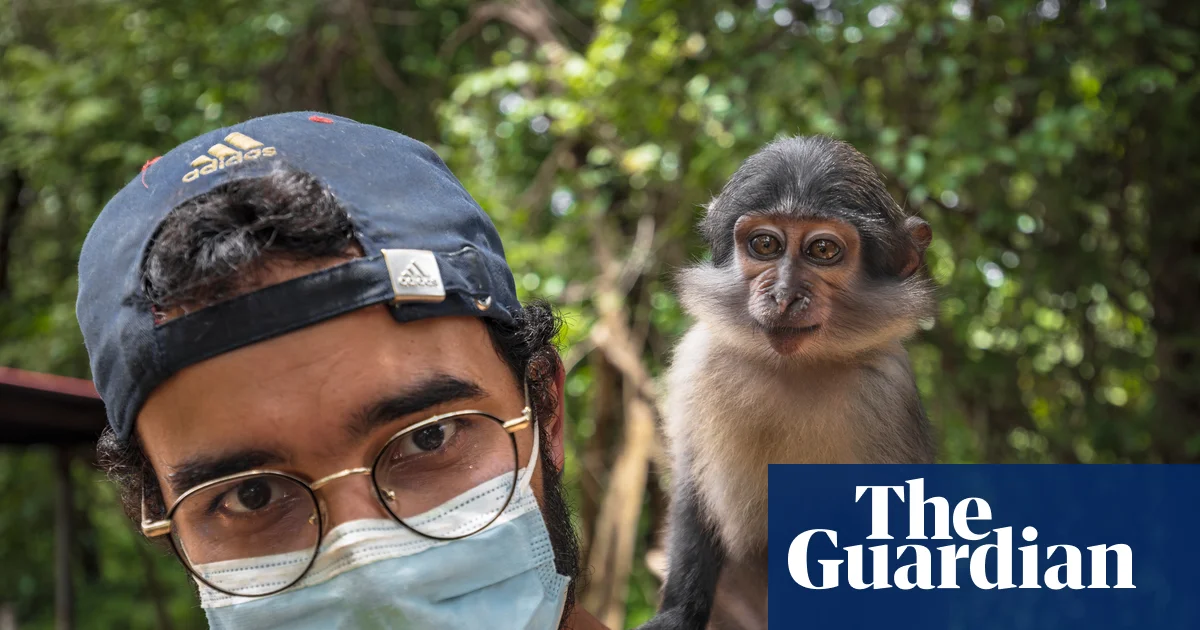
One relationship marked me more than any other, and that was with a baby sooty mangabey called Elio. He was a handful and required constant care – someone to feed him, comfort him and help him learn to explore his surroundings – a bit like a human child.
These monkeys are vulnerable to extinction in the wild. I think his parents had been poached. Tiny babies are not worth anything as bushmeat, so the poachers sometimes kill the family and take the babies alive or just abandon them. All the primates at the sanctuary were there for this reason.
What marked me the most was how human he looked (especially his hands and feet), he had this amazing pinky face and wonderful look in his eye. For the first three days, I spent the entire day in the cabin with him to gain his trust. He was jumping around everywhere, then he started jumping on me. He came over and offered his back, legs and arms to be groomed, just like he would have with his parents.
Every day at 7am I got him his fruit and a bottle of milk and then we would wander around camp. We had two or three different spots we particularly liked. I would sit and read books or play Sudoku and he would go into the trees, jumping from one to the other, and sometimes chasing the wild vervet monkeys. The minute I started walking away he would follow. I was with him the whole time and did everything I could to make his days happy.
A bond had been created – it was an amazing moment for me. I learned I could be patient. He taught me that I’m ready to be a dad – and this meant a lot to me, because I have always had a difficult relationship with my own father.
After two months, we got news that it was time to move Elio to a wildlife centre in Liberia where he could be with other mangabeys. I knew it was the best thing for him – he was growing up – but it was extremely hard to say goodbye. The director from the centre saw how attached to him I was and promised they would take good care of him, and that he would have friends. They had a release programme, so he could possibly live in the wild one day.
About a year after I’d left him, I had a dream about Elio, and so I asked them how he was doing and was told he had died of an infection. It broke my heart. I consider him my first son.
Thanks to Elio, though, I finally found my purpose, which I definitely did not do selling ridiculously expensive flats in Paris. There is nothing in France that can bring as much meaning as being with chimpanzees and monkeys, and taking care of them. It was Elio who taught me this. He made me join the fight against poaching and the illegal wildlife trade. I think about him a lot. I have a tattoo of him on my arm, so in a way he comes everywhere with me.
Find more age of extinction coverage here, and follow the biodiversity reporters Phoebe Weston and Patrick Greenfield in the Guardian app for more nature coverage