Stand by Me
Obviously The Shining remains the greatest Stephen King adaptation ever made, but Stand By Me is the one I love beyond all measure. It’s the warmest, the saddest and the funniest, too: a lovely, grubby ode to the joys of misspent youth. “I never had any friends later on like the ones I had when I was 12,” remarks small-town adventurer Gordie Lachance, who sets off with his pals to find a dead body in the woods. “Jesus, does anyone?”
Certain films land at just the right moment in life and so it was with Stand By Me, which I first saw as an adolescent, in a Bristol cinema, alongside a schoolmate who had already seen it a few weeks before. We had to skip the last five minutes in order to catch the last bus home to our own small town. This infuriated me at the time, but now feels all of a piece. It means that Stand By Me’s heart-piercing final scene – the four kids ambling back into Castle Rock at dawn – is inextricably bound up with that long, slow bus ride through the night as my friend recounted the movie’s ending, explaining how friendships wane and heroes die, and I stared out the window and tried very hard not to cry. Xan Brooks
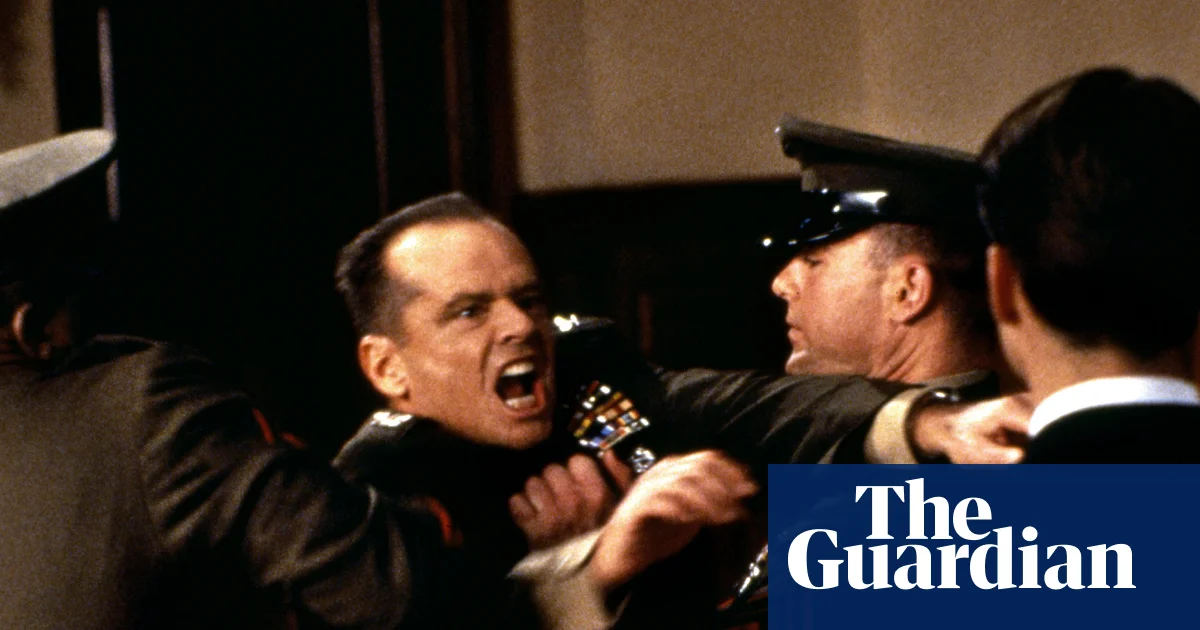
A Few Good Men
“They don’t make ’em like this anymore,” is a phrase that is overused to the point of meaninglessness, but it’s one that certainly applies to A Few Good Men, the sort of swaggering, legal drama showdown that, in 2025, ends up being made into a prestige TV drama rather than a film. In 1992 though, it was a drop-everything blockbuster event, the chance to see Hollywood’s coming leading-man force, Tom Cruise, and its biggest, scenery-chewingest star, Jack Nicholson, crashing into each other like rutting stags.
A lot of attention inevitably lands on those performances – Nicholson as terrifying bully Colonel Jessep, Cruise as the military defence lawyer attempting to goad Jessep into revealing his complicity in the death of a young Marine – not to mention the verbal pyrotechnics of the film’s script, written by Aaron Sorkin. Rob Reiner usually gets overlooked in all this, but it’s his steady, unfussy direction that makes the whole thing thrum. A great director of actors, usually by just standing back and letting them cook, he also understood, and actually liked, genre movies, and in A Few Good Men his film-making actively leans into all the cliches and conventions of the courtroom drama – third act reversals of fortune, surprise witnesses, stirring, orchestral score and all. The result is propulsive and just the right side of preposterous; I could watch the final 30 or so minutes, culminating of course in that line, on a loop till the end of time. Gwilym Mumford
This Is Spinal Tap
Tap is great on so many levels: crucially (and amazingly) it’s still funny, even though, inevitably, some of it has, er, dated. The performances are across-the-board brilliant, and not just the leads – the sideshows are faultless too, from Fran Drescher’s Bobbi Flekman to Tony Hendra’s Peter Grant-channelling manager Ian Faith to Paul Shaffer’s combover promo guy Artie Fufkin. What stands out now is the level of detail: the early-Status-Quo-esque video for Listen to the Flower People, or the Shrewsbury Town shirt sported by bassist Derek Smalls.
But in the end, Tap’s greatest achievement is the way it defanged and repackaged rock stars; in the 70s they were largely seen as sinister, dangerous figures, co-opting the youth into a world of debauchery. But afterwards? Well, rockers didn’t suddenly become cuddly, and there was still plenty of mileage in their reputation for sex and drugs, but the strutting peacocks of the double-neck guitar and four-bank synthesiser were now absurd, even idiotic, and not to be taken seriously. If nothing else, that was a vital service for humanity. Andrew Pulver
When Harry Met Sally
Earlier this year, working on an article about modern Hollywood romantic comedies, I interviewed screenwriters and producers working in the genre today. I was struck by how often When Harry Met Sally came up in conversation – and for good reason. It is still, after 35 years, a standard bearer of the genre, the north star guiding so many others. Nora Ephron’s script brims with wit and intelligence; the fashion and cinematography – all cosy knits and a Manhattan blanketed in crisp vermillion foliage – has come to define autumn; Meg Ryan’s warmth finds a perfect foil in Billy Crystal’s sardonicism. Ephron has been rightfully credited with making the film great, but Reiner’s influence is all over it, too. “Rob’s so funny. He’s also very combative,” Ephron recalled. The clashes between Sally and Harry were often the result of “bitter fights” between her (team Sally) and Reiner (team Harry) in the writers’ room. It was, she said, “as much fun as I’ve ever had”. Rebecca Liu
The Sure Thing
Amid the 1980s surge of teen movies, Rob Reiner’s second feature as director stood out as a beacon of old-school delight between the bratpack bleating of The Breakfast Club (sorry, not a John Hughes fan) and the grotesque misogyny of Screwballs II or Hardbodies. John Cusack and Daphne Zuniga play mismatched college students thrown together on a road trip from New England to California. He’s a beer-swilling slob on his way to get laid; she’s an uptight prig (“Spontaneity has its time and its place”), planning to join her boring lawyer boyfriend; no prizes for guessing what happens. Stephen L Bloom and Jonathan Roberts’s screenplay reworks It Happened One Night for a new generation, but it’s Reiner’s rapport with his young actors, innate comic timing and grasp of classic structure that weave the zingy one-liners, teenage romance and real feeling into a funny, touching and altogether agreeable little romcom. Anne Billson
The Wolf of Wall Street
“$26,000 worth of sides? What are these sides – they cure cancer?” In a film not short of peppy cameos (Jean Dujardin as a supercilious Swiss banker, Joanna Lumley as a naughty aunt), Reiner’s as Stratton-Oakmont accountant “Mad” Max Belfort is a mini comic diamond that’s tossed out casually and ricochets all over. We’ve already been primed about his hair-trigger temper when he storms into the corner office to pull up his son, Wall Street shyster Jordan Belfort, and fellow reprobates about their $430k expenses tab. Reiner serves as lightning rod for AAA-grade banter, cheekiness and implausible denial from DiCaprio, Jonah Hill and co, mostly improvised: “The IRS, they allow for T&A,” says Hill about a billing to “EJ Entertainment”. “T&E!” Reiner yells back. Hilariously drowned out by the movie’s amoral rollercoaster, he is a sound choice as the doomed voice of conscience of this circus; loosey-goosey satire that revelled in human foibles was very definitely his bag. Phil Hoad
Misery
That this 1990 Stephen King adaptation combines Rob Reiner’s innate gift for raising laughs with an acute sense of claustrophobia and suspense only makes it more impressive. James Caan is Paul Sheldon, the star novelist rescued from a snowy Colorado car wreck and nursed by his No 1 fan, Annie Wilkes (Oscar-winner Kathy Bates), in her isolated home. Aghast when she finds that his latest manuscript departs from his pot-boiler formula, Annie uses her advantage – Paul is bed-bound for the entire film – to force him to bash out a new book that is more to her liking.
A deranged treat when it first opened, the picture now looks prescient in its vision of the parasocial phenomenon: imagine how many Misery fantasies the internet has engendered. It also serves today as a commentary on a consumer-driven society where art is moulded and inhibited by a vocal online public.
But while Annie symbolises that corrosive influence, I still cheer her on whenever I watch the film. Even before she breaks Paul’s ankles with a mallet, she is, gloriously, a lot. From her melodramatic hissy fits to her Liberace obsession, she’s a queer-coded avenger giving the smug, rich patriarchy its just deserts. This is one film that only gets better when viewed with a rowdy #TeamAnnie crowd. Company loves Misery, you might say. Ryan Gilbey
It’s Garry Shandling’s Show
Reiner was prepping When Harry Met Sally when he made his exceptionally sporting (and funny) guest appearance in Dial L for Laundry, a first season episode of Shandling’s postmodern sitcom. Playing himself as a doleful actor-director, he drops by Shandling’s place seeking gainful employment and winds up performing the star’s chores; after seeing off a laundry-room bully (future Twin Peaks villain Chris Mulkey) with a bottle to the head, he walks arm-in-arm with his host – two wily pros, forever on the lookout for amusing business – into a closing credits Stand by Me homage. Reiner recurred in the series’ third season before provoking comic ire as a guest on The Larry Sanders Show. Here, however, Shandling pays fulsome tribute to Reiner’s skill with a scourer, holding up a sparkling dinner plate to the cameras: “Get a tight shot of this. Look at it. Rob, you did a great job.” Mike McCahill
New Girl
Rob Reiner was an undeniable genius, both in front of and behind the camera, but my favourite project of his will always be the TV sitcom New Girl. In it he plays Jess Day’s (Zooey Deschanel) dad, Bob, divorced from his wife Joan (Jamie Lee Curtis) and navigating the bumpy road to find love again. Bob is warm, cuddly, fiercely protective and willing to serenade people with Tal Bachman’s power pop song She’s So High in a bid to win them over; very much how I imagine Reiner would have been in real life. It was a brilliant showcase for his comedic talent, and the series even featured a parody of Misery, where Jess aggressively takes care of her dad, cutting his toenails just a little too close for comfort. In the final season, Bob becomes increasingly desperate for Jess’s hapless long-term boyfriend Nick (Jake Johnson) to propose to his daughter, beaming proudly as he finally walks her down a hospital corridor to get married. Sure, Bob isn’t Rob, but to me, this character sums up how Reiner acted throughout his career – he knew the importance of love and the need to celebrate it, and he wanted to spread joy as much as he possibly could. Ann Lee
Primary Colors
Three years after directing The American President, Reiner had a cameo in another Clinton-era political drama. He plays Izzy Rosenblatt, the host of Florida radio show Schmooze for Jews, who asks presidential hopeful Jack Stanton (John Travolta) softball questions about his mother and Vegas, only for a rival candidate to dial in and have an on-air heart attack. It’s a lovely comic turn – “Go ahead, Governor, be my guest! What am I saying? You are my guest!” – in an entertaining, sharply observed film that has aged well despite now seeming like a despatch from a completely different political era. It was Reiner’s second performance (after Postcards from the Edge) for director Mike Nichols, a figure he resembled in some ways; they fished in similar talent pools, both working with Nora Ephron, Carrie Fisher and Aaron Sorkin, and both were creative powerhouses with protean talents who were to some extent underrated as directors. Chris Tryhorn
The Princess Bride
What to add to the many millions of words already written about the delights of The Princess Bride? The tale of its slow-burn success is well known but I’m one of a small elite (I like to think) who saw it as a teenager in the cinema on its initial release. I came for the swoon-worthy Cary Elwes but stayed for the witty script and the tenderness of the friendships. I was given the video for Christmas, and I watched it so much that, by the time I was 18, I could recite the entire movie off by heart (and did, on occasion). Back in those days I might have preferred to namedrop Wim Wenders, Peter Greenaway and Jean-Luc Godard as my favourite film-makers, but I always kept a place in my heart for Rob Reiner and The Princess Bride. And, as soon as my own daughter had outgrown Pingu and Teletubbies, we watched this together and have returned to it again and again. There are simply no moments you want to fast-forward, each line is delivered with perfect timing, the fairytale setting is unashamedly sumptuous, the performances glorious, sincere and yet given with a lightness of touch that makes Reiner’s film still feel fresh and fun. My daughter is now away at university; the evening before she left for her new life, we watched The Princess Bride. It won’t be the last time, but the terrible events of this past week will now cast a dark shadow over this open-hearted and loving movie. Imogen Tilden