


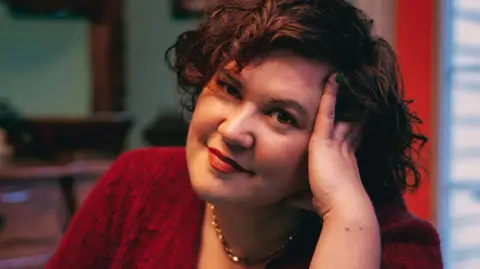
“I write sexually explicit queer romance novels about hockey players. You probably know this, but I’m saying it because it’s something that I don’t feel comfortable telling everyone.”
Rachel Reid wrote those words on her blog four months ago. Now, the adaptation of her self-described “smut” is the most talked-about show on TV: Heated Rivalry.
Its stars have appeared at the Golden Globes, on major late-night talk shows and podcasts, and in a seemingly unending stream of social media fan edits – leaving Reid nowhere to hide.
But the Canadian author tells the BBC: “There’s nothing to be embarrassed about any more.”
“People are so open about loving the show,” she continues. “It’s embarrassing to not like it.”
There is no shortage of sex in Heated Rivalry, which follows the illicit relationship of two rival ice-hockey stars and is based on the second book in Reid’s Game Changers series of novels.
“I thought they were unadaptable,” Reid says frankly of her books, which she first published anonymously online, disguised as fan fiction.



But changes to her story for TV are few and far between. The author from Nova Scotia notes: “I don’t think I’ve ever seen an adaptation this loyal before.”
Despite its heartfelt depiction of LGBT relationships and representation in sport, some have trivialised it – branding it “the gay hockey show”.
Reid, however, is not concerned: “I feel very good about it. A lot of the community around it – all these events, watch parties, raves – it’s because the show is such a great vibe check for people.
“If you like this show, you’re probably on the right side of a lot of things.”

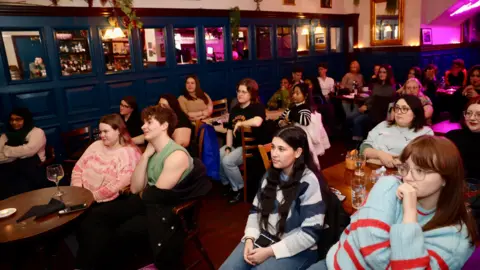
One such watch party in London grew quiet as the packed pub waited for episode one to begin on the evening of its UK release in early January.
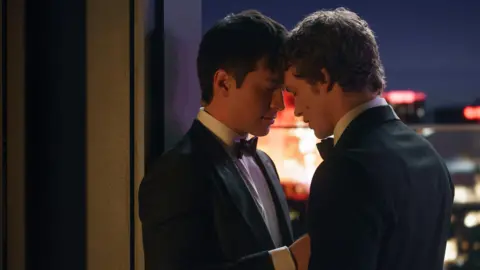
A “shush!” rang out when Canadian rookie Shane Hollander – one of the now-beloved protagonists – first appeared shirtless on screen. The crowd, mostly made up of younger viewers, listened.
Later, there were cheers and applause: standing near Shane in an otherwise-empty row of locker-room showers was the confident Ilya Rozanov, from Russia. Both men, the camera showed us in some detail, were naked.
Nonetheless, viewers were quick to stress the sex was a way to illustrate their slow-burn relationship, developed through secret meetings and covert texting over eight years of public sporting rivalry.

“I went into it expecting it to be a 50 Shades of Grey type of thing,” said Joe Leonard, one of the organisers of the West London Queer Project event.
“You’re watching a little bit in awe for the first few episodes,” he confessed, “but then by the end, you’re there sat with tissues drying tears away… it’s a very, very sweet story.”
Another fan, 21-year-old Alana, added: “If people are reducing it to the intimacy aspect, it’s like – people don’t say that about Bridgerton, about different shows that have intimacy between straight people, so how is it any different?”
In a room split almost evenly between men and women, some in the crowd were eager to address the show’s popularity with female viewers – dubbed “wine moms” by showrunner Jacob Tierney and the subject of some debate online, from Reddit to TikTok.
“I don’t think it’s a new thing that women are interested in queer fiction, even straight women,” said Bethan Smith, 26.
“I think it’s just because it’s become so mainstream people are like, ‘oh why are women a fan of this?’ Where have you been?”
Reid, whose real name is Rachelle Goguen, gives a simple view on this question: “Obviously, the books have a huge female fanbase because that’s who reads romance, that’s who reads fiction generally.
“Now, with the show, we’ve gained a much wider and more diverse fanbase of – yeah – a lot of men, which is really exciting.”
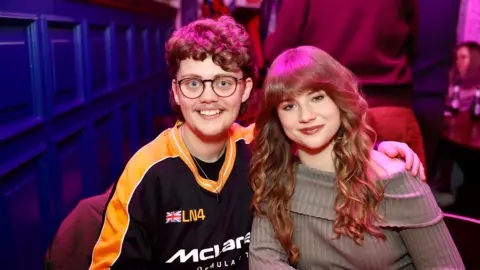
Combining romance and sport may seem unusual to the uninitiated – but to some readers in the room, it made perfect sense.
Kayleb, 23, said Heated Rivalry was one of several “sport romances” he had read. “I’ve read some Formula 1 romances,” he explained.
He was referring to a growing sub-genre of romance novels set in the world of sport – from football to boxing and baseball – which literary agent Saskia Leach said had “absolutely snowballed over the last four to five years”.
“It’s arguably the breakout romance sub-genre of the 2020s,” she said, making the success of Heated Rivalry unsurprising.
Aimee Cummings, who runs Love Stories Bookshop in Cardiff, agreed there was “huge demand” for these books, “even though they’re a niche within a niche”.
“Our first customer order was for Binding 13 by Chloe Walsh, a rugby romance,” she said, adding: “Since day one, we’ve had people ask for Heated Rivalry.”
But ice hockey is more than a backdrop in Reid’s world. The author says she wrote her books “to work out a lot of my feelings about rampant misogyny, homophobia, violence” in the sport of which she had been a life-long fan.
There are no openly gay active players in North America’s National Hockey League (NHL), according to the Canadian broadcaster CBC, and the show has reignited discussion around representation in the sport.
Reid says no one from the NHL has reached out to her since the show first aired in the US and Canada in late November, “but a lot of people from the hockey world have… people I love and respect, so that’s all that matters to me”.
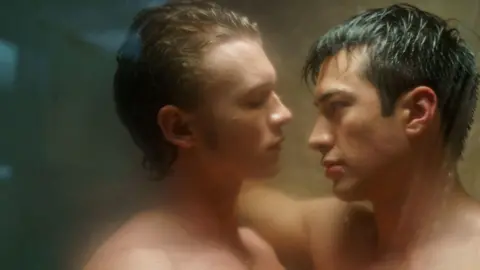
The show, created by Canadian streamer Crave, has naturally boosted book sales. Heated Rivalry, first published in 2019, and several of Reid’s other novels hit the New York Times bestseller list in early December.
Reid announced a new Shane Hollander and Ilya Rozanov, or “Hollanov”, novel last week, Unrivaled. Meanwhile, the rest of her titles will line UK bookshelves for the first time from 20 January. They have previously only been available as e-books in the territory, and recently entered Amazon’s best-seller chart.
The UK’s biggest bookselling chain, Waterstones, said daily pre-orders for the series in print had increased “by about 700% week on week” since the new year – the bulk for Heated Rivalry – while publisher HarperCollins said it had to print several more batches of the books than originally planned to meet demand.
For Reid, her hope is that the books inspire more positive LGBT love stories.
“There just haven’t been many shows that have had a happy ending, and queer joy.”
“Maybe we don’t have to kill one of them before the end,” she jokes. “It would be a nice change.”